
Argentina World Cup 2026 — Defending Champions Betting Guide | KICKSTAKE
 Available in US
Loading...
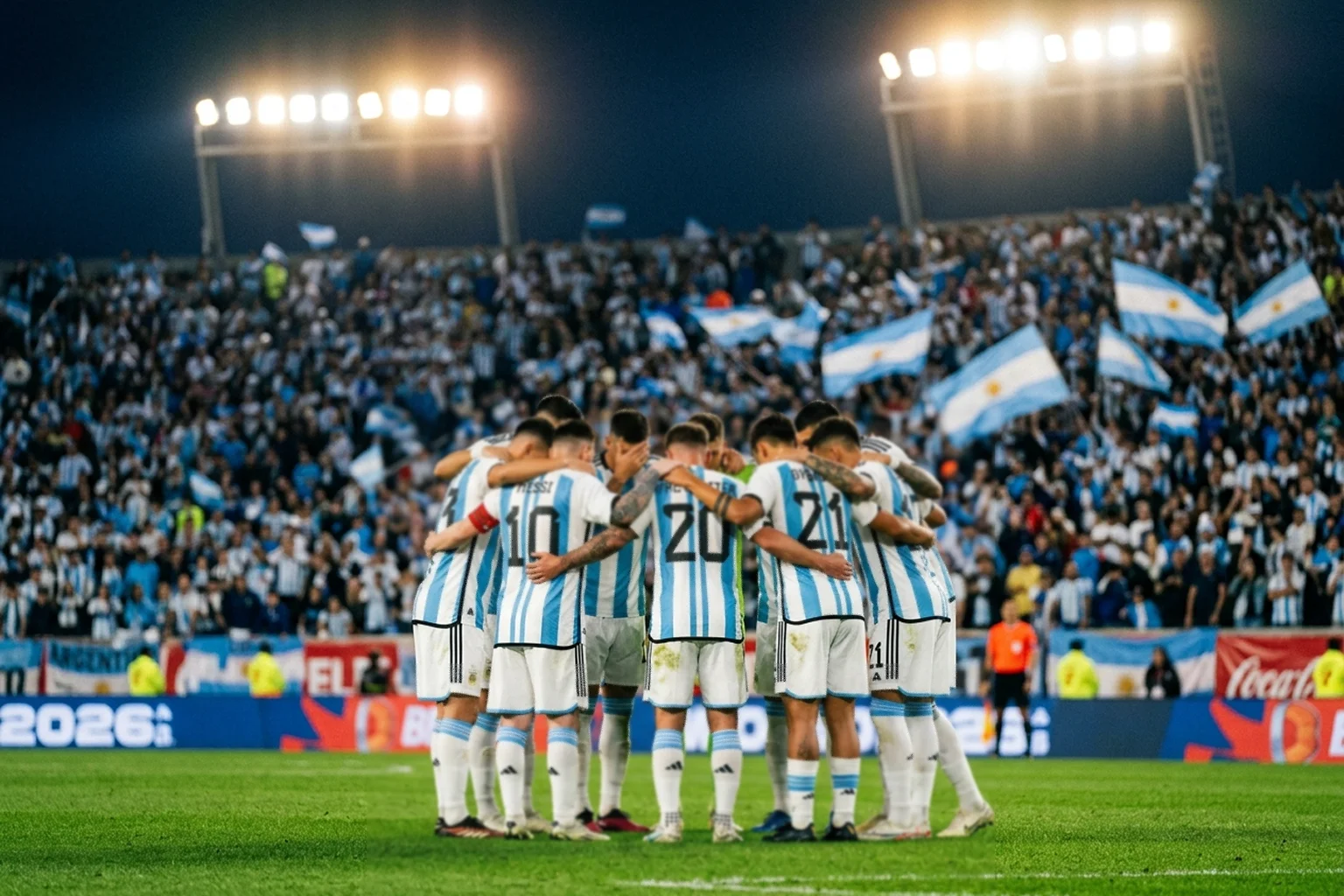
The image remains vivid: Lionel Messi lifting the World Cup trophy in Lusail, completing a career that had lacked only that singular achievement. Argentina’s 2022 triumph rewrote narratives, validated a golden generation’s final chapter, and established them as the team to beat entering 2026. Four years later, the question reverberates through every betting market — can they do it again?
Only two nations have successfully defended a World Cup title. Italy accomplished it in 1938, when the tournament was a sixteen-team affair played in fascist Italy. Brazil achieved it in 1962, four years after introducing the world to Pelé. Since then, every defending champion has stumbled somewhere between the group stage and the final. France in 2022 came closest, losing only on penalties in Qatar. Argentina World Cup 2026 betting forces a reckoning with historical precedent, roster evolution, and whether the magic of 2022 can sustain through another tournament cycle.
The Post-Messi Transition That Isn’t Quite Post-Messi
Lionel Messi turns thirty-nine during the 2026 World Cup. He has indicated this will be his final tournament. The question of whether he starts, plays limited minutes, or serves as ceremonial presence affects everything from formation decisions to prop bet markets. Managing Messi’s involvement defines Argentina’s tactical identity entering North America.
At his peak, Messi’s influence on matches defied quantification. Opponents doubled him, restructured defensive shapes around him, and still watched him produce moments that decided outcomes. The 2022 version showed diminished mobility but retained vision, passing weight, and clutch finishing. The 2026 version — another four years of aging, another round of Inter Miami matches rather than elite European competition — enters with legitimate questions about physical capacity.
Yet Messi’s presence transcends individual contributions. Argentina’s squad carries confidence from their World Cup triumph, and Messi embodies that confidence. Younger players who grew up idolizing him now share a dressing room with a legend willing to sacrifice ego for collective success. The psychological value of Messi in camp, even with reduced minutes, exceeds any replacement’s on-field contribution. Betting markets should account for morale effects alongside tactical considerations.
The transition plan involves maintaining structures that worked in 2022 while integrating next-generation talent. Julián Álvarez has emerged as the primary striker, his workrate and finishing now tested across Champions League and Premier League campaigns. Enzo Fernández controls midfield with a maturity that belies his age, having developed from World Cup breakthrough to established star. Alexis Mac Allister provides tactical flexibility across midfield positions. These players carry the playing load while Messi influences matches in condensed bursts.
Defensively, the core persists. Emiliano Martínez remains Argentina’s goalkeeper, his penalty-saving antics and shot-stopping ability proven across multiple tournaments. Cristian Romero and Lisandro Martínez offer center-back options with Premier League pedigree. Nicolás Tagliafico and Nahuel Molina provide fullback depth. The back line that conceded only eight goals across seven matches in 2022 returns largely intact, aging but experienced.
Coaching continuity matters enormously. Lionel Scaloni has managed Argentina since 2018, building toward the 2022 triumph through tactical refinement and squad development. His system emphasizes defensive organization, midfield control, and releasing attacking talent in specific moments. Scaloni understands tournament management — rotation, psychological preparation, in-game adjustments — in ways that newer coaches cannot match. This institutional knowledge provides advantages that betting markets may underweight.
The bench provides quality options that rival many nations’ starting elevens. Giovani Lo Celso offers creative midfield presence when matches require different tempo. Lautaro Martínez, if fit, adds striking depth behind Álvarez. Ángel Di María, like Messi approaching career’s end, brings experience and big-game mentality. Paulo Dybala and Leandro Paredes contribute technical quality in specific tactical situations. This depth allows Scaloni to rotate across group matches while maintaining performance levels, a significant advantage in a forty-eight-team format requiring five to seven matches for tournament victory.
Group J — The Path to the Knockout Rounds
Argentina draws Group J alongside Algeria, Austria, and Jordan. No traditional powerhouse lurks. No historical rival creates narrative tension. This draw looks comfortable on paper, which creates its own dangers — complacency against motivated underdogs has eliminated defending champions before.
Algeria presents the most credible threat. The Algerian national team has developed since their 2014 World Cup showing, adding technical quality through European-based players while maintaining the physical intensity that defines African football. Riyad Mahrez, if still active, provides creative spark. The Algerian approach involves aggressive pressing, quick transitions, and capitalizing on moments of defensive disorganization. Against an aging Argentine backline, Algeria’s pace could cause problems. Betting markets should not dismiss Algeria to draw or win outright at significant odds. Their African Cup of Nations performances demonstrate tournament pedigree that translates to World Cup stages.
Austria qualified through European playoffs, demonstrating knockout-format resilience. The Austrian side mixes Bundesliga-based players with Premier League contributions like Marko Arnautović. Their tactical approach emphasizes pressing and vertical play, testing opponents’ ability to play through pressure. Austria will compete for second place and could complicate Argentina’s group-stage path if Algeria extracts an upset result. Their physicality and European tactical discipline make them awkward opponents even for superior squads, creating potential for drawn or tight matches where Argentina must grind rather than cruise.
Jordan makes their World Cup debut, the culmination of Asian football development that has seen Gulf and Middle Eastern nations improve rapidly. Jordan qualified ahead of more established Asian programs, suggesting organization and competitive spirit. However, squad quality falls short of contending for knockout advancement. Jordan versus Argentina profiles as a comfortable win for the defending champions, with betting angles focusing on margin and totals rather than match result uncertainty. First-half goals for Argentina, clean sheet possibilities, and correct score markets around 3-0 or 4-0 lines deserve attention in this specific fixture.
Argentina should top the group. The relevant betting question involves whether they do so without stress — three comfortable wins — or whether Algeria or Austria extract points that create late-group uncertainty. Historical patterns show defending champions occasionally struggle with motivation in group stages where advancement seems assured. Scaloni’s management must guard against this tendency.
Match scheduling within Group J affects preparation and betting analysis. The sequence of opponents — whether Algeria comes first or last — changes how Argentina approaches each fixture. Opening against a motivated debutant like Jordan allows Argentina to find rhythm against lower quality. Opening against Algeria presents immediate test of tournament readiness. Understanding the exact schedule, once finalized, helps identify where letdown spots or trap games might materialize.
North American venues create logistical considerations. Argentina’s squad, largely based in European leagues, requires travel and acclimatization. Training facilities, hotel arrangements, and travel between group-stage venues all affect physical preparation. These factors matter less for a nation with Argentina’s resources than for smaller federations, but tournament logistics never disappear entirely. Identifying which venues Argentina plays in helps project environmental factors affecting match totals and tempo.
History of Title Defences — The Curse That Isn’t Quite a Curse
The narrative writes itself: defending champions fail. Since Brazil in 1962, every reigning World Cup holder has exited without lifting the trophy again. France in 2002 crashed out in the group stage without scoring a goal. Spain in 2014 suffered similar humiliation. Germany in 2018 finished bottom of their group. Italy in 2010 and 2014 never advanced beyond the group stage. The pattern suggests structural forces work against repeat winners.
Several explanations exist for this trend. Opponents study the champion’s tactics obsessively, finding weaknesses to exploit. Players who peaked for tournament victory experience natural decline over the next cycle. The psychological burden of defending rather than chasing shifts team mentality. Fixtures are scrutinized more intensely, raising pressure on individual moments. These factors combine to create a hostile environment for defending champions.
France in 2022 nearly broke the pattern, reaching the final before losing on penalties to Argentina. Their route included surviving early-group scares, knockout drama, and a final that saw them rally from 2-0 down. France’s near-miss suggests the curse reflects difficulty more than impossibility. Argentina can study France’s 2022 path for lessons on managing the unique pressures of defending a title.
Betting implications favor taking against Argentina at short prices while remaining open to their talent producing deep runs. The historical base rate for defending champions winning again approaches zero in the modern era — betting as though Argentina has a one-in-five or better chance ignores this evidence. However, the historical base rate for defending champions reaching quarterfinals or semifinals remains reasonable, suggesting progression markets offer better value than outright winner bets.
Argentina’s specific circumstances differ from recent failed defences in important ways. Germany in 2018 suffered from complacency and aging simultaneously. Spain in 2014 saw their tiki-taka dominance decoded by opponents. France in 2022 dealt with injury crises and nearly won anyway. Argentina in 2026 has fewer excuses available — their squad remains relatively young at key positions, their tactical approach has evolved since 2022, and Scaloni provides coaching stability that crashed-out champions often lacked. Whether these differences matter enough to beat the base rate requires judgment beyond historical patterns alone.
Argentina’s Odds — Where the Market Stands
Argentina typically prices between six and ten to one for outright tournament winner, shorter than most contenders except France and occasionally England. This pricing reflects 2022 momentum, squad talent, and perceived favorable draw through the group stage. Whether these prices offer value depends on your assessment of the Messi factor and historical patterns around defending champions.
I view Argentina as overpriced at anything shorter than eight to one. The combination of Messi’s reduced effectiveness, historical title-defence failures, and inevitable bracket opponents in later rounds suggests win probability below what short prices imply. Argentina backing at eight to one may represent fair value; at five or six to one, the market overestimates their chances based on recency bias from Qatar. The general public backs defending champions disproportionately, creating market inefficiencies that sharper bettors can exploit by fading short prices.
Group J winner markets should price Argentina as heavy favorites, around one-point-three to one-point-five decimal odds. This pricing seems fair given opponent quality. Finding value requires Algeria or Austria at significant longshot odds if you believe in upset potential. Otherwise, group-stage markets offer limited opportunity beyond match-specific angles.
To reach the final markets let you back Argentina’s progression without committing to outright victory. If Argentina prices at three to one to reach the final, you capture value from their talent level while avoiding the historical penalty associated with winning twice. This structure hedges against the specific difficulty of defending titles while acknowledging Argentina’s genuine quality.
Player prop markets offer granular opportunities. Julián Álvarez to finish as Argentina’s top tournament scorer prices reasonably given his starting role and finishing quality. Enzo Fernández to record an assist prices on his progressive passing and set-piece involvement. Emiliano Martínez to save a penalty — almost inevitable across a deep tournament run — offers longer odds than his track record warrants.
Cards markets for Argentine players deserve attention. The team’s tactical approach involves strategic fouling to break up counter-attacks, particularly from defensive midfielders and center-backs. Accumulator bets on Argentine players receiving cards across multiple matches capture this tendency at potentially favorable prices. Individual match card markets for Argentina versus physical opponents like Austria may offer value.
Corners and shots markets in Argentina group matches reflect their possession-dominant approach. Against defensive opponents, Argentina generates corners at above-average rates through sustained attacking pressure. Shots on target props for attacking players like Álvarez capitalize on volume shooting opportunities against overmatched opponents. These secondary markets often receive less attention from sharp bettors, creating potential inefficiencies.
The X Factor — What Happens When Messi Steps Away
A scenario exists where Messi plays twenty minutes per match, contributes marginally, and Argentina advances on the strength of their post-transition core. Another scenario sees Messi start every match, exhaust himself by the quarterfinals, and leave Argentina exposed when knockout intensity peaks. Both paths have evidence supporting their plausibility, and which unfolds affects betting positioning significantly.
If Argentina plays without heavy Messi reliance, their tactical approach resembles a cohesive European side: pressing, midfield control, attacking transitions through Álvarez and wide players. This version can compete with anyone and sustain performances across a thirty-nine-day tournament. The squad depth supports rotation without dramatic quality drop-offs.
If Argentina depends on Messi magic, they become vulnerable to matches where he cannot produce. Opponents who neutralize Messi through doubles and tactical discipline force Argentina’s supporting cast to create independently. Some of those players — Fernández, Álvarez, Mac Allister — have grown into that responsibility. Others remain dependent on Messi unlocking space for them. The dependency question lingers throughout the tournament.
Scaloni’s task involves finding the balance that worked in 2022: using Messi strategically while empowering the collective. Four years of practice with this balance provides templates. Whether Messi’s diminished physical state allows the same approach remains uncertain. Betting on Argentina requires a stance on this uncertainty rather than assuming 2022’s formula persists unchanged.
The emotional dimension cannot be ignored. Messi’s final World Cup generates narrative energy that elevates teammates. Players running for a legend’s farewell find extra reserves. This intangible worked in Qatar; whether it works again against opponents who have now seen the movie once is debatable. The element of surprise has vanished, replaced by an opponent playbook titled “How Argentina Won and How to Stop It.”
Media attention on Messi creates both advantages and distractions. Press conferences, documentary crews, and historic-moment framing consume energy that could otherwise focus on match preparation. Scaloni must manage this circus while keeping players grounded. The 2022 experience helps — they have navigated intense scrutiny before — but the farewell narrative adds pressure that did not exist when the goal was winning a first title rather than defending one.
Younger players stepping into expanded roles face their own psychological tests. Fernández and Álvarez proved themselves in 2022 but now carry expectations rather than exceeding them. The shift from promising talent to established star changes how opponents prepare and how pressure accumulates. Their continued development during the intervening club seasons suggests readiness, but tournament environments test players differently than league campaigns.
Value Bets on Argentina
After analyzing squad composition, group dynamics, historical patterns, and market pricing, several value angles emerge for Argentina betting.
Argentina to reach the semifinals at odds around two to one offers positive expected value. Their path through Group J should be straightforward. Early knockout rounds likely feature beatable opponents from weaker groups. The semifinal threshold lets you capture Argentina’s genuine quality while avoiding the specific challenge of winning the final against elite opposition. This bet structure manages downside risk while participating in Argentina’s tournament upside.
Julián Álvarez over 2.5 tournament goals combines his starting role, finishing quality, and likely minutes across at least six matches. With three group games and an expected deep knockout run, Álvarez faces enough shooting opportunities to clear this threshold. His pricing reflects secondary-striker perception despite his primary role in the Argentina setup.
Emiliano Martínez to win Golden Glove (best goalkeeper) prices attractively if Argentina reaches later rounds. Martínez’s shot-stopping, presence in aerial duels, and penalty heroics generate highlight moments that influence voting. His personality — polarizing to opponents, beloved by Argentines — creates memorable narratives that voters recall. At longshot odds, this market offers asymmetric upside tied to Argentina’s tournament progression.
Fading Argentina in specific match markets as the tournament progresses offers contrarian value. If Argentina advances as expected, their later-round opponents will be quality sides capable of winning. Taking Argentina opponents on moneyline or draw in quarterfinal or semifinal matches captures the historical pattern of defending champions falling short while backing genuinely talented opposition. This approach requires patience — no bet until knockout rounds — but positions you against inflated Argentina pricing.
The overall approach to Argentina betting involves respecting their talent while recognizing the unique challenges they face. Short prices to win the tournament ignore historical evidence. Longer prices on progression, player props, and specific match scenarios capture value without overcommitting to outcomes that probability disfavors.
Contrarian positioning against Argentina finds its moment when public sentiment peaks. If Argentina wins their group comfortably and enters knockout rounds as heavy favorites against early opponents, the market may overreact to recent performance while underweighting the structural challenges ahead. That moment — not before the tournament, but during it — represents optimal timing for Argentina fades at inflated prices.
Ultimately, Argentina World Cup 2026 betting requires holding two ideas simultaneously: they remain one of the world’s best national teams with genuine tournament-winning capability, and they face historically unprecedented challenges that no champion has overcome in six decades. Threading that needle means selective betting rather than wholesale backing or fading. The defending champions deserve respect — just not at any price.
