
Croatia World Cup 2026 — Betting Picks & Group L Outlook | KICKSTAKE
 Available in US
Loading...
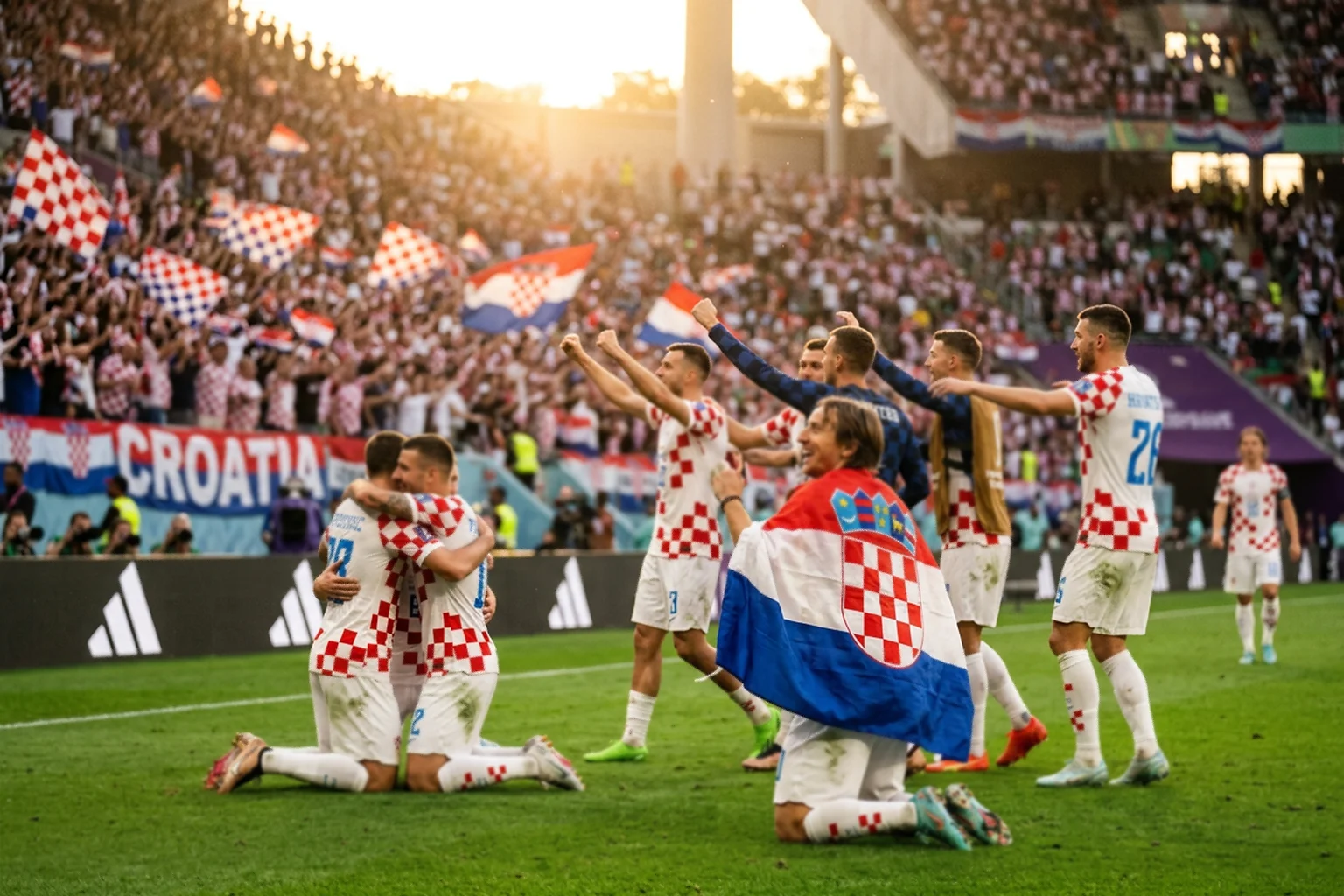
Finalist in 2018. Third place in 2022. No nation with Croatia’s population — roughly four million people — has produced such consistent World Cup excellence. The checkered jersey has become synonymous with tournament overachievement, with a midfield-driven approach that frustrates opponents expecting to dominate possession against a smaller nation. Croatia World Cup 2026 betting carries this remarkable pedigree alongside the central question: how much longer can the magic last?
Luka Modrić defines Croatian football, and his presence — or absence — shapes everything about their tournament ceiling. At forty, he has indicated this represents his final World Cup. The transition from Modrić’s era to whatever follows has begun unevenly, with emerging talents developing while the maestro still conducts. This guide examines Croatia’s squad composition, their challenging Group L draw against England, and where betting value exists for a team whose tournament history defies logical expectation.
Squad and the Modrić Question
Luka Modrić’s influence transcends statistics. His ball retention under pressure, tempo control, and ability to find passes that unlock defenses have defined Croatian football for over a decade. At forty, physical decline is inevitable — the burst to escape pressure has slowed, recovery time has extended. Yet his intelligence, positioning, and composure under pressure remain exceptional. Croatia’s tactical approach depends on managing Modrić’s minutes while maximizing his influence in decisive moments.
Mateo Kovačić provides the transition option that Croatia’s future requires. His Manchester City development added dimensions to an already excellent game, producing a midfielder capable of controlling matches through ball-carrying and distribution. Kovačić can shoulder primary midfield responsibility when Modrić rests, maintaining Croatian identity without the maestro on the pitch. His partnership with Modrić in important matches creates a double pivot that few opponents can dominate.
Joško Gvardiol represents the defensive future that Croatia desperately needed. His development at Manchester City — playing left-back and center-back interchangeably — produced a player capable of anchoring defenses for the next decade. Gvardiol’s emergence provides reassurance that Croatian excellence does not end with the Modrić generation. His aerial ability, ball-playing, and aggressive positioning transform Croatian defensive identity.
Ivan Perišić’s experience adds width and workrate that younger players cannot replicate. His ability to operate across the front line creates tactical flexibility that opponents must respect. Perišić’s tournament pedigree — critical goals and assists across multiple World Cups — provides the big-game mentality that newcomers develop rather than possess inherently.
Dominik Livaković has established himself as a tournament specialist goalkeeper. His penalty heroics across 2022 — saving three in the shootout against Japan and critical moments against Brazil — confirmed his big-game credentials. Livaković provides competent shot-stopping alongside elite penalty-saving that matters disproportionately in knockout football.
Zlatko Dalić’s coaching continuity since 2017 provides stability that tournament success requires. His understanding of Croatian football culture, player relationships, and tactical preferences enables squad management that maximizes collective output. Dalić knows when to use Modrić, how to motivate supporting players, and which tactical adjustments suit specific opponents. This institutional knowledge represents an underappreciated advantage against coaches managing squads they have recently inherited.
Squad depth has improved as the next generation develops. Lovro Majer adds creative quality from advanced positions. Mario Pašalić provides midfield depth with goal-scoring contribution. Andrej Kramarić offers experienced striking options. The bench no longer represents dramatic quality drop-offs from starting personnel — a evolution from earlier Croatian squads that relied heavily on eleven players.
The pressing game has intensified under Dalić’s continued tactical development. Croatia now win the ball higher up the pitch than previous iterations, creating turnovers in dangerous areas. This evolution suits younger, more athletic players while requiring Modrić to contribute defensively in ways his age challenges. Managing this balance affects Croatian performance across matches.
Set-piece organization represents an underappreciated Croatian strength. Delivery quality from Modrić and wide players creates corner and free-kick opportunities. Aerial presence through Gvardiol and others converts chances that open play cannot guarantee. Backing Croatian set-piece goals captures this dimension at prices calibrated to overall offensive reputation.
The cultural continuity matters for Croatian tournament success. Players grow up together through youth systems, know each other’s tendencies, and share national pride that manifests in collective effort. This intangible distinguishes Croatia from larger nations whose squads feature players meeting for the first time during tournament preparation. Chemistry cannot be manufactured; Croatia’s exists naturally.
Group L — England, Ghana, Panama
Croatia draws Group L alongside England, Croatia’s 2018 semifinal victim; Ghana, unpredictable African qualifiers; and Panama, limited CONCACAF representatives. The draw features a genuine rival, a wildcard, and a fixture that should produce comfortable victory.
England represents the headline matchup. The 2018 semifinal rematch carries historical resonance that adds psychological dimension to tactical analysis. Croatia eliminated England through extra-time victory that still haunts English football memory. Whether this history provides Croatian confidence or English motivation varies by perspective. England’s superior squad depth and recent tournament consistency create favorites status; Croatia’s midfield control and tournament pedigree suggest the match remains competitive.
Ghana brings unpredictability that African qualifiers often provide. The Black Stars possess athletic players capable of individual brilliance alongside organizational inconsistency that creates variance in outputs. Ghana versus Croatia profiles as competitive without clear favorite — Croatian control versus Ghanaian directness and pace produces matches where either style can prevail.
Panama returns after their 2018 debut that included a 6-0 loss to England. The Central American side lacks personnel to threaten Group L’s top teams but competes with intensity that smaller nations bring to World Cup stages. Croatia versus Panama should produce comfortable Croatian victory, with betting interest focusing on margin and player props.
Croatia should advance from Group L, likely in second position behind England. The England match determines group positioning; Ghana and Panama matches should produce sufficient points regardless of the England result. Betting on Croatia to top the group requires expecting victory over England — possible but not probable given squad comparisons.
Match scheduling affects tactical preparation significantly. The order of opponents changes how Dalić manages Modrić’s minutes and overall squad rotation. Opening against Panama allows confidence-building while preserving legs for England; opening against England presents immediate test of tournament readiness. Understanding fixture sequences helps identify where fatigue or lineup changes might affect outcomes.
North American venues create logistics for European teams. Croatia’s resources provide adequate preparation despite smaller federation budget than rivals. Time zone adjustment from Central European schedules affects older players like Modrić more than younger squad members. These factors influence early-match performances before full acclimatization occurs.
The third-place advancement rules provide insurance Croatia should not need. Eight of twelve third-place teams advance, meaning even disappointing group results might allow progression. However, Croatia’s tournament pedigree suggests they will advance comfortably rather than requiring mathematical assistance.
Odds and Angles
Croatia typically prices between fifteen and twenty-five to one for outright tournament winner, reflecting their remarkable recent history alongside realistic squad assessment. This pricing acknowledges Croatian ability to exceed expectations while recognizing that tournament victory requires something beyond beating expectations — it requires actually being the best.
At twenty to one, Croatia implies roughly five-percent win probability. Given their recent finishes — final in 2018, third in 2022 — this pricing may undervalue their actual ceiling. Croatian tournament magic has produced results that pre-tournament odds could not predict. Value exists if you believe this magic persists despite Modrić’s aging.
Group L runner-up markets price Croatia at around 2.00 or similar, reflecting expected advancement behind England. Finding value requires either backing Croatian group victory at longer odds or identifying underpriced opponents in individual matches.
Croatia to reach quarterfinals prices around even money, capturing expected group advancement plus a Round of 32 win. This market offers clean value for bettors who believe Croatian tournament pedigree sustains through at least four matches.
Player props concentrate on Modrić, Gvardiol, and Kovačić. Modrić’s assist props capture his creative role if minutes remain sufficient. Gvardiol’s defensive contribution manifests through clean sheet correlations rather than individual scoring. Kovačić’s progressive passing generates less spectacular props but contributes consistently.
Croatia clean sheet props vary by opponent. Panama fixtures should produce higher clean sheet probability than England or Ghana, where attacking quality threatens even organized defenses. Selective clean sheet backing captures capability without assuming consistency against all opposition.
Cards markets for Croatian players reflect their midfield intensity. Tactical fouls to prevent counter-attacks accumulate bookings across matches. Accumulator bets on Croatian midfielders receiving cards capture this tendency at potentially favorable prices.
Corners props in Croatian matches reflect their possession dominance. Controlled buildup and wide play generate corner opportunities at above-average rates. Over corner totals in matches against Panama may price favorably given expected territorial control.
Value Bets on Croatia
After analyzing squad, group dynamics, and market positioning, several value angles emerge for Croatia betting.
Croatia to beat England at odds around 4.00 or higher offers contrarian value. The 2018 precedent provides psychological foundation. Croatian midfield control can frustrate English attacking talent. This represents a longshot with genuine upset foundation given Croatian tournament pedigree.
Under 2.5 goals in Croatia versus England reflects both teams’ potential for tactical chess. Neither side’s approach produces high-scoring affairs when tournament stakes demand concentration. This fixture profiles as tighter than combined attacking reputations suggest.
Croatia to reach semifinals at odds around four to one captures their remarkable tournament consistency. Final in 2018, third in 2022 — the semifinal threshold represents achievable continuation rather than unprecedented success. This market captures Croatian magic at prices that may undervalue their proven ability.
Dominik Livaković to save a penalty across the tournament at long odds captures his specialty. If Croatia face penalty shootouts — increasingly likely in tight knockout matches — Livaković’s heroics may repeat. His record justifies backing this outcome at prices that may not reflect his exceptional shootout performance.
The broader approach to Croatia betting involves respecting their proven tournament excellence without assuming it continues indefinitely. Modrić’s final World Cup creates narrative energy that could inspire transcendent performance or mark the end of Croatian magic. Position sizing should reflect this uncertainty — exposure to Croatian success without overcommitment to outcomes that even their remarkable history cannot guarantee.
Historical patterns suggest Croatia outperform expectations at major tournaments. Their small population, limited resources, and modest domestic league should produce modest international results. Instead, they reach finals and third-place matches consistently. This pattern creates value whenever markets price Croatia based on objective squad assessment rather than demonstrated tournament capability.
The emotional dimension affects betting analysis. Modrić’s farewell, the checkered jersey’s meaning to Croatian identity, and collective determination to send the golden generation out with honor create intangibles that influence performance beyond measurable factors. Whether these emotions manifest as focused excellence or overwhelming pressure determines Croatian trajectory.
