
Best World Cup 2026 Betting Sites in Canada (2026) | KICKSTAKE
 Available in US
Loading...
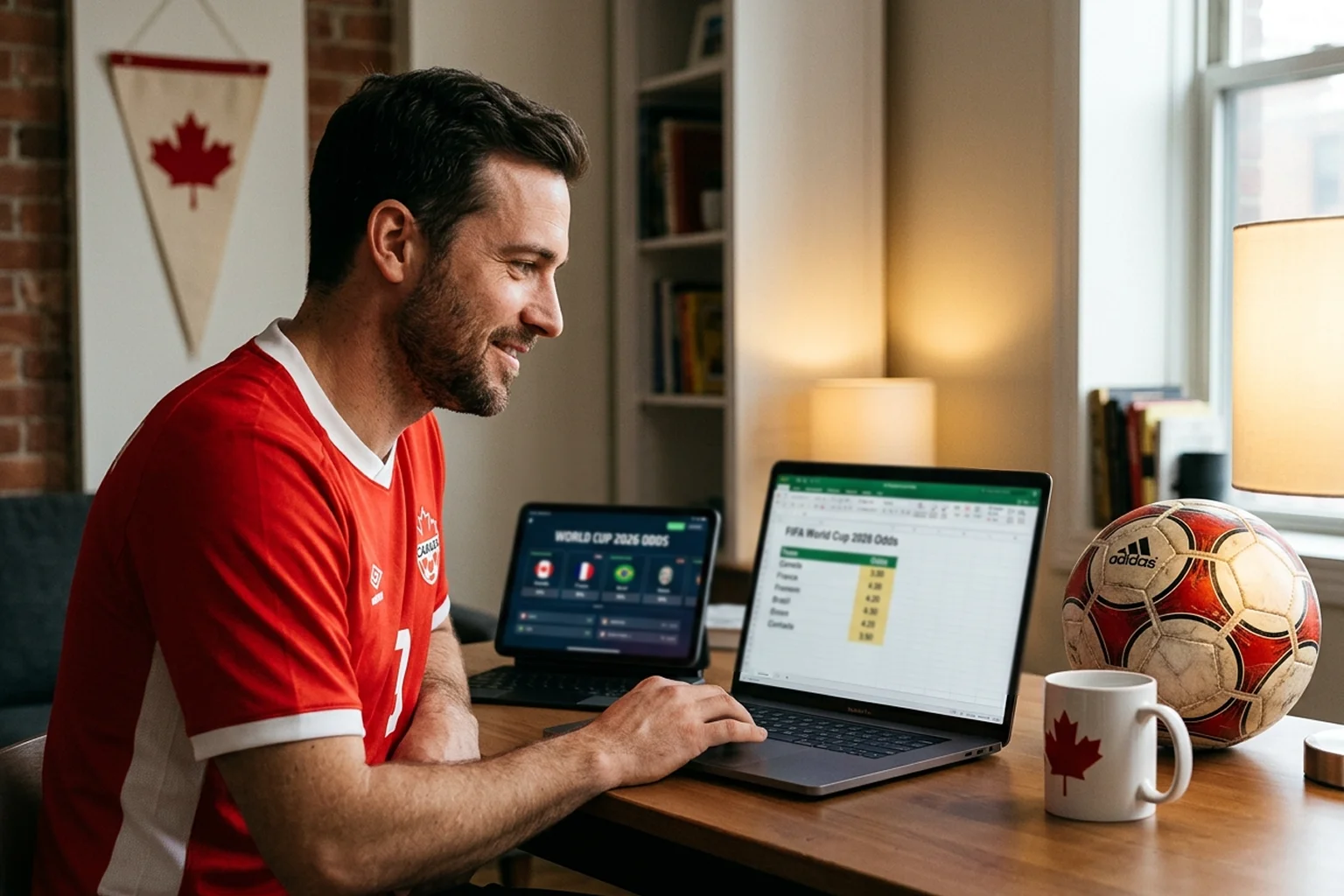
I placed my first legal single-game wager on Canadian soil in August 2021 — seventy-two hours after Bill C-218 came into effect. The betting slip was simple: a moneyline on a Premier League match. What struck me was not the bet itself but the fact that I could finally do it without navigating offshore grey markets. Five years later, the World Cup 2026 arrives on home turf, and the landscape of best World Cup betting sites in Canada has matured beyond recognition. Ontario alone hosts over forty licensed operators. Provincial platforms in British Columbia, Québec, and Alberta serve millions more. Whether you are betting from Toronto, Vancouver, or Yellowknife, choosing the right sportsbook for this tournament matters — and I have spent the past nine years dissecting exactly what separates a solid platform from a mediocre one.
This guide walks through everything a Canadian bettor needs to place confident wagers on the 104 matches ahead. I cover legal frameworks, evaluation criteria, platform breakdowns, World Cup-specific features, and the practical steps to get started. No rankings, no “top five” lists, no brand endorsements — just the information required to make your own call.
The Legal Framework You Actually Need to Understand
A colleague once asked me why Canadian bettors seem confused about legality when the law changed years ago. The answer is simple: Canada does not have one betting market — it has fourteen. Each province and territory sets its own rules, and the federal Criminal Code merely permits single-event wagering. Understanding this structure protects you from unlicensed operators and clarifies where your money actually goes.
Bill C-218, the Safe and Regulated Sports Betting Act, decriminalized single-game wagering at the federal level on August 27, 2021. Before that date, Canadians could only legally bet on parlays through provincial lottery corporations. The amendment shifted authority to individual provinces, creating a patchwork of regulatory approaches. Ontario seized the opportunity by launching an open, competitive market in April 2022. The Alcohol and Gaming Commission of Ontario (AGCO) now licenses private operators alongside the provincial OLG Proline+. As of spring 2026, more than forty sportsbooks hold AGCO registrations, making Ontario the most competitive betting jurisdiction in the country.
Other provinces took a different path. British Columbia operates PlayNow through the BC Lottery Corporation, offering a single regulated platform. Québec runs Mise-o-jeu under Loto-Québec. Alberta launched Play Alberta in 2020 and has announced plans to open its market to private operators by 2026 — timing that may overlap with World Cup group-stage matches. Manitoba, Saskatchewan, and the Atlantic provinces maintain provincial lottery platforms without private competition. In practice, this means a bettor in Calgary accesses a different sportsbook ecosystem than a bettor in Ottawa, even though both wager legally under Canadian law.
Offshore operators still accept Canadian players, operating in a legal grey zone. These sites are neither licensed nor explicitly prohibited for individual bettors, though they lack consumer protections, dispute resolution mechanisms, and responsible gambling safeguards mandated for regulated platforms. For a tournament as significant as the World Cup, I recommend sticking with provincially regulated options — not out of moralism, but because licensed platforms offer recourse if something goes wrong.
Age requirements vary by province. Ontario, British Columbia, and most other provinces set the minimum at nineteen. Alberta, Manitoba, and Québec allow betting at eighteen. Verification happens during account registration, and platforms use identity checks to enforce these limits. If you travel between provinces during the tournament, your existing account remains valid, but promotional offers may differ based on geolocation.
What Makes a World Cup Sportsbook Worth Your Time
I have tested platforms across three continents while covering major tournaments. The features that matter during a thirty-nine-day event differ from those that matter for a single weekend of NHL action. World Cup betting demands sustained engagement: group-stage matches every day, overlapping kickoff times, and a knockout bracket that reshapes markets overnight. Here is how I evaluate sportsbooks for this specific context.
Market depth ranks first. A sportsbook might offer moneylines and totals for Canada versus Bosnia and Herzegovina, but does it price Asian handicaps, both-teams-to-score, correct-score doubles, and first-half results? The World Cup attracts casual bettors alongside sharps, and operators respond by expanding prop offerings. Look for platforms that list at least thirty markets per group-stage match and scale up for knockout rounds. Player props — Alphonso Davies to score anytime, Jonathan David to record an assist — should appear alongside match-level bets. Tournament outrights, including golden boot and top group scorer, indicate a platform taking soccer seriously.
Odds competitiveness comes next. A tenth of a decimal point matters less on a single wager than over a hundred potential bets across the tournament. I track line movements across platforms using comparison tools, and the variance between licensed Canadian operators often exceeds five percent on identical outcomes. For a decimal line of 2.00, that gap translates to 2.10 versus 1.95 — meaningful over volume. Some operators shade lines toward recreational bettors, inflating prices on favourites while compressing underdogs. Others maintain tighter margins across the board. Without recommending specific brands, I advise opening accounts on multiple platforms to shop lines match by match.
Live betting infrastructure determines whether you can act on in-game momentum. World Cup matches attract global viewership, and broadcast delays vary by provider. A sportsbook with fast data feeds lets you back a surging team before the market corrects. Platforms with laggy interfaces or limited in-play markets frustrate bettors during critical moments — the eighty-ninth minute equalizer that flips a result. Test live betting functionality on lower-stakes matches before the tournament begins.
Cash-out options provide flexibility. If Canada takes a two-goal lead against Qatar, you may want to lock in profit rather than risk a late collapse. Partial cash-out lets you secure a portion while leaving the rest in play. Full cash-out closes the position entirely. Not all platforms offer both, and cash-out availability varies by market type. Futures bets on outright winners often exclude cash-out until the knockout rounds.
Mobile experience matters for a tournament spanning time zones. Group-stage matches kick off at various hours across Eastern and Pacific time. A mobile app that loads quickly, displays odds clearly, and processes wagers without friction makes betting from a streetcar or coffee shop feasible. Responsive web design suffices if the native app lacks features, but platform stability under high traffic — the opening match, Canada’s first game, the final — separates reliable operators from those that buckle.
Ontario’s Open Market Versus Provincial Platforms
During the 2022 World Cup, I tracked bet placement times across Ontario-licensed operators and provincial platforms in other regions. The difference in user experience surprised me. Ontario’s competitive market has driven innovation, while provincial monopolies often lag in features and odds. This dynamic shapes how Canadians in different provinces approach World Cup betting.
Ontario bettors access the broadest selection of licensed platforms in Canada. The AGCO’s iGaming Ontario framework allows private operators to compete directly, resulting in aggressive odds, extensive market coverage, and feature parity with international sportsbooks. Operators invest in user acquisition, which benefits bettors through promotions and enhanced products. The tradeoff involves navigating a crowded market and managing multiple accounts to capture value.
British Columbia’s PlayNow offers a single integrated platform combining sports betting with casino and lottery products. The interface is functional but lacks the depth found in competitive markets. Odds tend toward conservative margins, and market selection for international soccer trails Ontario operators. That said, PlayNow provides clear responsible gambling tools and straightforward dispute resolution through the BC Lottery Corporation.
Québec’s Mise-o-jeu operates under Loto-Québec with a similar monopoly structure. The platform historically focused on parlays and has expanded single-game options since legalization. Soccer coverage for major tournaments is adequate, though player prop markets remain limited compared to Ontario. Francophone bettors benefit from full French-language support, a gap some Ontario operators still fail to address.
Alberta’s Play Alberta launched before single-game wagering legalization, initially offering only parlay products. The platform has since added single-event betting, but market depth lags behind Ontario. The provincial government’s announced intention to open the market to private operators by 2026 could transform the landscape mid-tournament, though regulatory timelines remain uncertain. Bettors in Alberta currently work with fewer options but enjoy a straightforward regulatory environment.
Smaller provinces and territories rely on Western Canada Lottery Corporation products or Atlantic Lottery offerings. These platforms provide basic World Cup coverage — match winners, totals, group winners — without the breadth of a competitive market. Bettors in these regions often consider offshore alternatives, though I reiterate the consumer protection tradeoffs involved.
Features That Actually Matter for World Cup Betting
Three weeks before the 2022 final, my preferred platform crashed during a quarter-final. I missed a live bet that would have cashed, and the operator’s compensation amounted to a generic apology. That experience taught me to prioritize reliability over promotional gloss. World Cup-specific features deserve scrutiny beyond marketing claims.
Bet builders let you combine selections within a single match into a custom parlay. Backing Canada to win, Davies to score, and over 2.5 total goals becomes a single wager with compounded odds. Platforms vary in how many legs they allow and which markets qualify. Some restrict bet builders to pre-match only, limiting in-play customization. For group-stage matches where value hides in correlated outcomes, bet builders offer creative angles.
Early payout triggers automatically settle bets when a team leads by two or more goals, treating the result as final regardless of how the match ends. This feature protects against improbable comebacks and appears on select match-winner markets. Not all platforms offer it for international soccer, and terms vary — some require the lead to occur before the eightieth minute. Read the fine print before assuming coverage.
Streaming and data visualization enhance live betting without switching between apps. Some Ontario operators provide live match streams for events where they hold rights, though World Cup broadcast exclusivity typically restricts this. Stat overlays showing possession, shots on target, and momentum indicators help bettors gauge in-play opportunities even without video.
Tournament-specific promotions appear across regulated platforms during major events. The 2024 responsible gambling advertising code, administered by Ad Standards, restricts public promotion of bonuses — you will not see deposit matches plastered on billboards. However, operators may communicate offers directly to registered players through email or in-app messaging. Signing up before the tournament begins ensures you receive these communications. I avoid recommending specific promotions because terms change, but comparing what lands in your inbox across platforms reveals competitive dynamics.
Multi-sport parlays combining World Cup bets with other June and July events — NHL draft, Wimbledon, MLB regular season — appeal to some bettors. Cross-sport correlation is generally minimal, making these constructions riskier than single-event focus. If you pursue multi-sport parlays, understand that operator variance in combined odds can be significant.
Responsible Gambling Tools You Should Actually Use
A tournament lasting thirty-nine days creates more opportunities to bet impulsively than a single championship weekend. I have seen experienced bettors blow bankrolls by chasing losses across consecutive group-stage days. Every regulated Canadian platform offers responsible gambling tools, but using them requires intentionality.
Deposit limits cap how much money you can add to your account over daily, weekly, or monthly periods. Setting these before the tournament begins prevents impulsive top-ups after a bad run. Ontario platforms allow you to adjust limits downward immediately but require a cooling-off period — often seven days — to increase them. This asymmetry protects against in-the-moment decisions.
Session time limits notify you after continuous play exceeds a set duration. World Cup matches overlap, and a day of group-stage action can stretch from early afternoon into late evening across time zones. A reminder that you have been active for three hours prompts a break and perspective check.
Reality checks display net win/loss summaries at regular intervals. Seeing your actual position — not just the thrill of winning streaks — grounds decision-making. Some platforms show this data on demand; others require navigating to account history. Know where to find your results quickly.
Self-exclusion programs let you block yourself from all regulated platforms in your province. Ontario’s self-exclusion registry covers every AGCO-licensed operator simultaneously. This measure is drastic and designed for bettors experiencing problem gambling, but awareness of its existence matters. If you find yourself unable to stop despite losses, self-exclusion provides a structural barrier.
Support resources including contact information for provincial problem gambling helplines appear on every regulated platform. ConnexOntario (1-866-531-2600) serves Ontario residents. British Columbia offers the BC Responsible & Problem Gambling Program. Québec provides Gambling: Help and Referral. These services are confidential and available throughout the tournament.
How to Sign Up and Place Your First World Cup Bet
The registration process across Canadian platforms follows a consistent pattern, though interface details vary. Completing setup before the June 11 opening match ensures you are ready when markets open. Here is the walkthrough.
Choose a platform based on your province and the criteria above. Ontario residents can select from dozens of licensed operators; other provinces direct you toward provincial lottery platforms. Navigate to the operator’s website or download the mobile app from official app stores. Avoid third-party APK downloads, which may contain compromised software.
Create an account by providing personal information: legal name, date of birth, residential address, email, and phone number. Operators verify this data against government records to confirm identity and enforce age restrictions. Accurate information matters — discrepancies delay withdrawals and may trigger account reviews. Some platforms request a scan of government-issued ID during registration; others require it only for withdrawal or if fraud flags arise.
Set responsible gambling limits before depositing funds. Establishing deposit, loss, and session time limits at the outset prevents later friction. Platforms prompt these settings during onboarding, though you can skip and return later. I recommend completing them upfront.
Fund your account using available deposit methods. Interac e-Transfer dominates the Canadian market, offering instant transfers from most banks. Credit cards, debit cards, and select e-wallets also work, though some banks block gambling transactions. PayPal, Skrill, and Neteller serve as alternatives where supported. Minimum deposits typically range from ten to twenty dollars. Avoid depositing more than your planned tournament bankroll.
Navigate to soccer or World Cup sections within the sportsbook. Major operators feature World Cup prominently as the tournament approaches, with dedicated landing pages and quick links. Browse available markets: outright winner, group winners, top scorer, and match-by-match options. Early odds for June matches should be live by late May.
Place your bet by selecting an outcome, entering your stake, and confirming. Double-check the selection and odds before submitting — platforms occasionally display stale lines during high-volume periods. Your bet slip shows potential returns based on decimal odds: a ten-dollar bet at 2.50 returns twenty-five dollars if successful, including your stake.
Track your bets through the platform’s bet history or active bets section. Some operators offer push notifications for settled wagers, goal alerts, and cash-out opportunities. Enable these for real-time updates during matches you cannot watch.
Withdraw winnings via the same method used to deposit, where possible. Interac e-Transfer withdrawals typically process within twenty-four hours on regulated platforms. Verification requirements may delay first withdrawals if documentation is incomplete. Plan ahead to ensure funds arrive when needed.
Preparing Your World Cup Betting Strategy
The sportsbook you choose matters less than the discipline you bring. I have watched sharp bettors grind profit on mediocre platforms and recreational bettors hemorrhage money on the best interfaces in the market. World Cup betting rewards preparation: understanding the tournament format, tracking team news, and managing bankroll across a five-week runway.
The 2026 format expands to forty-eight teams across twelve groups of four. The top two teams from each group advance to the round of thirty-two, along with the eight best third-place finishers. This structure increases unpredictability in group outcomes and creates value in third-place qualification markets. Familiarize yourself with tiebreaker rules — goal difference, goals scored, head-to-head — which determine advancement in tight groups.
Canada’s Group B includes Switzerland, Qatar, and Bosnia and Herzegovina. All three group matches take place on Canadian soil: Toronto (June 12) and Vancouver (June 18, 24). Home advantage has historically boosted host-nation performance, and Canadian bettors may find value fading inflated away-team lines. Track how sportsbooks price this dynamic as the tournament approaches.
Line movement tells a story. Sharp money often hits markets early, shifting odds before recreational volume arrives. If you notice a line moving against public sentiment — for example, a heavy favourite drifting — investigate why. Team news, weather, and venue conditions all influence pricing. Following reputable soccer analysts and injury aggregators keeps you informed.
Bankroll management across thirty-nine days requires pacing. A bettor who fires aggressively during the group stage may have nothing left for knockout rounds where volatility and opportunity both increase. Allocate your total bankroll in advance: a percentage for group-stage matches, a reserve for knockouts, and a portion for outright futures locked in before play begins. Adjust as results unfold, but avoid the temptation to chase losses by oversizing late bets.
Keep records. Every bet placed, odds taken, and result recorded builds a dataset for post-tournament review. You will learn more from analyzing your own decisions than from any external analysis. Spreadsheets work; dedicated bet-tracking apps work better. The format matters less than the habit.
