
Spain World Cup 2026 — Odds, Picks & Group H Preview | KICKSTAKE
 Available in US
Loading...
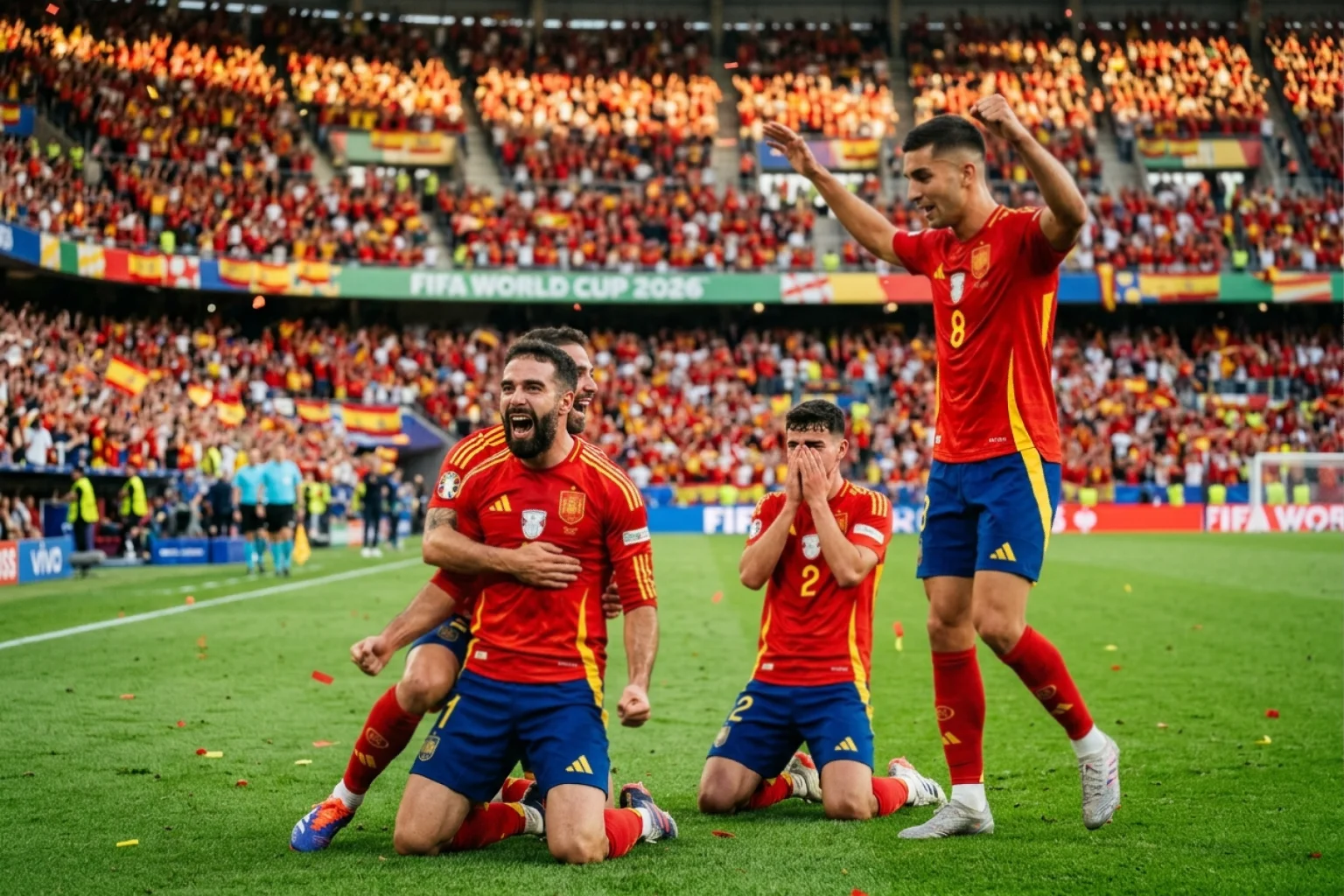
When Spain lifted the Euro 2024 trophy in Berlin, the average age of their starting eleven was twenty-four years old. That statistic captures everything about this generation: youth fused with technical excellence, producing a European Championship victory that looked like a statement of future dominance rather than a peak moment to be preserved. Spain World Cup 2026 betting centers on whether that Euro triumph represents the beginning of an era or a single tournament where everything aligned perfectly.
The 2010 World Cup triumph established Spain as tiki-taka’s apex. The 2012 Euro retention confirmed their dominance. Then came years of decline — early World Cup exits in 2014 and 2022, knockout disappointments at European Championships. The youth movement that produced Euro 2024 success suggests the cycle has reset. This guide examines Spain’s squad composition, Group H challenges, tactical evolution, and where betting value exists for a team entering their second major tournament as champions.
Golden Generation 2.0 — The Youth Movement Delivers
Pedri orchestrates from central midfield with a maturity that belies his age. His Barcelona development under multiple coaches refined close control, passing weight, and positional intelligence that evoke comparisons to Xavi and Iniesta without fully matching their peaks. Pedri dictates tempo, survives pressure through technical excellence, and distributes to attackers with vision that sees solutions before they fully develop. His fitness — historically fragile across injury-interrupted seasons — represents the primary concern for a player whose influence determines Spain’s ceiling.
Gavi provides the combative complement to Pedri’s elegance. His aggression, ball-winning, and progressive carrying add dynamism that Spanish midfields sometimes lack. Gavi’s youth creates variance — brilliant performances alongside anonymous ones — but his ceiling includes controlling World Cup knockout matches through sheer force of will. The Pedri-Gavi partnership represents Spain’s engine room for the next decade.
Lamine Yamal exploded into global consciousness at Euro 2024, becoming the tournament’s youngest-ever scorer and one of its most dangerous attackers. At just eighteen during the 2026 World Cup, Yamal offers dribbling ability, final-ball delivery, and finishing instincts that mark genuine world-class potential. His Barcelona progression since Euro 2024 has confirmed the tournament was not an aberration — this is a generational talent whose development arc suggests peak years ahead rather than behind.
Nico Williams provides explosive width from the opposite flank. His pace, directness, and willingness to attack defenders creates space that others exploit. Williams and Yamal as wide options give Spain attacking variety that pragmatic managers cannot simply defend through organization. One-on-one quality defeats double-teams, and Spain possess it on both flanks.
The striking position offers options without certainty. Álvaro Morata’s experience and international scoring record compete with younger alternatives developing at club level. Ferran Torres provides versatility across the front line. Spain’s system often features a false nine rather than traditional target striker, creating selection flexibility that depends on opponent characteristics.
Defensively, Spain blends experience with emerging quality. Rodri anchors the midfield pivot, providing defensive screening and progressive passing that enable attacking freedom. His Manchester City development under Guardiola refined a game already exceptional, producing arguably the world’s best midfielder at his peak. Center-back partnerships have rotated through qualification, with Robin Le Normand and Aymeric Laporte among options. Fullback positions feature Dani Carvajal’s veteran presence and Alejandro Grimaldo’s attacking thrust. The overall defensive structure prioritizes possession retention that limits opponent opportunities rather than last-ditch defending.
Goalkeeper Unai Simón has established himself since his nervous 2021 performances. Shot-stopping has improved, distribution remains excellent for Spain’s buildup requirements, and tournament experience provides composure. Simón is not among the world’s elite goalkeepers but represents no weakness in a system that limits shot volume against him.
Luis de la Fuente’s coaching tenure produced the Euro 2024 triumph, validating an approach that trusts youth while maintaining tactical discipline. His system emphasizes possession, pressing triggers, and attacking rotations that confuse defensive structures. De la Fuente has built on Spanish traditions while adapting to modern demands — a balance that suggests continued success rather than one-tournament magic.
Squad depth extends beyond the obvious names. Mikel Merino provides midfield options with physical presence and aerial ability. Dani Olmo’s creativity from central positions adds tactical flexibility when Yamal or Williams need rest. Joselu’s experience offers striking alternatives. Spain can field multiple configurations without significant quality drop-offs — a luxury that proves decisive across tournament formats requiring depth utilization over five to seven matches.
The integration of youth has occurred without sacrificing cohesion. Unlike nations where generational gaps create friction, Spain’s young players share Barcelona and national youth team backgrounds that build understanding before senior debuts. This familiarity shows in combination play that requires no introduction — players know each other’s movements through years of development together. The cultural continuity represents an underappreciated advantage that betting markets cannot directly price but certainly affects performance.
Injury management represents a concern given key players’ fragility. Pedri’s injury history, Gavi’s extended absence, and the physical demands on young bodies in compressed tournament schedules all create uncertainty. Spain’s depth provides insurance, but losing Pedri or Yamal to injury would significantly affect their ceiling. Monitoring fitness news approaching the tournament helps adjust betting positions accordingly.
Group H — Uruguay and Saudi Arabia Provide Tests
Spain draws Group H alongside Saudi Arabia, Cape Verde, and Uruguay. The draw includes a 2022 World Cup giant-killer, a debutant nation, and a historical power whose current squad rivals Spain’s quality. Navigation requires attention despite Spain’s favorites status.
Uruguay shares Group H as co-favorites alongside Spain. The two-time World Cup champions have rebuilt around a new generation that includes proven European-based stars and emerging talents. Uruguay’s defensive organization — historically among the world’s most difficult to break down — presents challenges even for Spain’s technical superiority. The Spain-Uruguay fixture likely determines group positioning, with both teams expected to defeat the other two opponents comfortably. This match profiles as the group’s headline event, affecting bracket paths and betting strategies.
Saudi Arabia carries the memory of their 2022 World Cup opening-match victory over Argentina — one of the tournament’s defining upsets. That result demonstrated Saudi ability to produce elite-level performances for specific matches when motivation peaks. Against Spain, Saudi Arabia will attempt similar organized defending and clinical counter-attacking. The probability of repeating their Argentina upset remains low, but dismissing Saudi Arabia entirely ignores recent evidence.
Cape Verde makes their World Cup debut after qualifying through African pathways. The island nation of roughly 500,000 people represents one of football’s great underdog stories. However, squad quality falls short of tournament contention. Cape Verde will defend resolutely and seek set-piece opportunities without threatening Spain for points. This fixture should produce comfortable Spanish victory, with betting interest focusing on margin and totals rather than result uncertainty.
Spain should top the group, with Uruguay the primary challenger for first position. Saudi Arabia’s upset potential introduces minor uncertainty that keeps group advancement from being entirely guaranteed — though actual elimination probability remains negligible. Betting on Spain to win Group H at short prices offers limited value; the Uruguay fixture introduces enough competitiveness to question heavy favorites pricing. Finding Uruguay at longer odds may provide better risk-reward if you believe the head-to-head profiles as unpredictable.
Match scheduling affects tactical preparation and rotation decisions. The order of opponents — whether Spain faces Uruguay first, middle, or last — changes how de la Fuente manages squad loads. Opening against Cape Verde would allow confidence-building before testing Uruguay; closing against Cape Verde with qualification secured could invite rotation. Understanding the exact fixture sequence helps identify where lineup changes might affect match dynamics.
North American venues create travel logistics that affect all European teams. Spain’s resources minimize these challenges through premium accommodation and preparation facilities, but tournament logistics never entirely disappear. Identifying which venues host Spanish matches helps project environmental factors — altitude, temperature, pitch conditions — that may affect match totals and tempo.
Third-place advancement rules create strategic complexity in final group matches. If Spain secure qualification before their third game, rotation could affect lineup quality against remaining opponents. Eight of twelve third-place teams advance, creating scenarios where even a loss might still allow progression. These dynamics affect betting on specific group fixtures and opponent incentives.
Tiki-Taka Evolved — Modern Spanish Football
The 2010-era Spanish dominance featured possession percentages exceeding sixty-five percent, patient buildup, and wearing opponents down through territorial control. Modern Spain maintains possession principles while adding directness that earlier iterations lacked. Yamal and Williams attack space behind defensive lines; transitions happen faster; pressing triggers activate higher. This evolution makes Spain more dangerous against organized defenses that previously absorbed tiki-taka through patience.
Possession statistics remain high — typically fifty-eight to sixty-five percent against competitive opponents — but the purpose differs. Spain now use possession to create attacking opportunities rather than simply denying opponents the ball. Progressive passes, carries into the final third, and shots per match have increased compared to the 2014-2022 decline period. This evolution affects totals betting: Spain matches may produce more goals than historical possession data suggests.
Pressing intensity reaches levels that previous Spanish generations avoided. The high line, coordinated triggers, and recovery speed create turnovers in dangerous areas that prior possession-based systems did not generate. Opponents who cannot play through pressure face long periods without territorial relief. However, this approach creates vulnerability to direct balls behind the high line — a weakness exploited by counter-attacking teams with pace.
Set-piece efficiency has improved markedly. Spain traditionally underperformed from corners and free kicks relative to their general quality. Modern Spain score from dead balls at improved rates, adding dimensions that pure open-play dominance cannot guarantee. Betting on Spain set-piece goals in specific matches captures this evolution at prices calibrated to historical data.
Late-game management reflects attacking mentality more than previous Spanish pragmatism. Leading 1-0, modern Spain often push for second goals rather than protecting narrow advantages. This approach increases totals in Spanish matches and creates variance in scorelines. Unders hitting requires opponents also limiting opportunities, which Spain’s possession denies — a structural tendency toward overs in many Spanish fixtures.
The Rodri factor deserves specific attention. His influence on matches extends beyond statistics through positioning that prevents counter-attacks, passing that sustains possession, and leadership that organizes teammates. Rodri’s absence through injury or suspension would fundamentally change Spain’s profile — a consideration for in-tournament betting if he accumulates cards or suffers fitness issues. No direct replacement exists in the squad for his specific skill set.
Youth energy creates advantages in tournament contexts where physical freshness matters. Older squads tire across thirty-nine-day tournaments; Spain’s young core maintains intensity through later rounds when experienced legs falter. This advantage may not appear in group-stage assessments but compounds through knockout phases where accumulation of ninety-minute efforts taxes bodies and minds.
The psychological profile of young players in pressure moments remains uncertain. Euro 2024 success provides confidence, but World Cup knockout matches carry different weight. Whether Yamal, Pedri, and others handle semi-final or final pressure as effectively as group-stage or early knockout fixtures remains unknown. Historical patterns suggest youth can thrive or crumble — Spain’s trajectory depends on which response materializes.
Spain’s Odds and Market Positioning
Spain typically prices between seven and ten to one for outright tournament winner, reflecting Euro 2024 momentum, squad quality, and the perception of sustainable success rather than single-tournament peak. This pricing represents shorter odds than Spain commanded entering Euro 2024, showing market adjustment to their demonstrated quality.
At eight to one, Spain implies roughly eleven-percent win probability. Given their Euro 2024 triumph, squad age profile, and favorable tournament timing, this probability may undervalue their actual chances. Spain entering prime years rather than declining adds value that aging champions like Argentina cannot claim. Backing Spain at eight to one or longer offers potential positive expected value if you believe their trajectory continues upward.
Group H winner markets price Spain as favorites, typically around 1.60 decimal odds with Uruguay at 2.50 or longer. The competitiveness of the Spain-Uruguay match suggests value may exist on Uruguay at these prices if the fixture profiles as closer to coin-flip than market implies.
Spain to reach semifinals prices around even money or slightly odds-on, reflecting expected group advancement and confidence against early knockout opponents. This market captures Spain’s quality without requiring them to win multiple elimination matches against elite opposition. The semifinal threshold offers cleaner value than outright winner for bettors who want Spain exposure without full commitment.
Player props concentrate on Yamal and Pedri. Yamal’s golden boot odds reflect his scoring ability and expected deep run providing additional matches. Pedri’s assist props capture his creative role in generating chances for teammates. Rodri’s influence on matches — often invisible on scoresheets — makes betting on his individual stats less appealing than backing Spain’s collective performance where his contribution manifests.
Spain clean sheet props deserve consideration against Cape Verde and potentially Saudi Arabia. Their defensive organization limits quality chances, and matches against inferior opponents often produce clean sheets alongside moderate-margin victories like 2-0 or 3-0. These scorelines inform correct-score betting in specific group fixtures.
Cards markets for Spanish players reflect their pressing intensity. Midfielders committing tactical fouls to stop counters accumulate bookings across tournament matches. Gavi’s aggressive style generates yellow cards at elevated rates. Accumulator bets on Spanish midfielders receiving cards capture this tendency at potentially favorable prices across multiple fixtures.
Corners props in Spain matches reflect their territorial dominance. Sustained possession in wide areas produces corner opportunities at above-average rates. Over corner totals in Spanish group matches may price favorably given their attacking width and opponent tendencies to defend deep.
Half-time markets often undervalue Spanish control. Their possession dominance typically produces first-half leads or level scores that favor second-half breakthroughs. Backing Spain to lead at half-time against inferior opponents captures their early control at prices that may not reflect probability.
Value Picks on Spain
After analyzing squad, group dynamics, tactical evolution, and market positioning, several value angles emerge for Spain betting.
Spain to win the tournament at odds longer than eight to one offers genuine value. Their squad age profile suggests multiple World Cups ahead at peak ability, but 2026 represents a legitimate title opportunity with Euro 2024 momentum, favorable group draw, and expanding player development. The price should reflect a team entering their window rather than one defending past glory.
Lamine Yamal to finish top three in Golden Boot voting prices attractively given his expected minutes, finishing ability, and Spain’s likely deep run. Even if he does not win the award, top-three placement offers payouts at prices reflecting uncertainty about his tournament role that domestic and Euro 2024 performances have answered.
Over 2.5 goals in Spain group matches against Cape Verde and Saudi Arabia captures their attacking evolution and opponent limitations. Spain should score multiple goals in both fixtures while defensive lapses — rare but possible — add to totals. These fixtures profile as higher-scoring than Spanish historical averages suggest.
Spain versus Uruguay under 2.5 goals contrasts the above by recognizing both teams’ defensive qualities in high-stakes matches. Uruguay will not open up against Spain; Spain’s possession may dominate without creating abundant chances against organized resistance. This fixture profiles as tactical chess match rather than attacking showcase.
The broader approach to Spain betting involves recognizing their genuine title credentials while avoiding assumption that Euro 2024 success guarantees World Cup repetition. Consecutive major tournament victories remain rare — Spain achieved it in 2010-2012 and few others have matched. Value exists in Spain markets at appropriate prices; overpaying for confirmed quality wastes expected value that patient market selection can capture.
The trajectory argument favors Spain over aging competitors. Argentina’s core players decline; Brazil’s transition continues; France’s next generation replaces established stars. Spain enters with a core approaching peak years rather than preserving past glory. This structural advantage may not appear in single-tournament analysis but compounds across betting portfolios that consider where teams sit in development cycles.
Contrarian positions on Spain become available when market sentiment undervalues them. Unconvincing early group performances, injury scares to key players, or difficult bracket draws could create temporary odds inflation worth exploiting. These moments offer buying opportunities for bettors who recognize Spain’s fundamental quality persists despite short-term concerns.
Spain World Cup 2026 represents the convergence of youth, tactical evolution, and tournament experience that championships require. Whether they convert this opportunity depends on factors beyond analytical prediction — penalty shootout variance, individual brilliance in decisive moments, and the psychological weight of expectation that accompanies favorites. The value lies in identifying prices that underestimate their probability while acknowledging the uncertainty inherent in tournament football.
