
Belgium World Cup 2026 — Odds, Group G Preview & Betting Picks | KICKSTAKE
 Available in US
Loading...
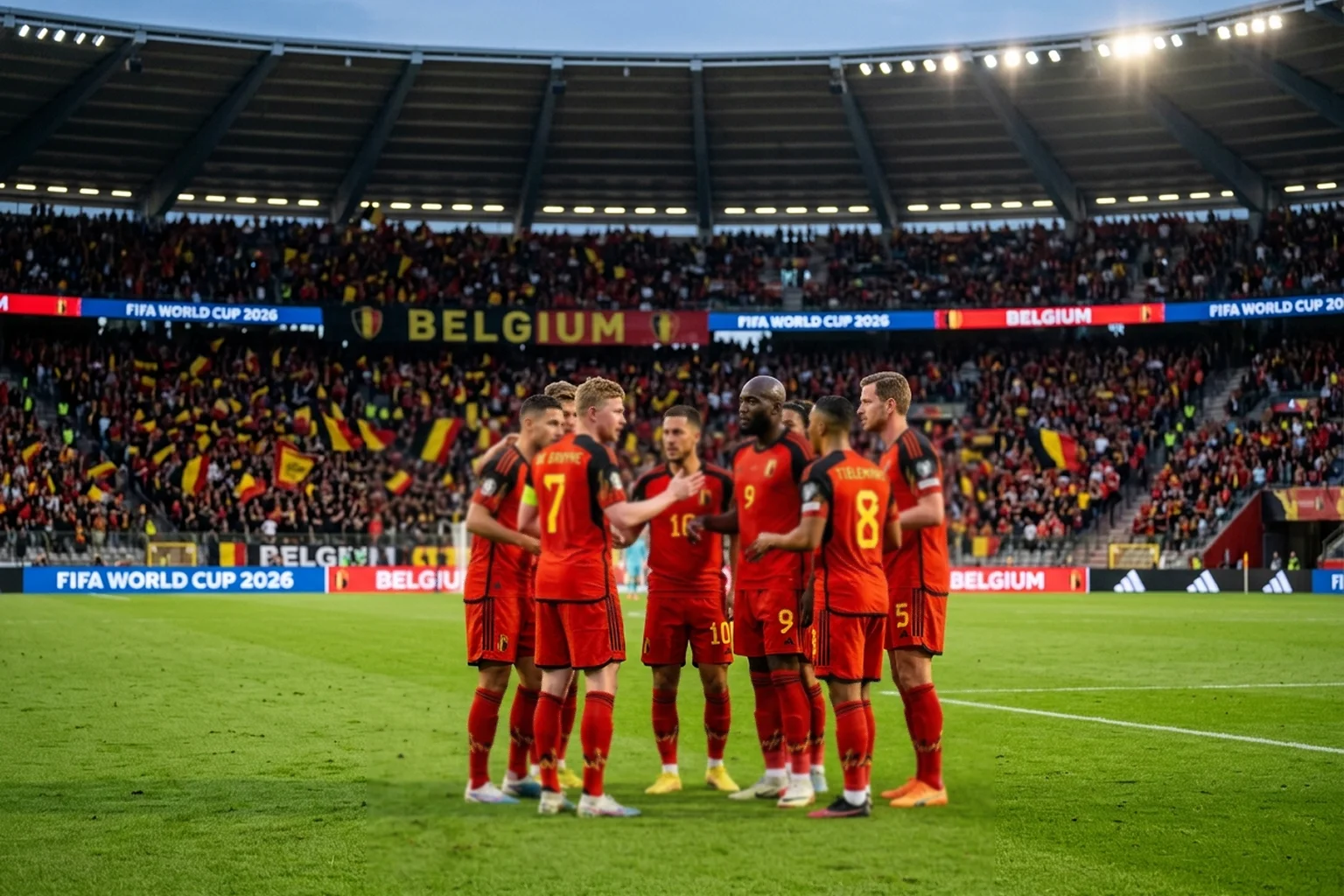
The golden generation that never won gold has reached its twilight. Kevin De Bruyne, Romelu Lukaku, and Thibaut Courtois carried Belgian football to world number one rankings and consistent tournament runs that somehow never produced a trophy. The 2018 semifinal felt like a beginning; now, in 2026, it feels like an ending. Belgium World Cup 2026 betting requires assessing what remains of that generation and whether emerging talents can extend Belgian relevance beyond this final window.
The 2022 World Cup group-stage exit shocked observers expecting another deep run. Morocco, Croatia, and even Canada outplayed a Belgian side that looked exhausted and disconnected. That failure accelerated the transition many thought could wait another cycle. This guide examines where that transition stands, analyzes Group G dynamics, and identifies where betting value exists for a team whose trajectory points downward.
Squad Transition and Key Players
Kevin De Bruyne remains the central figure, but age and injury accumulation affect his capacity for tournament intensity. His Manchester City brilliance has produced domestic trophies and Champions League success; international duty has yielded only near-misses. De Bruyne’s creative vision still exceeds any Belgian peer, but the burst and recovery that younger versions possessed have diminished. His involvement in Belgian buildup remains essential; his ninety-minute durability across seven potential tournament matches creates concern.
Romelu Lukaku’s strike rate for Belgium defies his club inconsistencies. Whatever happens at Roma or his next destination, Lukaku scores for the national team with remarkable reliability. His physical presence, aerial ability, and finishing instincts create focal-point threat that Belgian systems maximize. Lukaku’s fitness and form entering tournaments varies; when sharp, he elevates Belgium significantly.
Thibaut Courtois provides world-class goalkeeping that reduces margin for error in other areas. His shot-stopping and command of the area set standards that few peers match. Courtois’ Champions League heroics for Real Madrid confirm his big-game credentials. Between the posts, Belgium have no weakness — a significant advantage in knockout football where single saves decide advancement.
Jérémy Doku represents the future that must deliver now. His Manchester City move accelerated development already impressive, producing a winger whose pace and dribbling create chaos that organized defenders cannot contain. Doku’s final product — finishing and crossing — remains inconsistent, but his ability to beat defenders generates advantages that teammates can convert. His emergence shifts Belgian identity from controlled possession toward direct attacking threat.
Amadou Onana provides the midfield presence that Axel Witsel once supplied. His physical dominance, aerial ability, and progressive carrying add dimensions that technical players require. Onana’s development at Everton and beyond has confirmed his readiness for major tournaments. His partnership with De Bruyne balances creative license with defensive responsibility.
Defensive personnel has rotated through recent campaigns without establishing settled partnerships. Jan Vertonghen and Toby Alderweireld’s era has ended; replacements have emerged without matching their peak levels. Wout Faes, Zeno Debast, and Arthur Theate compete for center-back spots with varying credentials. This uncertainty affects Belgian defensive reliability in ways that Courtois’ brilliance cannot fully compensate.
Domenico Tedesco’s coaching tenure followed Roberto Martínez’s long reign. His approach emphasizes pressing and vertical transitions over Martínez’s controlled possession. This tactical shift suits younger players better than aging veterans, creating tension between squad composition and playing style. How Tedesco balances generations affects Belgian tournament identity.
Squad depth has diminished alongside the golden generation’s aging. The bench no longer matches starting quality in ways previous Belgian squads enjoyed. Rotation options exist but represent significant drop-offs from first-choice personnel. This limitation affects tournament management where five to seven matches demand squad utilization that Belgium’s depth may not support.
The psychological burden of unfulfilled potential affects squad dynamics. Players who have experienced multiple near-misses carry different mentality than those entering their first major tournament. Whether this manifests as desperate determination or resigned acceptance varies by individual. Belgian responses to pressure moments reveal which mindset prevails.
Set-piece organization has improved under Tedesco’s staff. De Bruyne’s delivery quality and Lukaku’s aerial presence create corner and free-kick threats. Defensive organization on set pieces remains inconsistent, creating vulnerability that quality opponents exploit. This asymmetry affects both-teams-to-score markets in competitive fixtures.
Group G — Egypt, Iran, New Zealand
Belgium draws Group G alongside Egypt, Iran, and New Zealand. The draw lacks elite opposition while featuring teams capable of competitive matches against vulnerable favorites. Belgium should advance; the question involves whether they do so dominantly or with struggle that signals deeper problems.
Egypt represents the primary threat. Mohamed Salah’s presence transforms any opponent into dangerous proposition. His Liverpool form — consistently among the Premier League’s most productive players — carries into international duty where supporting quality often falls short. Egypt versus Belgium profiles as Salah versus De Bruyne, with supporting casts determining which star’s influence prevails. Egyptian defensive organization frustrates technical opponents; Belgian inconsistency could produce an unexpected result.
Iran returns after competitive 2022 performances that included a narrow loss to eventual runners-up Portugal and victory over Wales. The Iranian approach emphasizes defensive discipline and quick transitions — a profile that troubles possession-based opponents who commit numbers forward. Iran versus Belgium will not produce easy Belgian domination; points dropped remain plausible against a side with no fear of favorites.
New Zealand represents Oceania’s qualification through expanded allocation. The All Whites lack the personnel to threaten Group G’s established nations but will compete with intensity that smaller nations bring to World Cup stages. Belgium versus New Zealand should produce comfortable victory, with betting interest focusing on margin and player props rather than result uncertainty.
Belgium should top the group, though Egypt could claim first position if the direct match favors them. Group advancement seems likely barring catastrophic collapse; group-winner positioning affects bracket paths that matter for knockout prospects. Betting on Belgium to win Group G at short prices ignores Egypt’s genuine threat; finding value requires either backing Belgian dominance confidently or identifying underpriced opponents.
Match scheduling affects preparation and rotation decisions. The order of opponents changes how Tedesco manages aging legs that require careful load management. Opening against New Zealand allows confidence-building; opening against Egypt presents immediate test. Understanding fixture sequences helps identify where fatigue or lineup changes might affect outcomes.
North American venues create logistics for European teams. Belgium’s resources provide adequate preparation support, but tournament distances and time zones affect older players more than younger ones. De Bruyne and Lukaku’s capacity for intensity across multiple time-zone-adjusted matches affects Belgian ceiling more than younger squads would experience.
Third-place advancement rules provide insurance that Belgium should not need. Eight of twelve third-place teams advance, meaning even disappointing group results might still allow progression. However, third-place advancement produces harder knockout paths — Belgium need first or second place to optimize their bracket position.
Belgium’s Odds and Market View
Belgium typically prices between fifteen and twenty-five to one for outright tournament winner, significantly longer than their 2018-era pricing when they held the world number one ranking. This reflects realistic assessment of aging core, transitional state, and recent disappointments. The market has adjusted from peak Belgian pricing toward levels that acknowledge decline.
At twenty to one, Belgium implies roughly five-percent win probability. Given their current squad composition and recent trajectory, this pricing may fairly reflect actual chances. Value emerges only if you believe the transition has produced an underrated squad — a difficult argument given visible evidence of decline.
Group G winner markets price Belgium as favorites, typically around 1.70 decimal odds with Egypt at 3.00 or similar. Salah’s presence makes Egypt more threatening than typical African qualifiers. Finding value requires strong opinions about the Belgium-Egypt matchup that historical data cannot definitively inform.
Belgium to reach quarterfinals prices around even money, reflecting expected group advancement plus a Round of 32 win. This market captures potential upside without requiring deep runs that aging squads struggle to produce. The quarterfinal threshold offers cleaner value than semifinals or beyond for teams in transition phases.
Player props concentrate on De Bruyne, Lukaku, and Doku. De Bruyne’s assist props capture his creative role if minutes remain high. Lukaku’s goal props reflect his international scoring record that exceeds club consistency. Doku’s involvement in Belgian attacks creates goal-plus-assist combinations at prices reflecting his inconsistent finishing.
Belgium clean sheet props deserve scrutiny given defensive uncertainties. Courtois provides insurance against high-quality chances, but Belgian organization limits how many saves even he can make. Selective clean sheet backing against New Zealand captures capability without assuming defensive reliability against Egypt or Iran.
Cards markets for Belgian players reflect the pressing intensity Tedesco demands. Midfielders committing tactical fouls and defenders competing physically accumulate bookings. Onana’s aggressive style generates yellow cards at elevated rates.
First goalscorer markets concentrate on Lukaku, but De Bruyne’s shooting from distance and Doku’s running create alternatives at longer odds. Including multiple Belgian attackers in first-scorer portfolios diversifies risk that single-player backing concentrates.
Value Bets on Belgium
After analyzing squad, group dynamics, and market positioning, several value angles emerge for Belgium betting.
Egypt to beat Belgium at odds around 4.00 or higher offers contrarian value. Salah’s individual brilliance creates match-winning potential against any opponent. Belgian defensive uncertainties and aging midfield create vulnerability that Egypt’s counter-attacking approach can exploit. This represents a longshot with genuine upset foundation.
Under 2.5 goals in Belgium versus Egypt reflects both teams’ potential for tactical matches. Egypt will not open up against Belgium; Belgian creation may struggle against organized resistance. Neither profile produces high-scoring affairs when stakes demand concentration.
Romelu Lukaku to score in multiple group matches at accumulator odds captures his international scoring consistency. Three fixtures against beatable opponents — even Egypt — create opportunities that his finishing historically converts. His Belgium record exceeds any concerns club form generates.
Belgium to exit before semifinals at odds around even money captures the realistic trajectory their aging squad suggests. The golden generation’s window has passed; expecting tournament victory ignores visible decline. This fade position profits from Belgian disappointment that recent evidence makes probable.
The broader approach to Belgium betting involves acknowledging that great teams eventually decline. Belgium in 2026 represents the tail end of a cycle that never produced its ultimate achievement. Betting should reflect this reality rather than nostalgia for what the golden generation once represented. Selective fading of Belgian progression markets may offer better value than backing their advancement at prices that still reflect past glories.
The emotional dimension complicates betting analysis. De Bruyne, Lukaku, and Courtois know this represents their final realistic championship window. Whether awareness of finality inspires transcendent performance or creates pressure that undermines execution varies by individual psychology. Belgian responses to adversity — falling behind in matches, facing elimination scenarios — reveal which mental state prevails.
Market sentiment may lag reality in Belgian pricing. The golden generation’s reputation persists beyond current capability. This gap between perception and reality creates betting opportunities where fading Belgian success captures value that backing them does not. Identifying specific markets where this mispricing appears offers better expected value than general Belgian assessment.
