
Germany World Cup 2026 — Betting Guide, Group E Odds & Picks | KICKSTAKE
 Available in US
Loading...
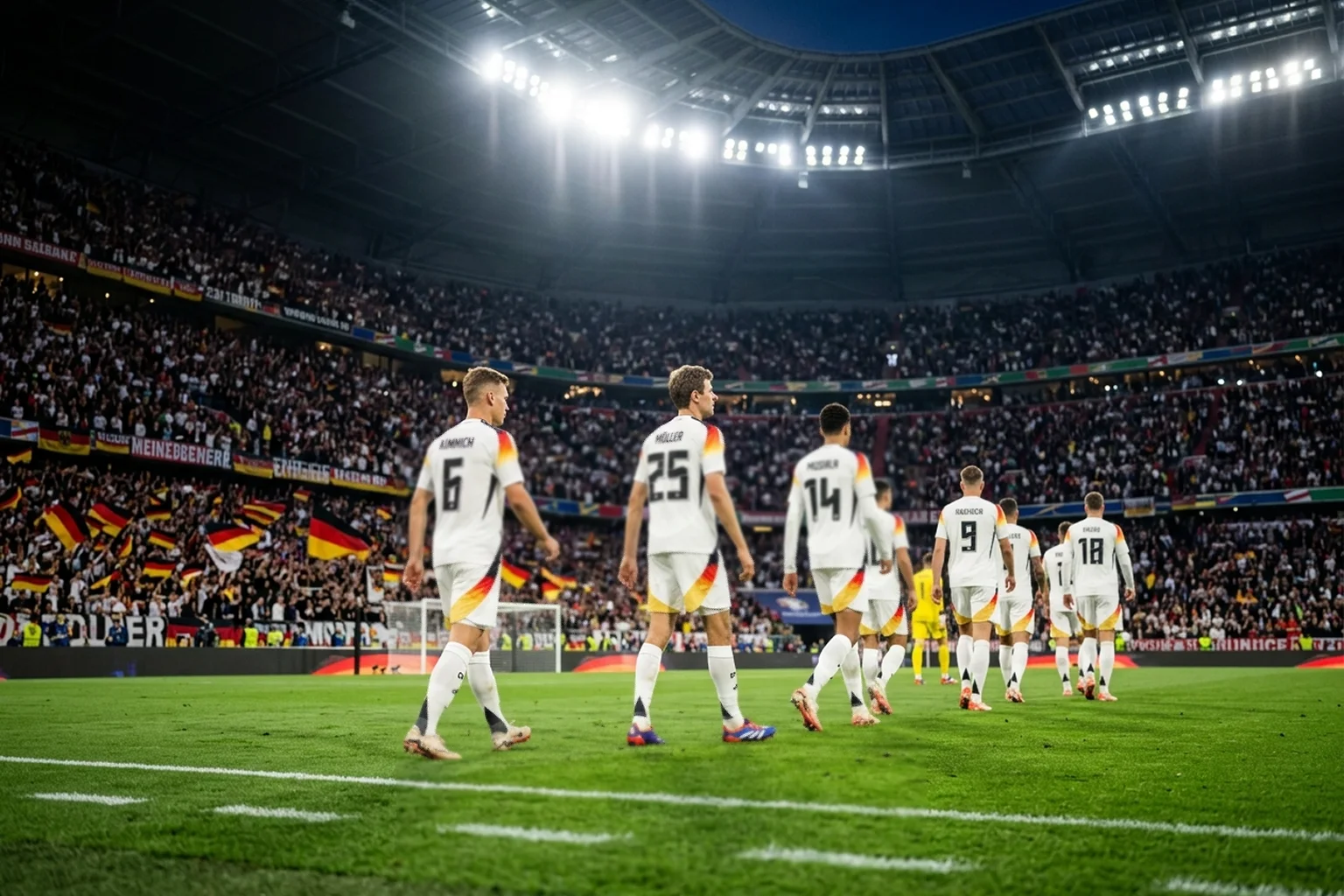
Two consecutive World Cup group-stage eliminations. For any other nation, this might represent expected variance. For Germany — four-time champions, perennial contenders, tournament specialists — the 2018 and 2022 exits shattered assumptions about their reliability. I watched both collapses unfold: the South Korea loss that sealed 2018’s fate, the Japan and Costa Rica results that produced history’s cruelest repetition in 2022. Germany World Cup 2026 betting begins with acknowledging that something fundamental broke in their tournament DNA — and asking whether repair is possible.
The redemption narrative writes itself. Host the 2024 European Championship, rebuild confidence on home soil, then arrive in North America with restored belief and refined squad. Germany’s Euro 2024 run ended in the quarterfinals against Spain, but the performances suggested progress rather than continued decline. This guide examines whether that progress translates to World Cup contention, analyzing squad composition, Group E dynamics, and where betting value exists for a team whose pricing reflects uncertainty about their true level.
Squad Rebuild and the Search for Identity
The generation that won 2014 has fully departed. No Müller, no Neuer, no Kroos anchoring the team. Germany enters 2026 with a squad that must establish its own tournament identity rather than extending past glory. This transition creates both risk and opportunity — risk of inexperience, opportunity for fresh approaches unburdened by recent failures.
Florian Wirtz represents the creative future. His Bayer Leverkusen development produced a player capable of unlocking defenses through dribbling, vision, and shooting from central positions. Wirtz’s Euro 2024 emergence confirmed his readiness for major tournaments, though knockout-round performances will define whether he can carry Germany when moments matter most. For prop betting, Wirtz’s involvement in German goals — either scoring or assisting — offers angles across group and knockout markets.
Jamal Musiala provides the X-factor that German football historically lacked. His ball-carrying, close control, and ability to beat defenders one-on-one resembles Brazilian flair more than German efficiency. Musiala can produce individual moments that decide tight matches — the type of quality that World Cup knockouts demand. His partnership with Wirtz creates a double threat from central and wide positions that opponents cannot simply mark out of games.
Kai Havertz has evolved into a more consistent attacking presence since his Arsenal move. His positioning, aerial ability, and link-up play provide the central striking option that Germany previously lacked between Miroslav Klose’s retirement and Havertz’s maturation. Goals come in bunches for Havertz rather than consistently, creating variance in individual scoring props that might offer value at elevated prices.
The midfield pivot position remains contested. Joshua Kimmich’s versatility allows deployment in midfield or defensive positions. Robert Andrich’s emergence provides defensive solidity. The balance between control and security depends on opponent characteristics, with tactical flexibility representing a strength that structured systems cannot replicate.
Defensive personnel has improved since the 2022 disaster. Antonio Rüdiger brings Real Madrid pedigree and physical presence to center-back. Jonathan Tah’s development provides partnership options. Fullback positions feature both defensive and attacking profiles depending on match requirements. The back line that looked chaotic in 2022 has stabilized through selection refinement and tactical adjustment.
Goalkeeping transitions away from Manuel Neuer’s era toward Marc-André ter Stegen’s established quality. Ter Stegen’s shot-stopping and distribution match Neuer’s prime, providing no downgrade at the position. His tournament experience with Barcelona and previous Germany camps ensures readiness for World Cup pressure.
Julian Nagelsmann’s coaching represents the tactical evolution Germany needed. His attacking principles, high pressing, and flexibility contrast with predecessors’ more conservative approaches. Nagelsmann’s youth — he remains among the tournament’s youngest coaches — brings modern tactical ideas without the institutional constraints that limited previous German staffs. Whether his intensity translates to tournament management remains unproven, but early evidence suggests Germany have found their next long-term coach.
Squad depth provides options that previous German tournaments lacked. Leroy Sané’s pace and directness offer attacking alternatives. Niclas Füllkrug’s physical presence creates Plan B options when technical approaches fail. Maximilian Mittelstädt’s emergence at left-back adds defensive stability. Germany can field multiple configurations without dramatic quality drop-offs — a luxury that tournament formats requiring five to seven matches demand.
The captaincy and leadership transition affects squad dynamics beyond tactical considerations. Previous German teams featured established voices — Schweinsteiger, Lahm, Neuer — whose authority commanded respect. Current leadership structures remain developing, with Gündoğan’s departure and Kimmich’s contested status creating uncertainty. How leadership manifests in pressure moments affects performances that betting cannot directly predict but certainly influences.
Set-piece organization has improved under Nagelsmann’s staff. Germany’s aerial threat from corners and free kicks creates opportunities that previous iterations failed to generate. Rüdiger’s heading ability, Havertz’s positioning, and Kimmich’s delivery combine for dead-ball threat that adds dimensions to predominantly open-play attacking approaches.
Pressing intensity defines Nagelsmann’s tactical identity. Germany under his direction win the ball high, transition quickly, and create chances before defenses organize. This approach produces goals in bunches when working correctly but leaves defensive vulnerability when opponents bypass the press. The high-risk profile affects totals betting and explains variance in German scorelines under his tenure.
Group E — Favorable Draw for Redemption
Germany draws Group E alongside Côte d’Ivoire, Ecuador, and Curaçao. The draw appears favorable — perhaps too favorable, inviting the complacency that contributed to previous failures. No traditional powerhouse lurks, but underestimating African and South American opponents has cost Germany before.
Côte d’Ivoire represents the group’s primary threat. African Cup of Nations champions in 2023, the Ivorian squad blends European-based stars with tactical organization that troubled continental rivals. Sébastien Haller provides scoring threat; Franck Kessié offers midfield presence. Côte d’Ivoire will not fear Germany after watching their recent World Cup failures. This fixture carries genuine upset potential that betting markets may undervalue.
The Ivorian approach emphasizes defensive solidity followed by rapid transitions. Their pace on counter-attacks can punish teams that commit numbers forward — exactly Germany’s profile under Nagelsmann’s pressing system. The tactical matchup profiles as dangerous for Germany, with Côte d’Ivoire’s strengths aligned against German weaknesses. Understanding this dynamic helps identify where upset value exists beyond general underdog pricing.
Ecuador returns to the World Cup after their 2022 appearance produced respectable results including a victory over host Qatar. The South American side plays with intensity and organization that frustrates more talented opponents. Moisés Caicedo’s midfield presence anchors a team capable of competing against anyone for ninety minutes. Germany versus Ecuador profiles as competitive rather than comfortable, with result uncertainty exceeding what German favorites pricing implies.
Ecuador’s physical approach creates challenges for technical teams. Their pressing intensity and willingness to compete in aerial and ground duels disrupts rhythm that possession-based sides depend upon. Germany’s midfield, while talented, has shown vulnerability to physical opponents who deny time and space. This matchup tests German composure under pressure in ways that Curaçao cannot replicate.
Curaçao makes their World Cup debut as one of the tournament’s smallest nations. The Caribbean island qualified through CONCACAF pathways, representing a historic achievement regardless of results. However, squad quality falls well short of tournament contention. Germany versus Curaçao should produce comfortable victory, with betting interest focusing on margin, totals, and player props rather than result uncertainty.
Germany should top the group, though Côte d’Ivoire or Ecuador could claim first position if Germany stumbles. The 2018 and 2022 precedents — where supposedly comfortable groups produced elimination — create psychological pressure that other nations avoid. Every group match carries additional weight for Germany, testing whether they have overcome the mental fragility that produced recent disasters.
Match scheduling affects preparation and rotation decisions. The order of opponents — whether Germany faces their toughest test first, middle, or last — changes tactical approaches. Opening against Curaçao would allow confidence-building before testing Côte d’Ivoire; opening against the African champions presents immediate test of readiness. Understanding the exact fixture sequence helps identify where upset potential or comfortable wins most likely occur.
North American venues create logistics that affect all European teams. Germany’s resources minimize these challenges through premium accommodation and preparation facilities, but tournament travel distances exceed typical European competition. Time zone adjustment, climate acclimatization, and training facility quality all factor into preparation assessments. Identifying which venues host German matches helps project environmental effects on match dynamics.
Third-place advancement possibilities add strategic complexity to final group matches. Eight of twelve third-place teams advance, creating scenarios where Germany could survive group-stage struggles even without finishing top two. However, third-place advancement produces harder knockout paths, making first-place finishes more valuable than raw advancement. This dynamic affects betting on group-stage margins and opponent incentives in final-round fixtures.
Four Stars — The Weight of History
Germany’s World Cup record includes four titles (1954, 1974, 1990, 2014), four runner-up finishes, and consistent advancement to later rounds across decades. This pedigree creates expectations that recent failures have violated. Understanding this context matters for betting because it shapes how Germany approaches tournaments and how markets price their outcomes.
The 2014 triumph represented peak German efficiency — squad depth, tactical flexibility, and decisive finishing that peaked with the 7-1 semifinal destruction of Brazil. That team featured players in their prime coordinated by a coach who understood tournament management. The subsequent decade has failed to replicate those conditions, producing decline rather than continuation.
Recent failures demand explanation beyond bad luck. South Korea in 2018 and Japan/Costa Rica in 2022 revealed structural problems: defensive disorganization, midfield vulnerability, and psychological fragility when matches required composure. Whether Nagelsmann’s tenure has addressed these issues remains uncertain — Euro 2024 provided limited evidence given the quarterfinal exit.
For betting purposes, Germany’s historical reliability no longer applies. Pricing Germany as automatic group qualifiers ignores 2018 and 2022 evidence. Pricing Germany as title contenders requires faith in rebuilds that remain unproven. The uncertainty creates market opportunities where prices may overreact to either historical reputation or recent failures rather than current squad assessment.
The psychological dimension deserves attention that statistical analysis cannot capture. German players entering the 2026 tournament carry collective memory of two consecutive group-stage failures. Whether this motivates superior performance or creates anxiety that undermines execution remains unknown. The pressure of expectation affects athletes differently — some rise, others crumble. Germany’s response to pressure in early group matches will signal which pattern emerges.
Media scrutiny in Germany following the 2018 and 2022 failures has intensified to levels that affect player psychology. Public criticism, coaching controversies, and federation politics created environments that distracted from footballing preparation. Nagelsmann’s appointment aimed to reset culture alongside tactics. Whether that cultural shift has succeeded becomes testable only through tournament performance under pressure.
Historical patterns suggest Germany eventually corrects decline periods. The post-2000 struggles that produced early Euro 2004 exit led to the rebuilding process that created 2014’s champions. Perhaps 2018-2022 represents a similar correction period from which Germany emerge stronger. Betting on this pattern requires faith in institutional processes that have worked before — not certainty, but educated probability assessment that informs risk tolerance.
Germany’s Odds and Market Value
Germany typically prices between ten and fifteen to one for outright tournament winner, longer than traditional German positioning but shorter than their recent results justify. This pricing reflects market uncertainty about where Germany truly sits — still among the elite or fallen to secondary-contender status.
At twelve to one, Germany implies roughly seven-to-eight-percent win probability. Given their squad talent, favorable draw, and Nagelsmann’s coaching, this probability may undervalue their actual chances if the rebuild has succeeded. However, if fundamental problems persist, Germany may again fail to advance from a group they should dominate. The binary nature of this assessment creates volatility that bet sizing should reflect — smaller positions accommodate uncertainty.
Group E winner markets price Germany as heavy favorites, often below 1.50 decimal odds. Finding value requires backing Côte d’Ivoire or Ecuador at longer odds if you believe German fragility persists. Alternatively, fading German group winner entirely captures uncertainty that heavy favorites pricing does not reflect.
Germany to reach quarterfinals prices around even money, reflecting expected group advancement plus a Round of 32 win. This market captures upside if Germany performs while limiting exposure to knockout-round variance against elite opponents. The quarterfinal threshold offers cleaner risk-reward than outright winner or deeper progression markets.
Player props concentrate on Musiala, Wirtz, and Havertz. Musiala’s dribbling and shooting create goal-involvement opportunities. Wirtz’s creative role generates assists. Havertz’s central positioning produces scoring chances that his finishing converts inconsistently. Understanding each player’s expected contribution helps identify value in individual markets.
German clean sheet props deserve scrutiny given their recent defensive issues. Matches against Curaçao should produce clean sheets; matches against Côte d’Ivoire and Ecuador carry more uncertainty. Selectively backing clean sheets against inferior opponents captures Germany’s capability without assuming defensive reliability that recent evidence does not support.
Cards markets for German players reflect their pressing intensity. Midfielders committing tactical fouls to stop counters accumulate bookings across tournament matches. Kimmich’s aggressive positioning generates yellow cards at elevated rates. Accumulator bets on German midfielders receiving cards capture this tendency at potentially favorable prices across multiple fixtures.
Corners props in German matches reflect their attacking dominance against inferior opponents. Sustained possession and wide play produce corner opportunities. Over corner totals in matches against Curaçao and Ecuador may price favorably given Germany’s expected territorial control.
First goalscorer markets concentrate on obvious names — Musiala, Wirtz, Havertz — but set-piece threat from defenders creates value at longer odds. Rüdiger’s aerial ability and Kimmich’s delivery produce corner goals at rates that justify consideration in specific match contexts where Germany expect territorial dominance.
Half-time markets reflect Germany’s tendency toward slow starts followed by second-half dominance under Nagelsmann. Backing level or trailing scores at half-time followed by German victory captures patterns that individual match pricing may not reflect. This in-play approach manages risk while exploiting statistical tendencies.
Value Bets on Germany
After analyzing squad, group dynamics, historical context, and market positioning, several value angles emerge for Germany betting.
Germany to reach semifinals at odds around three to one offers exposure to their rebuilt quality without requiring tournament victory. If Nagelsmann’s work has succeeded, Germany should advance from Group E and win early knockout matches against beatable opponents. The semifinal threshold captures this potential while limiting exposure to final-four matches against elite opposition.
Côte d’Ivoire to beat Germany at significant longshot odds — perhaps 6.00 or higher — offers contrarian value. The African champions possess quality capable of producing results against vulnerable opponents. Germany’s recent group-stage failures provide precedent. This bet loses more often than it wins but offers asymmetric payoff when upsets materialize.
Jamal Musiala to score two or more goals across the group stage prices attractively given his expected minutes, shooting frequency, and central role. Three group matches against beatable opponents create volume opportunities that his finishing quality should convert. This threshold remains achievable if Germany perform to capability.
Under 2.5 goals in Germany versus Côte d’Ivoire reflects both teams’ potential for tactical matches where defensive organization limits chances. Neither profile produces high-scoring affairs when stakes demand concentration. This fixture may profile as cagier than German attacking reputation suggests.
The broader approach to Germany betting involves accepting uncertainty rather than pretending it does not exist. Germany could reclaim elite status through a deep World Cup run; Germany could suffer a third consecutive group-stage failure. Betting strategies should position for both possibilities rather than committing entirely to either narrative. Diversified positions — some backing German success, others hedging against continued failure — manage risk that concentrated bets cannot accommodate.
The tournament structure affects German value calculations. The forty-eight-team format requires six or seven matches for tournament victory rather than seven in previous formats. Germany’s depth provides advantage in extended tournaments where squad rotation matters. If they survive the group stage — the phase where recent failures occurred — their resources position them favorably for knockout-round demands.
Contrarian opportunities emerge when market sentiment shifts. If Germany win their opening match convincingly, prices will compress toward shorter favorites territory. If they struggle early, prices will inflate toward longshots. Both reactions may overcorrect, creating buying or fading opportunities that patient bettors can exploit. Monitoring market movements throughout the group stage helps identify these moments.
Germany World Cup 2026 represents a genuine crossroads. The path leads either toward restoration of their tournament identity or confirmation that recent failures reflect structural decline. Betting on this uncertainty requires calibrated positions that capture upside without overexposing to downside. The four stars on their crest demand respect; the recent results demand caution. Threading that needle defines profitable Germany betting across market types.
