
Netherlands World Cup 2026 — Odds & Group F Betting Picks | KICKSTAKE
 Available in US
Loading...
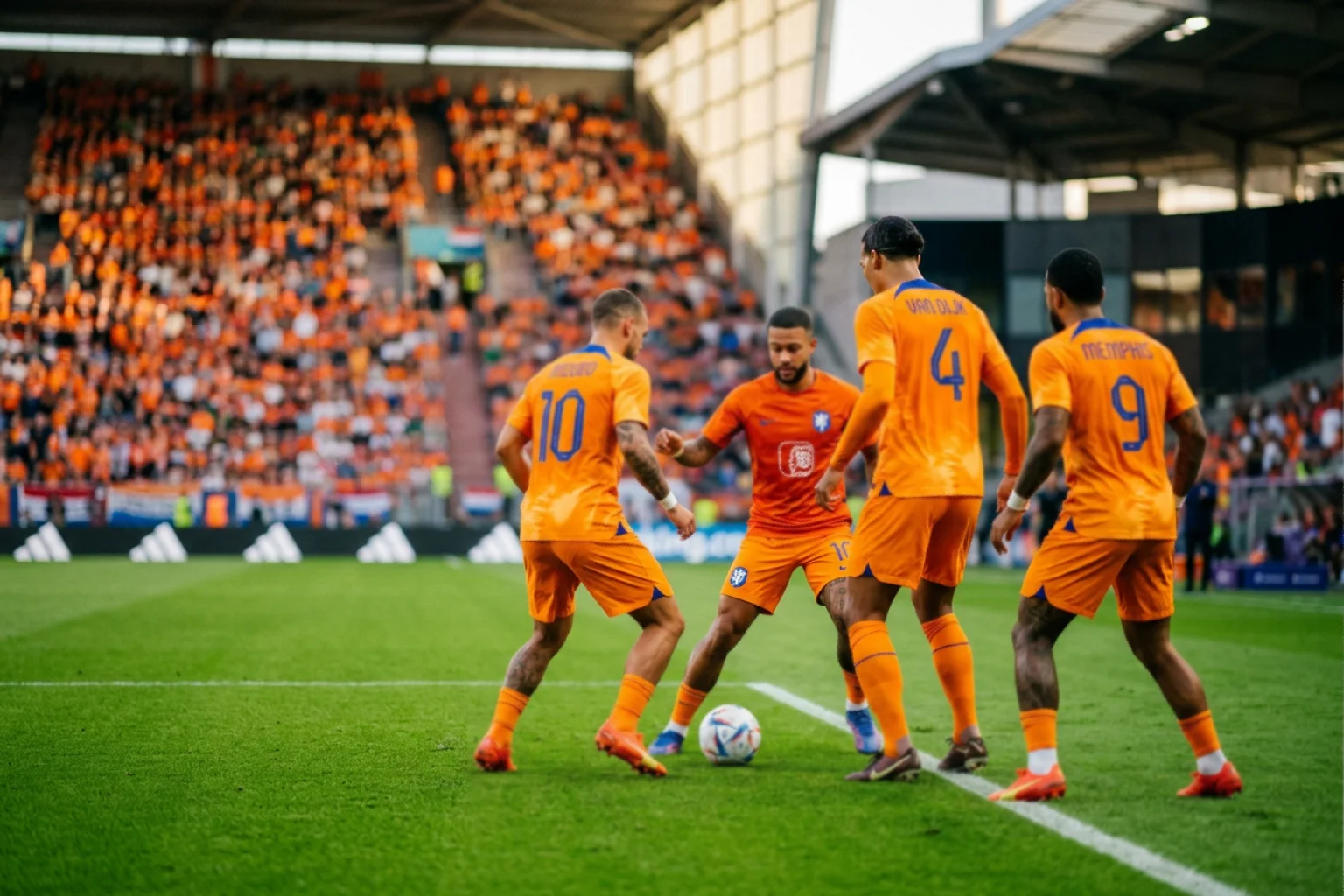
Three World Cup finals without a single trophy. That statistic haunts Dutch football more than any other. I have watched the Netherlands produce some of the tournament’s most beautiful football — the total football of 1974, the counter-attacking brilliance of 2010 — only to fall at the final hurdle. Netherlands World Cup 2026 betting carries this historical weight: a nation capable of reaching any stage but cursed to stumble before lifting the trophy.
The Oranje enter 2026 in transition. The generation that reached the 2014 semifinal and 2022 quarterfinal has aged or departed. Virgil van Dijk provides defensive leadership but approaches thirty-five. Memphis Depay’s fitness concerns persist. Yet emerging talents offer hope that another competitive run remains possible. This guide examines squad composition, the challenging Group F draw, and where betting value exists for a team whose ceiling and floor span wide ranges.
Key Players and Squad Depth
Virgil van Dijk remains the defensive anchor whose presence transforms Dutch organization. His aerial dominance, positioning, and leadership set the tone for everything behind him. However, age concerns linger — World Cup demands differ from club campaigns where rest and rotation preserve older bodies. Van Dijk’s fitness through a potential seven-match tournament affects Netherlands’ ceiling significantly.
Cody Gakpo has emerged as the primary attacking threat. His 2022 World Cup performances — three group-stage goals — announced his arrival at the highest level. Subsequent development at Liverpool refined his game, adding consistency to explosive potential. Gakpo’s ability to score and create from wide positions makes him the focus of Dutch attacking play and the primary target for prop betting markets.
Frenkie de Jong’s midfield orchestration drives Dutch possession. His Barcelona development produced a player capable of carrying the ball through pressure, distributing with precision, and controlling tempo against any opponent. De Jong’s injury history creates concern about tournament availability, but when fit, he elevates Netherlands from competitive to genuinely threatening.
Xavi Simons represents the next generation of Dutch creativity. His Paris Saint-Germain breakthrough and subsequent loan success demonstrated technical quality that Netherlands’ system can maximize. Simons operates between lines, creating and scoring in equal measure. His inclusion adds dynamism that older Dutch squads sometimes lacked.
Defensive depth beyond Van Dijk varies in quality. Nathan Aké provides reliable partnership options. Jurriën Timber’s development adds athleticism and versatility. Fullback positions feature Denzel Dumfries’ attacking thrust balanced against defensive responsibilities. The overall defensive picture depends heavily on Van Dijk’s availability and fitness — without him, Netherlands become significantly more vulnerable.
Goalkeeping remains uncertain following Jasper Cillessen’s decline from previous tournament levels. Bart Verbruggen’s emergence offers youth and potential without established tournament credentials. The goalkeeper position represents a question mark rather than strength for Dutch tournament prospects.
Ronald Koeman’s second managerial tenure brings familiarity with Dutch football culture and expectations. His first spell produced the 2014 semifinal run; his return aims to replicate or exceed that achievement. Koeman’s pragmatic approach — defensive organization enabling counter-attacking quality — suits tournament football where control matters more than dominance.
Squad depth varies by position. Midfield options beyond de Jong include Teun Koopmeiners’ box-to-box contribution and Marten de Roon’s defensive screening. Attacking alternatives feature Memphis Depay’s experience alongside Gakpo and emerging talents still establishing international credentials. The bench provides options without matching starting quality — a limitation in extended tournaments requiring rotation.
The Dutch total football tradition creates expectations that current squads rarely match. Modern Netherlands teams play more pragmatically than their 1974 or 1988 predecessors, prioritizing solidity over spectacle. This evolution suits tournament football but disappoints purists expecting flowing attacks. Betting analysis should reflect current tactical identity rather than historical mythology.
Set-piece organization represents a Dutch strength that statistics sometimes overlook. Van Dijk’s aerial presence creates corner and free-kick threats that add dimensions to open-play quality. Delivery from de Jong and wide players generates opportunities that pure possession metrics miss. Backing Dutch set-piece goals in specific matches captures this strength at prices calibrated to overall offensive data.
Group F — Nobody Wants This Draw
Netherlands draws Group F alongside Japan, Tunisia, and Sweden. This group lacks the “Group of Death” label that would accompany elite opponents, yet features competitive teams capable of producing any result. Group F projects as one of the tournament’s most unpredictable, with every match carrying genuine uncertainty.
Japan represents the primary threat. Their 2022 World Cup victories over Germany and Spain announced Japan as genuine tournament contenders rather than perennial group-stage exits. The Japanese squad combines European-based talent with tactical discipline that frustrates superior opponents. Japan versus Netherlands profiles as the group’s headline match, likely determining who finishes first versus second.
Tunisia returns after competitive 2022 performances that included a draw against Denmark and near-miss against France. The North African side defends with organization and competes physically against more technical opponents. Tunisia versus Netherlands will not produce an easy Dutch victory — points dropped here remain plausible.
Sweden qualified through European playoffs, demonstrating resilience in knockout formats. The Swedish approach emphasizes defensive solidity and set-piece threat, creating low-scoring affairs that frustrate possession-based opponents. Sweden versus Netherlands profiles as tactical chess where quality should prevail but margins remain thin.
Netherlands should advance from Group F but may not top it. Japan’s quality makes group-winner markets genuinely competitive. Tunisia and Sweden both offer upset potential in individual matches. Betting on Netherlands to win the group at short prices ignores genuine uncertainty; finding value requires either backing Dutch dominance at fair odds or identifying underpriced opponents.
Match scheduling affects tactical preparation for all Group F teams. The order of opponents changes how Koeman manages squad rotation and tactical approaches. Opening against Japan presents immediate test of readiness; closing against Japan with qualification potentially secured could invite rotation. Understanding fixture sequences helps identify where upset potential concentrates.
North American venues create logistics for European teams. Netherlands’ resources minimize travel and preparation challenges, but tournament logistics never entirely disappear. Time zone adjustment from Central European schedules, climate differences, and training facility quality all factor into preparation assessments that affect early-match performances.
The Group F dynamic creates a situation where any finishing order remains plausible. Netherlands topping comfortably, Japan advancing first, or wild-card results from Tunisia and Sweden all represent reasonable scenarios. This uncertainty affects group-winner betting more than advancement betting — Netherlands should qualify regardless of which team finishes first.
Third-place advancement rules add strategic complexity. Eight of twelve third-place teams advance, creating scenarios where Group F’s third-place finisher could still progress. This affects final group-match intensity and opponent incentives when advancement is secured but positioning remains contested.
Dutch Odds Across Markets
Netherlands typically prices between twelve and eighteen to one for outright tournament winner, reflecting their history of deep runs alongside inability to actually win. This pricing captures the contradiction: good enough to beat anyone, historically unable to beat everyone consecutively.
At fifteen to one, Netherlands implies roughly six-to-seven-percent win probability. Given their squad quality, challenging group draw, and historical knockout struggles, this pricing may fairly reflect their actual chances. Value emerges only if you believe this squad represents an improvement over previous nearly-winning iterations — a difficult argument given the transition phase they occupy.
Group F winner markets price Netherlands as slight favorites over Japan, typically around 2.00 decimal odds with Japan at 2.80 or similar. These prices reflect genuine uncertainty about the group’s outcome. Finding value requires strong opinions about head-to-head matchups that historical data cannot definitively inform.
Netherlands to reach quarterfinals prices around even money, capturing expected group advancement plus a Round of 32 win. This market offers cleaner value than deeper progression because it avoids the knockout-round variance that has historically plagued Dutch campaigns. Quarterfinal threshold represents achievable goals; semifinal or beyond requires historical pattern-breaking.
Player props concentrate on Gakpo and de Jong. Gakpo’s scoring record in 2022 creates expectations that pricing reflects — finding value requires expecting him to exceed that impressive baseline. De Jong’s influence manifests through assists and key passes rather than goals, making assist props more attractive than scoring markets.
Van Dijk receiving cards markets reflect his aerial involvement and occasional tactical fouls. His physicality generates bookings at rates that accumulator bets can capture. Selectively backing Van Dijk cards in physical matches adds dimension to Dutch betting portfolios.
Netherlands clean sheet props vary by opponent. Tunisia and Sweden fixtures should produce higher clean sheet probability than Japan, where both teams possess attacking quality. Selective clean sheet backing captures defensive capability without assuming consistency against all opponents.
Corners markets in Dutch matches reflect their attacking patterns. Possession and wide play generate corner opportunities at above-average rates. Over corner totals in Netherlands matches may price favorably given their territorial tendencies against defensive opponents.
First goalscorer markets beyond Gakpo include Van Dijk’s set-piece threat. His aerial ability on corners creates scoring opportunities at longer odds than probability suggests. Including Van Dijk in first-scorer portfolios adds diversification beyond obvious attacking targets.
Value Bets on Netherlands
After analyzing squad, group dynamics, and market positioning, several value angles emerge for Netherlands betting.
Japan to beat Netherlands at odds around 3.50 or higher offers contrarian value. Japan’s 2022 victories over Germany and Spain demonstrated their ability to defeat European opponents through tactical discipline and clinical finishing. Netherlands’ defensive uncertainties beyond Van Dijk create vulnerability that Japan could exploit.
Under 2.5 goals in Netherlands versus Japan reflects both teams’ potential for tactical matches where defensive organization limits chances. Neither profile produces high-scoring affairs when stakes demand concentration. This fixture profiles as cagier than either team’s attacking reputation suggests.
Cody Gakpo to score in multiple group matches at accumulator odds captures his 2022 form continuation expectations. Three group matches against beatable opponents — even Japan — create opportunities for a player who thrives in international competition. His tournament scoring record justifies backing continuation.
Netherlands to reach semifinals at odds around four to one offers exposure to their tournament-run capability without requiring the title-winning finish that history denies them. The semifinal threshold — which they have reached multiple times — represents achievable ambition that captures Dutch quality without requiring unprecedented success.
The broader approach to Netherlands betting involves acknowledging their tournament competence without assuming they can convert deep runs into actual titles. Three finals without a trophy establishes the pattern; betting against that pattern requires stronger evidence than current squad composition provides. Value exists in progression markets and specific match scenarios; outright winner backing demands discounts that markets rarely offer.
Historical patterns shape expectations that current squad must overcome. Netherlands have reached major tournament finals or semifinals repeatedly, only to fall short at decisive moments. Whether this reflects bad luck, psychological weakness, or opponent quality varies by analysis. For betting purposes, progression markets capture Dutch quality while avoiding the final-stage variance that history suggests works against them.
The transition phase creates uncertainty that affects pricing. Veteran leaders aging out, emerging talents still developing, and coaching continuity all factor into assessments that markets must price. Netherlands could exceed expectations if youth development accelerates; they could disappoint if defensive fragility beyond Van Dijk materializes. Managing this uncertainty through position sizing and market selection matters more than conviction in specific outcomes.
