
Japan World Cup 2026 — Odds, Group F Preview & Betting Tips | KICKSTAKE
 Available in US
Loading...
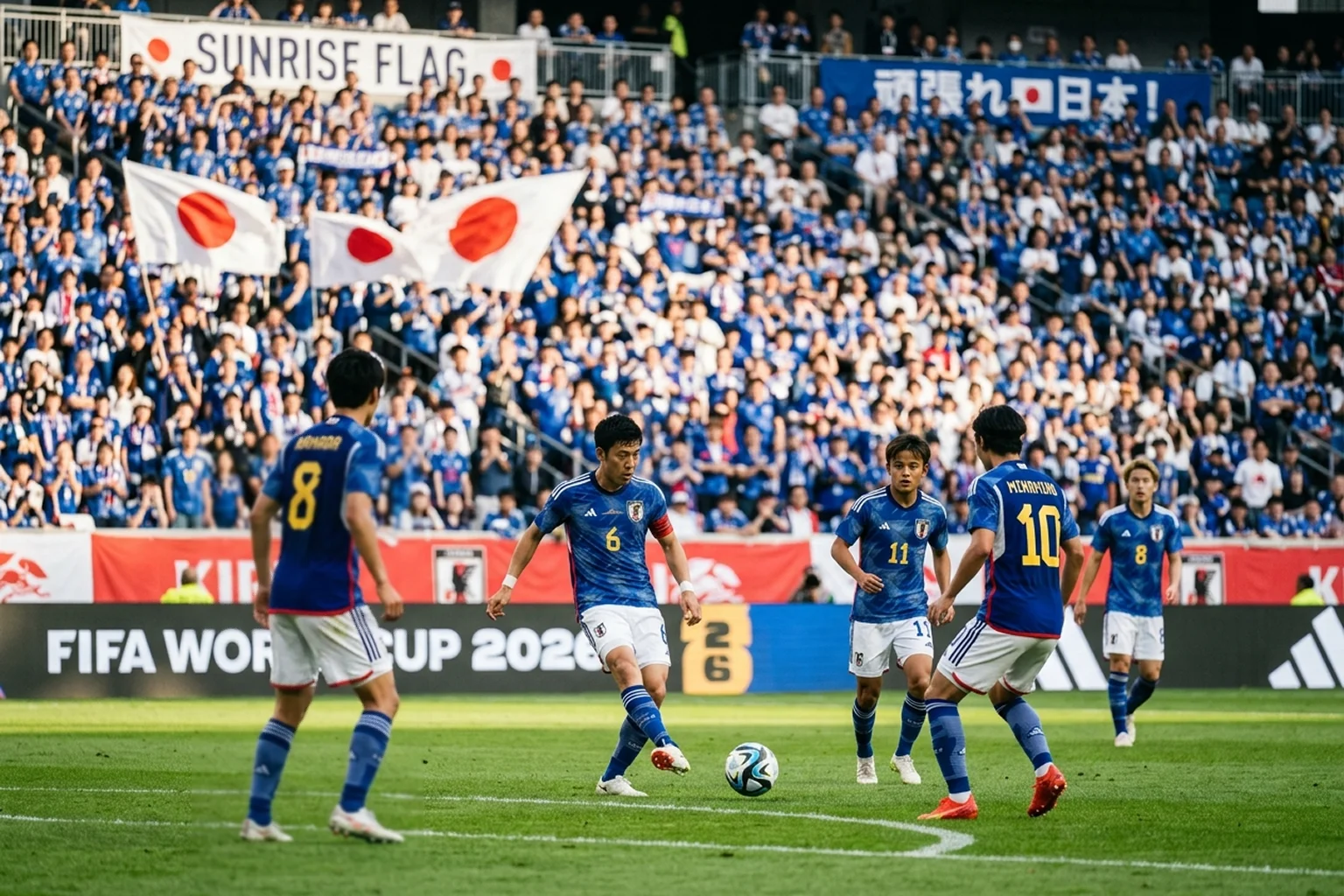
Germany defeated. Spain defeated. Two giants slain in group stages before heartbreak on penalties against Croatia. Japan’s 2022 World Cup demonstrated capabilities that previous generations could not have imagined. The Samurai Blue have assembled their most European-based squad in history, featuring players from the Bundesliga, Premier League, and top leagues across the continent. Japan World Cup 2026 betting captures this evolution from hopeful Asian qualifiers to genuine dark-horse contenders.
The quarter-final ceiling that Japanese football has never broken remains the target. Six World Cup appearances, three Round of 16 exits on penalties or extra time — Japan know how to compete at this level without yet knowing how to break through. This guide examines Japanese squad composition, Group F dynamics featuring Netherlands, and where betting value exists for a team whose trajectory points toward breakthrough even as psychological barriers persist.
Squad and Key Players
Takefusa Kubo represents the technical ceiling that Japanese development has reached. His Real Sociedad career has produced a creative player whose dribbling, passing, and goal contribution match any European peer. Kubo’s ability to unlock defenses through individual skill adds a dimension that Japanese teams historically lacked — the capacity to create something from nothing when collective patterns stall.
Kaoru Mitoma’s Brighton breakthrough elevated Japanese football’s global profile. His direct running, precise finishing, and ability to beat defenders one-on-one create attacking threat that organized defenses cannot prevent through positioning alone. Mitoma’s Premier League experience at elite level provides composure that tournament pressure tests.
Wataru Endo anchors midfield with Liverpool pedigree that few Asian players can claim. His defensive positioning, ball-winning, and distribution create the platform that attacking talents require. Endo’s tactical intelligence suits the disciplined Japanese approach while his Premier League adaptation demonstrates capability against elite opposition.
Takehiro Tomiyasu’s versatility across the back line provides defensive options that tactical flexibility requires. His Arsenal career refined a game capable of playing center-back, right-back, and left-back at Premier League level. Tomiyasu’s availability and fitness directly correlate with Japanese defensive stability.
Ritsu Doan provides wide attacking threat that complements Kubo and Mitoma. His Bundesliga and subsequent career produced a winger whose directness and work rate suit Japanese collective approach. Doan’s tournament experience across multiple competitions adds composure that newer squad members lack.
Hajime Moriyasu’s coaching has produced Japan’s most successful period of international football. His management of European-based players, tactical flexibility, and tournament preparation yielded 2022 results that exceeded expectations. Moriyasu understands how to maximize Japanese strengths while accepting limitations that honest assessment reveals.
Squad depth reflects the European development pathway that Japanese football has cultivated. Players across Bundesliga, Ligue 1, and other leagues provide rotation options that maintain quality levels. The bench represents genuine alternatives rather than dramatic drop-offs — essential for tournament runs that demand squad utilization.
The cultural dimension shapes Japanese tournament approach. Collective commitment, tactical discipline, and relentless work rate characterize Japanese play regardless of individual talent levels. This cultural foundation persists even as European development adds technical dimensions that previous generations lacked.
Physical conditioning represents Japanese advantage that often goes unnoticed. The ability to maintain intensity across ninety minutes and into extra time reflects preparation standards that some opponents cannot match. This conditioning advantage matters in tournament football where accumulated fatigue affects late-match performance.
Group F — Netherlands, Tunisia, Sweden
Japan draws Group F alongside Netherlands, Tunisia, and Sweden. The draw features elite European opposition, African qualifiers, and Scandinavian competitors. This group presents challenges where Japanese quality must prove itself against varied styles.
Netherlands represents the headline challenge. The Dutch possess squad quality that exceeds Japanese capabilities across most positions. Netherlands versus Japan creates a fixture where Dutch favorites status reflects genuine superiority. Japanese upset requires defensive discipline, transition efficiency, and finishing quality that their inconsistency rarely produces simultaneously.
Tunisia brings African competitiveness that Asian qualifiers must respect. The Eagles of Carthage possess organization and physicality that matches Japanese collective approach. Tunisia versus Japan profiles as competitive without clear favorite — a fixture where either result remains plausible depending on which collective approach prevails.
Sweden returns after playoff qualification, demonstrating resilience that knockout formats demand. The Scandinavians lack the elite quality of previous Swedish generations while maintaining the organization and physicality that characterize Nordic football. Japan versus Sweden produces competitive matches where technical quality may favor Japan.
Japan should advance from Group F, likely competing with Netherlands for first position. The Netherlands fixture determines group positioning; Tunisia and Sweden matches should produce sufficient points for advancement. Betting on Japan to top the group requires expecting victory over Netherlands — unlikely but not impossible given 2022 upset precedent.
North American venues present familiar challenges for Asian teams. Time zone adjustment from Japanese schedules affects early-match performances. Travel distances between match locations require logistical management. These factors matter most in opening fixtures before full acclimatization occurs.
Match scheduling affects tactical preparation significantly. The order of opponents changes how Moriyasu manages squad rotation and physical loads. Opening against Tunisia or Sweden allows confidence-building before facing Netherlands; opening against Netherlands presents immediate elite test.
Third-place advancement rules provide insurance Japan should not need given group composition. Eight of twelve third-place teams advance — but Japanese quality should secure top-two positioning without requiring mathematical assistance from other groups.
The Group of Death narrative may apply to Group F. Netherlands, Japan, Tunisia, and Sweden all possess competitive quality that makes prediction difficult. This group could produce any combination of advancing teams, creating variance that betting markets may not fully capture.
Japan’s Odds
Japan typically prices between twenty and thirty-five to one for outright tournament winner, reflecting Asian quality alongside realistic ceiling assessment. This pricing acknowledges Japanese improvement while recognizing that championship requires defeating elite opponents across multiple knockout rounds — something Japanese football has never achieved.
At twenty-five to one, Japan implies roughly four-percent win probability. Given their 2022 group-stage performances against Germany and Spain, maintained squad quality, and continued European development, this pricing may undervalue their actual ceiling. Value exists if you believe quarter-final breakthrough finally occurs.
Group F advancement markets price Japan around 1.60 for qualification, reflecting competitive group alongside challenging Netherlands fixture. Finding value requires backing Japanese group victory at longer odds if you believe Dutch vulnerability creates upset opportunity.
Japan to reach quarterfinals prices around 3.00, capturing expected group advancement plus knockout breakthrough. This market captures the specific target that Japanese football has not achieved — value exists if you believe this generation finally breaks through.
Player props concentrate on Kubo, Mitoma, and attacking contributors. Kubo’s goal-involvement props capture his creative role. Mitoma’s scoring props reflect his direct running and finishing. Both players’ involvement in Japanese attacks creates combination props worth exploring.
Japan clean sheet props offer value against Tunisia and Sweden where collective organization should limit quality chances. The Netherlands fixture presents lower probability where elite attacking quality threatens Japanese defensive structure.
Cards markets for Japanese players reflect their disciplined approach. Tactical fouls prevent counter-attacks but Japanese discipline limits reckless challenges. This tendency creates value in under cards markets for Japanese fixtures.
Corners props in Japanese matches reflect their possession approach. Technical buildup generates corner opportunities at steady rates. Over corner totals may price favorably in fixtures where Japanese control seems assured.
Both teams to score props vary by fixture. Netherlands matches profile for BTTS given quality on both sides; Tunisia and Sweden matches depend on fixture flow and Japanese finishing efficiency.
Value Bets and Angles
After analyzing squad, group dynamics, and market positioning, several value angles emerge for Japan betting.
Japan to beat Netherlands at odds around 5.00 or higher captures proven upset capability. The 2022 victories over Germany and Spain demonstrate Japanese ability to defeat elite European opposition. This market offers contrarian value based on demonstrated rather than theoretical capability.
Under 2.5 goals in Japan versus Netherlands reflects both teams’ potential for tight tactical chess. Japanese defensive organization meets Dutch possession dominance in a fixture where goals come at a premium. This total often prices near even money when probability favors the under.
Japan to reach quarterfinals at odds around 3.00 captures the breakthrough potential. Six World Cups without reaching quarter-finals creates narrative pressure; this generation possesses the quality to break through. The market captures achievable Japanese performance at prices that may undervalue demonstrated capability.
Kaoru Mitoma to score in at least one group match at reasonable odds captures his finishing quality across three fixtures. Tunisia and Sweden offer scoring opportunities that his directness and finishing should convert at least once.
The broader approach to Japan betting involves respecting proven giant-killing capability while acknowledging knockout limitations. Group-stage success against elite opponents does not automatically translate to knockout advancement. Value exists in progression markets at appropriate prices; outright backing requires accepting the psychological barrier that has prevented Japanese breakthrough.
Historical patterns suggest Japan outperform group-stage expectations before disappointing in knockout rounds. Three consecutive Round of 16 exits — to Turkey 2002, Paraguay 2010, Croatia 2022 — demonstrate the ceiling that this generation aims to break. Whether psychological factors or squad quality causes these exits affects assessment.
The European development pathway has transformed Japanese football. Previous generations featured domestic-based players with limited elite-level experience. Current squads feature players from Premier League, Bundesliga, and top leagues whose daily training prepares them for World Cup intensity. This evolution suggests breakthrough potential that historical limitations may not predict.
Japanese betting suits bettors who appreciate collective discipline over individual brilliance. Organized play, relentless pressing, and tactical commitment characterize Japanese football regardless of opponent quality. Understanding this stylistic consistency helps select appropriate markets — progression, clean sheets, and under totals rather than high-scoring attacking props.
The penalty shootout factor deserves specific consideration. Japan’s knockout exits have frequently involved spot-kicks where fortune plays significant role. If Japanese progression markets reach penalty shootouts, outcomes become less predictable than ninety-minute assessment suggests. This variance affects position sizing for knockout progression bets.
