
2026 World Cup Groups — Betting Guide to All 12 Groups | KICKSTAKE
 Available in US
Loading...
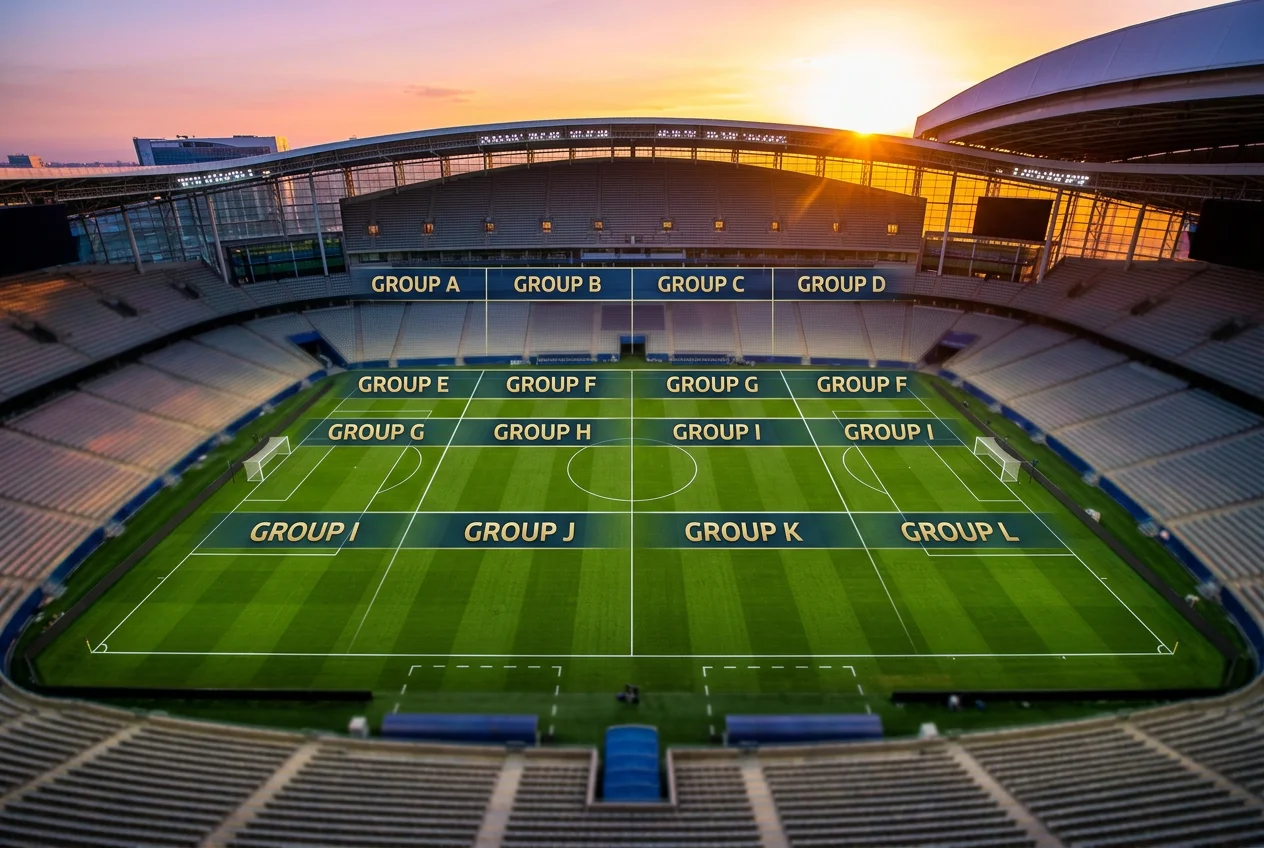
The draw ceremony in Zürich lasted ninety minutes, produced twelve groups, and immediately reshaped every betting market for the 2026 World Cup. Within seconds of each ball revealing a team’s fate, odds flickered across sportsbooks worldwide. Argentina to win the tournament shortened when Group J paired them with Algeria, Austria, and Jordan rather than a European powerhouse. England’s outright odds lengthened slightly when Group L placed Croatia — 2018 finalists, 2022 semi-finalists — directly in their path. Canada’s odds to top Group B improved when Switzerland emerged as their toughest opponent rather than a Tier 1 heavyweight.
Group-stage composition determines more than initial advancement — it shapes knockout-round pathways, recovery time between matches, and travel logistics across three host nations spanning six time zones. A team that cruises through a weak group with minimal exertion enters the Round of 32 fresher than one that fought three intense battles just to survive. The 48-team format creates twelve groups of four, where the top two finishers advance automatically and the eight best third-place teams earn additional knockout spots. This expanded qualification pathway changes everything about group-stage strategy.
I’ve organized this guide to move from structural understanding through group-by-group analysis to actionable betting strategies. The groups aren’t equal — difficulty varies dramatically based on composition — and identifying which groups favor underdogs versus chalk matters enormously for group-winner markets, advancement props, and individual match betting throughout the opening phase.
| Group | Teams | Difficulty Rating | Key Storyline |
|---|---|---|---|
| A | Mexico, South Korea, South Africa, Czechia | 2/5 | Opening match hosts |
| B | Canada, Switzerland, Qatar, Bosnia & Herzegovina | 2/5 | Canada’s home group |
| C | Brazil, Morocco, Haiti, Scotland | 3/5 | 2022 rematch tension |
| D | USA, Paraguay, Australia, Türkiye | 3/5 | Co-host pressure |
| E | Germany, Côte d’Ivoire, Ecuador, Curaçao | 2/5 | German redemption |
| F | Netherlands, Japan, Tunisia, Sweden | 4/5 | Group of death |
| G | Belgium, Egypt, Iran, New Zealand | 2/5 | Golden generation finale |
| H | Spain, Saudi Arabia, Cape Verde, Uruguay | 4/5 | Spain-Uruguay blockbuster |
| I | France, Senegal, Norway, Iraq | 3/5 | Haaland’s debut |
| J | Argentina, Algeria, Austria, Jordan | 2/5 | Defending champions |
| K | Portugal, Colombia, Uzbekistan, DR Congo | 3/5 | Two attacking powers |
| L | England, Croatia, Ghana, Panama | 4/5 | 2018 semi-final rematch |
How the 48-Team Group Stage Works
FIFA’s decision to expand the World Cup from 32 to 48 teams required reinventing the group-stage structure entirely. The mathematics of tournament design don’t accommodate every number gracefully — 48 divided by 4 produces twelve groups, but twelve doesn’t create clean knockout brackets the way eight or sixteen does. The solution introduces complexity that previous World Cups didn’t require.
Twelve groups of four teams each play a round-robin format where every team faces every other team in their group once. Three matches per team over approximately twelve days determine group standings based on points — three for a win, one for a draw, zero for a loss. Ties in points fall to goal difference, then goals scored, then head-to-head results, then fair play points, then drawing of lots.
The top two teams from each group advance automatically to the Round of 32 — that’s twenty-four teams through direct qualification. The remaining eight knockout spots go to the best third-place finishers across all twelve groups. This means a team finishing third with four points might advance while a third-place team with three points goes home, depending on results in other groups.
The best-third-place pathway creates strategic complexity that previous World Cups lacked. A team sitting on three points after two matches might calculate that a draw in their final match secures enough points for advancement as a third-place finisher, depending on results elsewhere. This introduces conservative play in matches that would otherwise demand aggression. Bettors who understand these incentives can exploit markets where conventional “must-win” logic doesn’t apply.
Group winners and runners-up follow predetermined knockout pathways. Winner of Group A plays a best-third-place team. Runner-up of Group A plays runner-up of Group B. The bracket is fixed before the tournament begins, meaning the draw already determines which teams might meet in quarter-finals and semi-finals if they advance as expected. Identifying favorable and unfavorable pathways shapes futures betting strategy before a ball is kicked.
The group stage runs from June 11 to June 26 — sixteen days featuring forty-eight matches across all three host nations. Most groups complete their schedule within five days, with minimal rest between fixtures. The condensed timeline rewards squad depth and fitness management. Teams that rotate effectively maintain freshness for knockout rounds; teams that exhaust their best eleven during group play fade when intensity escalates.
Venue distribution matters for logistical analysis. Groups concentrate in geographic clusters to minimize travel — Canadian venues host primarily Group B matches, Mexican venues handle Groups A and C opening fixtures, and American venues spread across the remaining groups. Teams playing consecutive matches in the same city gain advantages over those crossing time zones between fixtures.
Groups A–D — The Americas and Co-Hosts
The tournament opens at Estadio Azteca on June 11 when Mexico faces South Africa in Group A. That venue selection carries deliberate symbolism — Azteca has hosted two World Cup finals and countless legendary moments. Mexico enters as heavy group favourites, though their historic inability to advance past the Round of 16 in seven consecutive tournaments hangs over every Mexican World Cup campaign.
Group A — Mexico, South Korea, South Africa, Czechia
Mexico and South Korea separated from the field as the group’s top two seeds, with South Africa and Czechia filling the remaining slots through African qualification and European playoffs respectively. The absence of a Tier 1 European or South American power makes Group A one of the tournament’s more accessible draws — no team enters with outright championship expectations.
Mexico’s path to the knockout rounds should be straightforward. El Tri possess clear quality advantages over all three opponents and play two of three group matches on Mexican soil at Estadio Azteca. Their opening match against South Africa carries minimal upset risk despite the occasion’s magnitude. The June 18 match against South Korea in Houston represents their toughest test — Korean counterattacking speed has troubled Mexican defenses historically.
South Korea brings Son Heung-min to what may be his final World Cup. The Tottenham captain carries Korean hopes almost single-handedly, and his performance will determine whether South Korea challenges Mexico for the group’s top spot or settles for second place. Korea’s qualification campaign demonstrated defensive solidity that limits blowout risk against superior opponents.
South Africa returns after a sixteen-year World Cup absence. Bafana Bafana lack the star power of their 2010 hosting squad and enter with modest expectations of competitive performances rather than advancement. Czechia arrived through the playoff path, suggesting a squad that barely exceeded the minimum threshold for qualification.
Group B — Canada, Switzerland, Qatar, Bosnia and Herzegovina
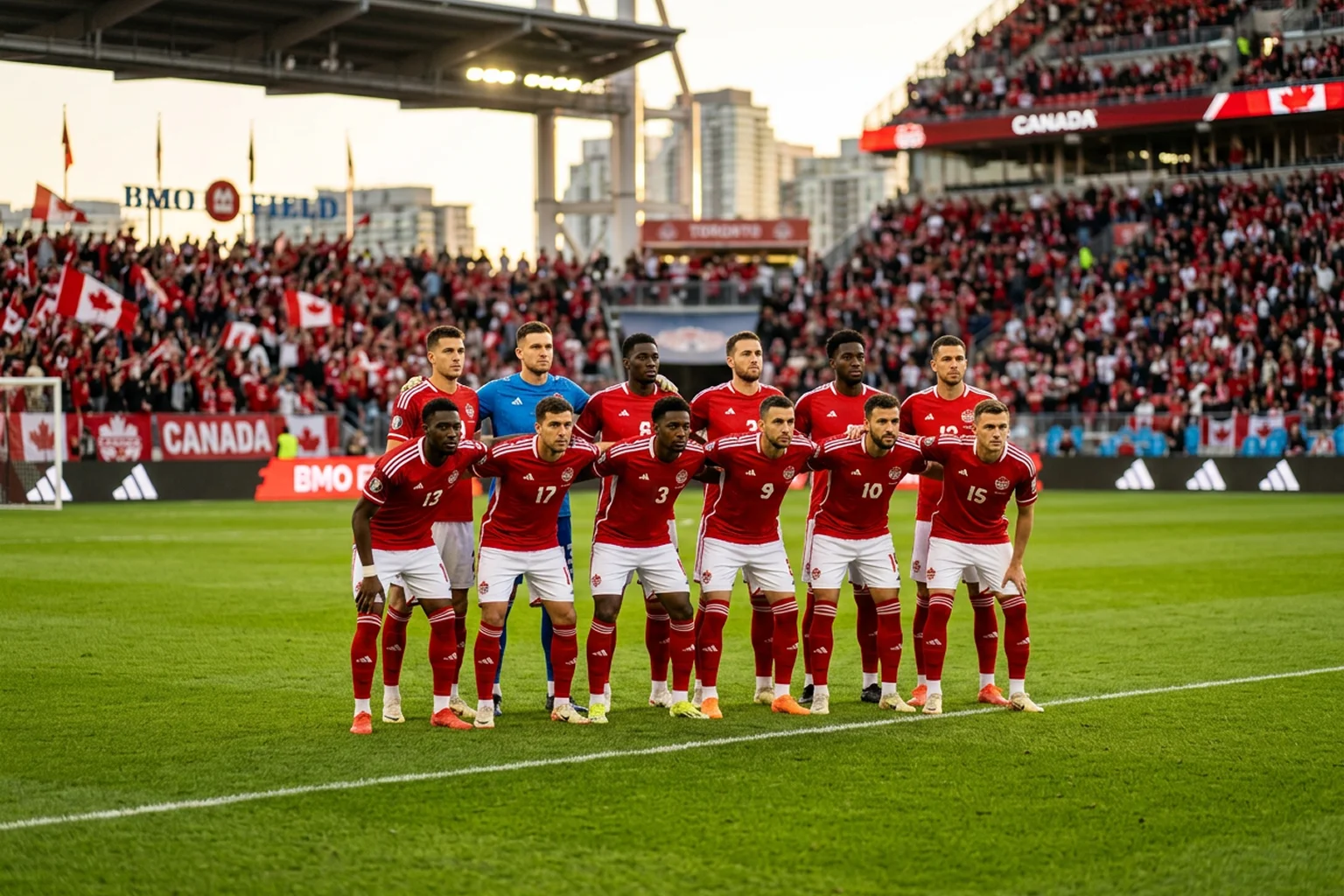
Group B belongs to Canada. All three Canadian matches occur on home soil — BMO Field in Toronto for the opener against Bosnia and Herzegovina, BC Place in Vancouver for matches against Qatar and Switzerland. No host nation has received a more favorable group-stage setup in recent World Cup history. The question isn’t whether Canada advances but whether they top the group.
Switzerland represents the primary obstacle to Canadian group supremacy. The Swiss have qualified for eight consecutive major tournament knockout rounds, a streak built on organization and consistency rather than spectacular talent. Granit Xhaka captains a squad that won’t intimidate opponents but equally won’t beat itself. The June 24 Switzerland-Canada match at BC Place likely determines first place.
Qatar enters with memories of their disastrous 2022 hosting performance — three losses, one goal scored, seven conceded, the worst showing by any host nation in World Cup history. The 2026 squad must prove that result was an aberration rather than a reflection of genuine limitations. Group B offers redemption opportunities against opponents more comparable to Qatar’s actual level than the Netherlands and Ecuador were in 2022.
Bosnia and Herzegovina qualified through European playoffs, making them the group’s fourth seed by default. The Bosnian golden generation of Edin Džeko and Miralem Pjanić has largely passed, leaving a transitional squad that secured qualification through collective organization rather than individual brilliance. Their ceiling is third place with potential best-third-place advancement; their floor is three losses.
Group C — Brazil, Morocco, Haiti, Scotland
Group C pairs Brazil with Morocco — a rematch of competitive 2022 quarter-final opponents that ended 1-0 in Morocco’s favor. That result announced African football’s arrival at the highest tournament level, and Morocco enters 2026 determined to prove it wasn’t a one-tournament peak. Brazil, meanwhile, hasn’t won a World Cup knockout match since their 2022 loss to Croatia on penalties.
Brazil should advance from Group C regardless of the Morocco result. The Seleção possess individual talent that overwhelms Haiti and Scotland even if tactical cohesion hasn’t reached championship levels. Vinícius Júnior, Rodrygo, and Endrick form an attacking core that any opponent must respect. Brazil-Morocco on matchday two becomes the group’s marquee fixture and potentially the match that determines first place.
Morocco’s 2022 run — victories over Belgium, Spain, and Portugal en route to a semi-final appearance — established them as genuine contenders rather than overachieving underdogs. Achraf Hakimi and the defensive structure that limited opponents to minimal chances remain intact. Morocco can beat Brazil over ninety minutes and has demonstrated exactly that capacity.
Scotland qualifies for consecutive major tournaments under Steve Clarke, a feat that once seemed impossible for the Tartan Army. Scottish pragmatism and defensive discipline produced results against Germany and Spain during Euro 2024, suggesting they can compete against Brazil without embarrassment even if victory seems unlikely. Haiti returns after a fifty-two-year World Cup absence, with their primary goal being competitive performances rather than results.
Group D — USA, Paraguay, Australia, Türkiye
The United States enters as co-hosts with expectations that exceed any previous American World Cup campaign. Group D offers a realistic path to the knockout rounds — no Tier 1 opponents, no historical nemeses, just three teams that America should handle if their European-based core performs to potential. Failure to top this group would constitute significant underperformance.
American venues host all Group D matches, giving the USMNT effective home advantage throughout the group stage. Christian Pulisic, Weston McKennie, and Tyler Adams form a spine that has played at the highest European club levels. The gap between American talent and American World Cup results has frustrated fans for decades. This generation must close that gap or face the familiar accusations of tournament underachievement.
Türkiye qualified through European playoffs following a Euro 2024 quarter-final run that briefly reignited Turkish football optimism. Arda Güler’s emergence as a Real Madrid regular gives Türkiye a genuine star, but the supporting cast remains inconsistent. Turkey versus USA becomes the group’s decisive fixture — both teams expect to advance, and first place likely determines knockout pathway favorability.
Australia proved in 2022 that the Socceroos belong at World Cups, reaching the Round of 16 before falling to eventual champions Argentina. Paraguay qualifies from South American qualification without the star power of previous Guaraní generations. Both teams represent credible opponents that could complicate American advancement if the hosts underperform.
Groups E–H — Europe’s Heavyweights
Four European powers — Germany, Netherlands, Spain, and Belgium — anchor Groups E through H. Each enters with championship aspirations at varying levels of credibility. Their group-stage compositions range from favorable (Germany’s Group E includes a debutant) to brutal (Spain shares Group H with Uruguay). Understanding these dynamics shapes both advancement props and outright futures.
Group E — Germany, Côte d’Ivoire, Ecuador, Curaçao
Germany drew the tournament’s weakest group on paper. Curaçao’s population of 150,000 makes them the smallest nation ever to qualify for a World Cup — every German home match attracts more spectators than Curaçao’s entire population. Ecuador and Côte d’Ivoire provide legitimate competition, but neither should prevent German advancement as group winners if Die Mannschaft performs to baseline expectations.
The German narrative entering 2026 centers on redemption. Back-to-back group-stage exits in 2018 and 2022 humiliated a nation that considers World Cup quarterfinals a minimum standard. Julian Nagelsmann’s appointment and the 2024 home Euros semifinal run suggested the corner had been turned. Group E offers Germany an opportunity to rebuild confidence through dominant performances before knockout-round pressure arrives.
Côte d’Ivoire won the 2024 Africa Cup of Nations on home soil, demonstrating tournament-winning capacity that shouldn’t be dismissed. Whether that form transfers to World Cup competition against European opposition remains uncertain. Ecuador qualified by beating Brazil during South American qualification — a result that demands respect beyond typical CONCACAF expectations.
Curaçao represents the tournament’s ultimate underdog story. The Dutch Caribbean island qualified through CONCACAF pathways against all demographic logic. Their matches carry symbolic importance regardless of scoreline — every minute on the World Cup stage validates a football culture that seemed permanently excluded from global competition. Betting markets price Germany-Curaçao spreads above four goals for a reason.
Group F — Netherlands, Japan, Tunisia, Sweden
Group F earned the “group of death” designation because no team can feel confident about advancement. Netherlands enter as slight favourites, but Japan’s 2022 victories over Germany and Spain suggest they can beat any European opponent on a given day. Tunisia and Sweden both reached knockout rounds in recent tournaments. Every match matters; every result carries advancement implications.
Netherlands fields perhaps their strongest squad since the 2014 World Cup third-place finish. Virgil van Dijk commands the defense at elite levels, Frenkie de Jong provides midfield control, and the Dutch attacking options create problems for any opponent. Ronald Koeman’s pragmatic approach prioritizes results over aesthetics — this Netherlands side grinds out victories rather than overwhelming with total football.
Japan’s European-integrated squad represents the best the Asian Football Confederation has ever produced at a World Cup. Players from the Premier League, Bundesliga, La Liga, and Serie A compose a starting eleven that stunned Germany and Spain during the 2022 group stage. Japan’s challenge is sustaining that level across three matches rather than peaking for individual upsets.
Tunisia consistently competes at World Cups without advancing — the Eagles of Carthage have never won a knockout-round match. Sweden returned through playoffs after missing the 2022 tournament entirely, fielding a younger squad that hasn’t proven itself at this level. Group F guarantees drama because all four teams can realistically finish anywhere from first to fourth.
Group G — Belgium, Egypt, Iran, New Zealand
Belgium’s golden generation faces its final World Cup opportunity in what should be a manageable group. Kevin De Bruyne at 34 and Romelu Lukaku at 33 still possess quality that exceeds most opponents, but the supporting cast that once ranked Belgium as FIFA’s number one nation has aged out or regressed. Group G tests whether residual class can overcome diminishing depth.
Egypt brings Mohamed Salah to a group stage where his individual brilliance could determine outcomes. The Pharaohs lack comparable quality in most positions, but Salah moments can swing matches against any opponent. Egypt’s defensive organization must limit chances while Salah creates magic in transition — a formula that works against some opponents and fails against others.
Iran represents the tournament’s most politically charged participant. Team Melli qualified through Asian pathways and brings defensive organization that frustrates technically superior opponents. New Zealand enters as Oceania’s sole representative, carrying minimal advancement expectations but determined to improve on their 2010 performance of three draws and no victories.
Group H — Spain, Saudi Arabia, Cape Verde, Uruguay
Group H features the tournament’s most intriguing heavyweight matchup — Spain versus Uruguay represents two of the world’s most prestigious football nations meeting in the group stage rather than knockout rounds. Both teams expect to advance; only one can finish first. The group’s composition forces genuine stars into direct competition before the bracket even begins.
Spain enters as Euro 2024 champions with a squad averaging under 25 years old. Pedri, Gavi, Lamine Yamal, and Nico Williams form a technical core that dominated every opponent during their European Championship triumph. Luis de la Fuente’s system maintains Spanish possession principles while adding directness previous iterations lacked. Spain-Uruguay on matchday two becomes a defining fixture of the entire group stage.
Uruguay’s La Celeste have won two World Cups and consistently compete above what their nation’s population would suggest. Darwin Núñez and Federico Valverde headline a squad that qualified strongly from South American competition. Uruguay-Spain promises open attacking football from two nations that prioritize possession and technical quality.
Saudi Arabia peaked with their stunning 2022 upset of Argentina — a result that remains arguably the greatest World Cup shock in modern history. Replicating that against Spain seems unlikely, but the Green Falcons enter with confidence from proving they belong at this level. Cape Verde qualifies for their first World Cup, representing the island nation’s greatest sporting achievement regardless of results.
Groups I–L — South American Flair
The tournament’s final four groups feature defending champions Argentina, a France squad seeking their third title in three tournaments, and the England-Croatia rematch that 2018 World Cup viewers have anticipated for eight years. These groups carry the highest concentration of Tier 1 and Tier 2 teams, producing the most consequential group-stage matches before knockout rounds begin.
Group I — France, Senegal, Norway, Iraq
France dominates Group I projections so thoroughly that advancement questions focus on which three teams compete for the remaining spots. Les Bleus have reached three consecutive World Cup semifinals — winning in 2018, losing the 2022 final — and enter 2026 with the tournament’s most complete squad. Kylian Mbappé at 27 operates in his absolute prime, supported by Aurélien Tchouaméni, William Saliba, and a generation accustomed to winning.
The battle for second place creates Group I’s betting interest. Senegal finished as Africa Cup of Nations runners-up and carries legitimate knockout-round pedigree from their 2002 quarterfinal run. Aliou Cissé’s squad combines African technical flair with European tactical discipline. Sadio Mané’s influence has waned, but emerging talents maintain Senegalese competitiveness.
Norway qualifies for their first World Cup since 1998, led by Erling Haaland — the tournament’s most dangerous single player. A striker averaging over forty goals per season for Manchester City enters a tournament format where individual brilliance can determine outcomes. Haaland has never experienced World Cup pressure; his response will determine Norwegian advancement.
Iraq returns after a forty-year World Cup absence, their first appearance since the 1986 tournament. The Lions of Mesopotamia qualified through Asian playoffs and carry historical national pride that exceeds current competitive expectations. Group I’s composition limits Iraqi advancement hopes, but every match represents progress for a football program that has endured extraordinary off-field challenges.
Group J — Argentina, Algeria, Austria, Jordan
Defending champions Argentina received the tournament’s most favorable top-seed draw. No Tier 1 European power, no emerging African contender with recent upset pedigree, just Algeria, Austria, and debutant Jordan competing for a chance to spring the upset of a generation. Argentina should cruise to first place if they perform to baseline expectations.
The Messi question hangs over every Argentina assessment. At 38, Lionel Messi would be attempting his sixth World Cup — an extraordinary longevity that stretches credibility. Whether Messi participates, starts, or features as a substitute affects Albiceleste’s tournament ceiling. Regardless of Messi’s decision, Argentina possesses Julián Álvarez, Enzo Fernández, and a defensive structure that conceded minimal goals during their 2022 championship run.
Algeria enters with talent that exceeds their historical World Cup performances. Riyad Mahrez’s international career winds down, but a new generation featuring Amine Gouiri and emerging stars provides attacking options. Algeria-Argentina carries echoes of Saudi Arabia’s 2022 upset — a reminder that defending champions can fall to motivated underdogs in tournament openers.
Austria qualifies for their first World Cup since 1998, a drought that frustrated a nation with a proud football heritage. David Alaba’s international retirement removed their highest-profile player, leaving a competent but unspectacular squad. Jordan’s debut represents the tournament’s only truly unknown quantity — their only World Cup experience comes from qualifying matches.
Group K — Portugal, Colombia, Uzbekistan, DR Congo
Group K pairs two attacking powers — Portugal and Colombia — in a group-stage fixture that determines knockout pathway favorability. Both teams expect to advance; the question is whether Portugal’s superior individual talent outweighs Colombia’s superior current form. This matchup deserves bracket-play significance rather than group-stage placement.
Portugal’s transition from the Cristiano Ronaldo era has been repeatedly delayed. At 41, Ronaldo would be attempting his sixth World Cup if selected — a longevity decision that divides Portuguese football opinion. Beyond Ronaldo, Rúben Dias, Bruno Fernandes, and Rafael Leão provide a quality core that should handle most group-stage opposition regardless of their captain’s status.
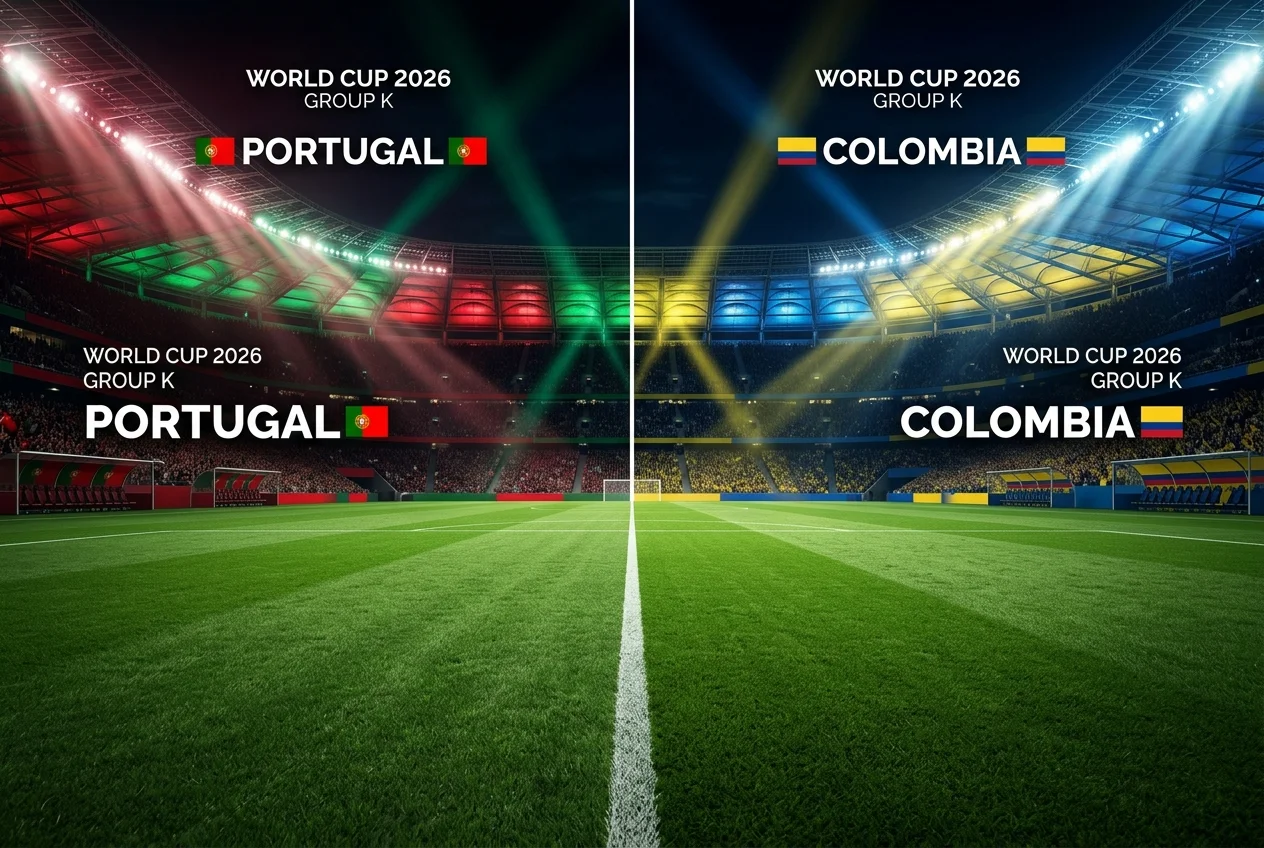
Colombia entered 2024 as Copa América finalists and qualified for 2026 playing some of the most attractive football in South American competition. James Rodríguez’s revival and Luis Díaz’s Liverpool emergence provide star power that compensates for defensive inconsistencies. Colombia-Portugal promises goals and attacking intent from both nations.
Uzbekistan and DR Congo complete the group as first-time qualifiers. Uzbekistan qualified through Asian pathways and brings genuine enthusiasm to their World Cup debut. DR Congo returns for the first time since 1974 — when they competed as Zaire — making this tournament a fifty-year homecoming for Congolese football.
Group L — England, Croatia, Ghana, Panama
The 2018 World Cup semifinal rematch arrives eight years later in Group L. England and Croatia meet again with roles potentially reversed — England has reached two consecutive major tournament finals since that Zagreb defeat, while Croatia’s golden generation has aged beyond peak performance. This match alone makes Group L appointment viewing for neutral observers.
England’s sixty-year trophy drought continues to define every tournament campaign. Harry Kane leads a forward line supplemented by world-class depth across every position. Gareth Southgate’s tournament consistency — 2018 semifinal, 2020 Euros final, 2022 quarterfinal, 2024 Euros final — demonstrates knockout-round competence without final victory. Group L asks whether this generation finally converts dominant position into silverware.
Croatia’s miracle runs to the 2018 final and 2022 semifinals relied on Luka Modrić’s transcendent midfield control. At 40, Modrić attempts one final tournament with a supporting cast featuring Joško Gvardiol and Mateo Kovačić. Croatian tournament pedigree demands respect regardless of objective squad assessment — they find ways to survive elimination matches.
Ghana’s Black Stars carry historical pedigree — their 2010 quarterfinal run remains African football’s second-best World Cup performance — without a current squad that matches those peaks. Panama returns for only their second World Cup after 2018’s maiden qualification ended in three group-stage losses. Both teams face difficult paths to knockout advancement in a group with two proven tournament contenders.
Ranking the Groups — Easiest to Hardest
Not every group presents equal difficulty. A team drawing Group E with a debutant nation faces fundamentally different advancement probability than a team drawing Group F with three legitimate knockout contenders. Understanding group difficulty shapes betting approaches — easier groups favor chalk, harder groups create upset value.
The easiest groups for top seeds are E, G, and J. Germany’s Group E includes Curaçao, the tournament’s smallest qualifier by population and competitive history. Belgium’s Group G pairs them with Egypt, Iran, and New Zealand — all respectable opponents but none capable of consistently beating Tier 2 opposition. Argentina’s Group J lacks any team with recent major tournament success.
Moderately difficult groups — A, B, C, D, I, and K — feature clear favourites with genuine upset potential from supporting cast. Mexico should handle Group A but South Korea can punish complacency. Canada should advance from Group B but Switzerland represents legitimate Tier 2 competition. These groups reward competent performances while punishing underperformance severely.
The tournament’s hardest groups are F, H, and L. Group F’s “group of death” label reflects Netherlands, Japan, Tunisia, and Sweden all possessing knockout-round pedigree. Group H forces Spain and Uruguay into direct group-stage competition — both expect advancement, but mathematics dictates only one finishes first. Group L pairs England and Croatia, two teams that have reached recent World Cup semifinals or finals.
Group difficulty affects betting strategy in concrete ways. In easy groups, backing favourites to win the group and both advance offers reasonable odds because upset risk is genuinely lower. In hard groups, value lies in “to advance” markets rather than “to win group” because advancement is achievable even for teams that lose to group favourites. The eight best third-place pathway particularly benefits teams in difficult groups — a strong third-place finish in Group F might require fewer points than a weak second-place finish in Group E.
Difficulty rankings also affect futures markets. Teams drawing hard groups see their outright championship odds lengthen because group-stage elimination risk increases. A team like Netherlands might offer better value at current odds precisely because Group F difficulty has pushed their price higher than squad quality justifies. The market prices difficulty; sophisticated bettors evaluate whether that pricing is accurate.
Five Group-Stage Betting Tips That Work
After covering three World Cups as a betting analyst, I’ve identified patterns that repeat across tournaments regardless of specific team compositions. These aren’t guarantees — nothing in betting ever is — but they represent structural advantages that the group-stage format consistently creates.
First, back draws in matches where both teams have already secured advancement. When a group’s final matchday features a fixture between two teams that have qualified regardless of result, neither team has genuine incentive to risk injury or reveal tactical cards for knockout rounds. The 2018 World Cup’s England-Belgium group finale exemplified this dynamic — both teams had qualified, both rested starters, and the match produced a low-intensity 1-0 result that neither team particularly wanted.
Second, identify matchday three fixtures where motivation asymmetry creates value. A team needing to win versus a team needing a draw produces different game states than two teams chasing victory. Similarly, an eliminated team facing a team still competing creates unusual dynamics — sometimes dead-rubber performances lack intensity; sometimes liberated players express themselves without pressure. The 48-team format’s best-third-place pathway multiplies these scenarios because teams can calculate advancement thresholds with precision.
Third, over goals totals in opening fixtures tend to outperform historical averages. Teams enter World Cups having trained specifically for the tournament, having watched film on opponents, having prepared tactical approaches for months. That preparation meets reality in ninety minutes, and the intensity of genuine World Cup stakes produces more goals than pre-tournament friendlies suggested. The 2022 tournament opened with Netherlands-Senegal and England-Iran producing thirteen combined goals. First-round fixtures run higher than tournament averages.
Fourth, the host nation advantage is statistically significant and consistently underpriced in group-stage markets. Canada playing at BMO Field and BC Place benefits from crowd support, minimal travel, and psychological comfort that road fixtures cannot replicate. The same applies to USA in American venues and Mexico at Estadio Azteca. Historical data shows host nations win approximately eight percent more group-stage matches than neutral-site models predict. Markets adjust for this advantage but rarely capture its full magnitude.
Fifth, fade overconfident favourites in matches against motivated underdogs. The 2022 World Cup produced multiple examples — Argentina losing to Saudi Arabia, Germany losing to Japan, Spain drawing with Morocco before losing in knockouts. Massive favourites generate massive public money, pushing odds to levels that don’t reflect genuine upset probability. When 85% of public money backs Germany against Japan at 1.20 odds, contrarian positions on Japan or the draw carry positive expected value even without specific match analysis.
These strategies require adaptation to specific group contexts. A tip that works in Group F’s competitive balance might fail in Group E’s mismatch structure. The common thread is understanding incentives, motivations, and market psychology rather than relying solely on squad quality assessments that everyone can read from FIFA rankings.
From Draw to First Whistle
Twelve groups. Forty-eight teams. One hundred four matches spread across thirty-nine days. The group stage determines which thirty-two teams earn knockout qualification — and perhaps more importantly, which pathways they follow through a bracket that culminates at MetLife Stadium on July 19.
The analysis above captures each group as it stands following the April 2026 draw. Between now and June 11, squads will be finalized, injuries will reshape depth charts, form will fluctuate through final preparation matches. A team that looks dominant in April might enter the tournament with key absences; a team struggling in friendlies might peak precisely when stakes escalate.
Group-stage betting rewards those who understand structural dynamics beyond pure squad talent. The best-third-place advancement pathway, host-nation advantages, motivation asymmetries in final matchday fixtures, and the compressed sixteen-day schedule all create edges invisible to bettors focused solely on which team fields better players. This guide provides the framework; applying it requires ongoing attention as the tournament approaches.
Canada’s Group B represents the most favorable draw Canadian football has ever received at a major tournament. Three home matches, no Tier 1 opponents, and a co-host atmosphere that transforms BMO Field and BC Place into fortresses. If Canada fails to advance from this group, it won’t be because the draw demanded too much — it will be because the moment proved too large. Every indication suggests this Canadian generation is ready for exactly this moment.
