
Brazil World Cup 2026 — Betting Guide, Odds & Squad Analysis | KICKSTAKE
 Available in US
Loading...
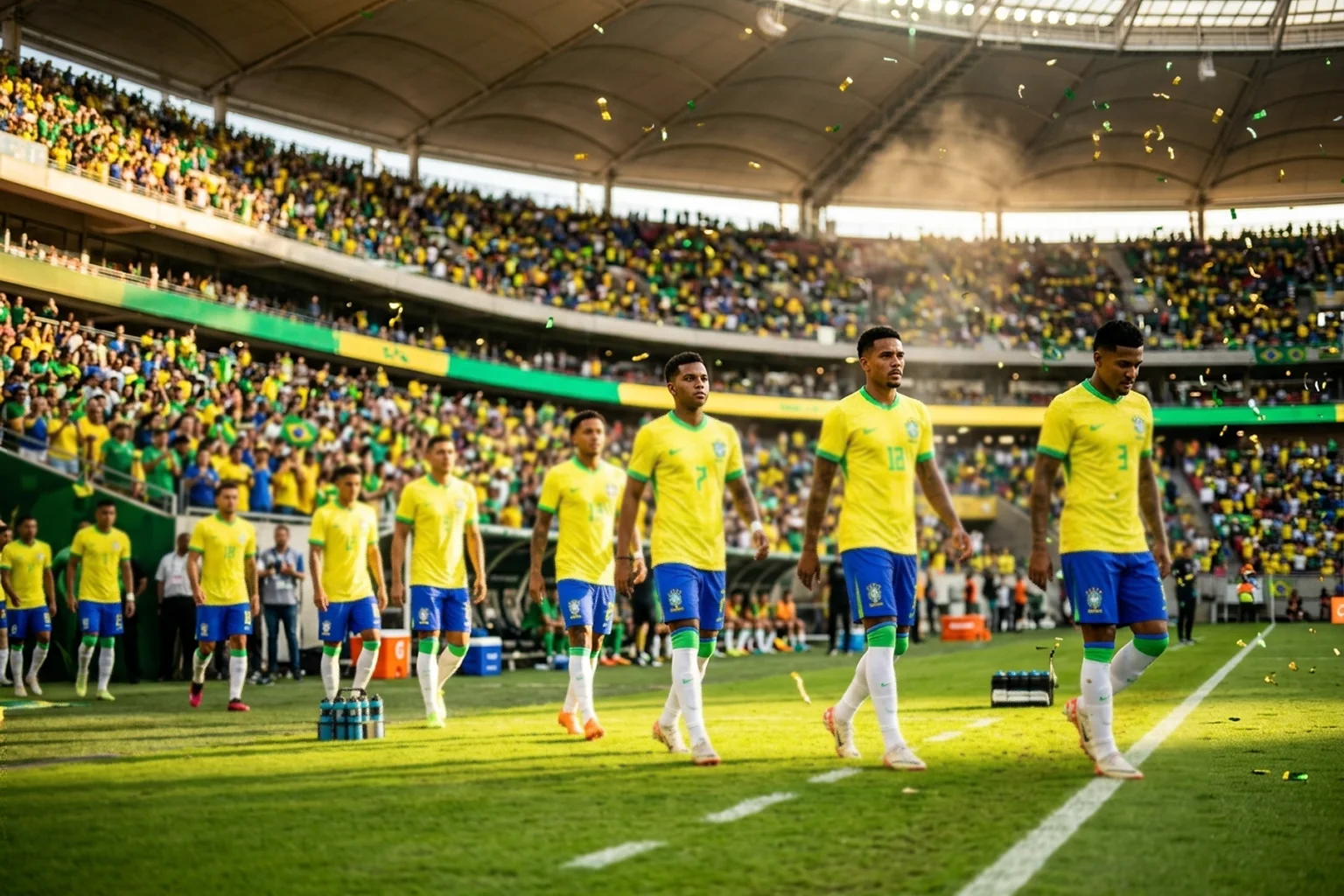
Five stars on the crest. Twenty-four years since the last one was earned. The longest title drought in Brazilian World Cup history stretches into a third decade, and every tournament that passes without adding a sixth star intensifies pressure on a program accustomed to dominance. I watched Neymar leave the 2014 quarter-final on a stretcher, witnessed the 7-1 humiliation against Germany days later, saw Croatia eliminate them on penalties in 2022, and tracked the years of squad turnover that followed. Brazil enters the 2026 World Cup as perpetual favorites who have not delivered since 2002 — and betting on them requires reckoning with both their talent ceiling and their recent tournament floors.
This guide examines Brazil through a betting lens: squad composition, Group C dynamics, odds positioning across markets, and where value might exist for a team whose prices often reflect legacy more than current form. Brazil World Cup 2026 betting demands separating the yellow jersey mystique from the tactical and personnel realities of the squad that will actually take the pitch in North America.
A Squad Between Eras
The generation that peaked at the 2018 and 2022 World Cups has aged out or moved to supporting roles. Neymar, now thirty-four, carries injury history that clouds his availability and effectiveness. Thiago Silva, approaching forty, no longer commands the defense. Casemiro’s reflexes have slowed. Brazil finds itself in transition, developing new leaders while retaining pieces from the previous cycle.
Vinícius Júnior carries the creative burden that Neymar once shouldered alone. His trajectory at Real Madrid — from frustrating inconsistency to Ballon d’Or contention — mirrors the explosive potential that makes Brazil dangerous. Vinícius attacks space behind defensive lines with acceleration that leaves markers flatfooted. His final ball has improved, his composure in front of goal has sharpened, and his ability to manufacture something from nothing suits tournament soccer where single moments decide elimination matches. For prop betting, Vinícius to score or assist in any given match prices reasonably given his expected involvement.
Rodrygo provides balance on the opposite flank. Less individually dominant than Vinícius but more consistent in output, Rodrygo’s positioning and movement create space for others. His set-piece delivery and willingness to drop into deeper areas to receive the ball add tactical dimensions. The Vinícius-Rodrygo partnership offers Brazil width and directness that opponents must account for.
Endrick represents the emerging generation. At eighteen, he has already secured a move to Real Madrid and earned national team minutes. His physical maturity, aerial presence, and penalty-box instincts suggest a classic number nine in development. Whether he starts or supersedes established options depends on the World Cup cycle, but his presence on the roster adds depth and a Plan B when Brazil needs direct attacking threat.
Midfield remains the lingering concern. Casemiro’s decline from world-class to serviceable leaves a gap no single replacement has filled. Bruno Guimarães offers technical quality and progressive passing. João Gomes brings energy and defensive coverage. Lucas Paquetá, despite gambling allegations that clouded recent years, adds creativity from central areas. None commands games the way Casemiro once did, and opponents targeting Brazil’s midfield fragility have found success in recent matches. Betting on Brazil conceding goals reflects this vulnerability.
Defensively, Marquinhos anchors the back line with the experience Thiago Silva once provided. Éder Militão and Gabriel Magalhães compete for partner duties, both offering physicality and aerial dominance without the ball-playing composure of peak Thiago Silva. Fullback positions generate attacking contribution through wide players like Renan Lodi and Yan Couto. Brazil’s defensive structure has improved under recent coaching without reaching the solidity of their most successful eras.
Goalkeeping presents no concerns. Alisson Becker remains among the world’s elite, capable of match-winning saves in tournament moments. His distribution initiates attacks, his command of the area settles defensive nerves, and his experience across major finals provides invaluable composure. Brazil’s last line offers no apparent weakness. Ederson provides quality backup should injury occur, maintaining depth at a position where Brazil has long excelled.
Coaching remains a variable. The post-Tite era has seen multiple appointments without establishing consistent identity. Tournament experience at the helm matters, and recent Brazilian coaches have lacked the pedigree of predecessors who won major honors. Tactical preparation, in-game adjustments, and squad management during a five-week tournament all fall under coaching responsibility. This represents an underappreciated uncertainty compared to teams with established long-term managers like France or Argentina.
Group C — Morocco Lurks
Brazil draws Group C alongside Morocco, Haiti, and Scotland. The surface read suggests comfortable advancement. The deeper analysis reveals Morocco as a genuine threat to finish above Brazil or at minimum extract points in a direct clash.
Morocco’s 2022 World Cup semi-final run shocked observers who dismissed African confederation depth. They defeated Spain and Portugal en route, conceding only once in open play across the tournament. That defensive organization, led by Achraf Hakimi and Sofyan Amrabat, returns with refinements. Morocco will not fear Brazil; they have beaten better. A potential Group C fixture between Brazil and Morocco carries genuine uncertainty, and betting markets should reflect Morocco’s credibility through competitive pricing rather than heavy Brazil favoritism.
Morocco’s tactical approach emphasizes compact defensive blocks that deny space between lines. They absorb pressure, force opponents wide, and defend the box with numbers and discipline. Transitioning quickly through Hakimi’s overlapping runs and central runners exploiting vacated spaces creates counter-attacking threat. Brazil’s propensity to commit numbers forward plays into Morocco’s hands. The Atlas Lions also benefit from passionate diaspora support across North America — Moroccan communities in Canadian and American cities will create pro-Morocco atmospheres even in neutral venues. This fixture deserves respect as a potential group-stage upset, not a formality.
Haiti makes their first World Cup appearance since 1974. The Caribbean nation qualified through a CONCACAF path that capitalized on expanded allocation, but squad quality falls well short of tournament contenders. Haiti will compete for respect more than results, bringing passionate support without the personnel to threaten established nations. Brazil versus Haiti profiles as the most lopsided match in the group, and betting on comfortable Brazil margins — over 2.5, over 3.5 match goals — aligns with expected performance. First-half goals, Brazilian clean sheets, and large correct score lines all deserve consideration in this specific fixture. The talent gap exceeds what even casual observers expect, creating potential for Brazilian statement performances.
Scotland returns to the World Cup after missing 2018 and 2022. The Scottish side offers physical commitment, tactical discipline, and tournament experience from European Championship participation. John McGinn and Billy Gilmour provide midfield quality. Scott McTominay contributes goals from deep positions. Scotland will not embarrass themselves but lack the attacking ceiling to threaten Brazil or Morocco for top positions. Draw-focused strategies in Scotland matches may offer value.
Scotland’s approach against elite opponents typically involves high pressing early before settling into defensive blocks if initial intensity fails to produce turnovers. Against Brazil, expect Scotland to test Brazilian composure in the opening twenty minutes before pragmatically protecting against a lopsided scoreline. This creates a match profile where early goals for either side shift dynamics significantly. Scotland conceding early likely opens the game for Brazilian accumulation; Scotland surviving the opening period intact forces Brazil into patient possession against organized resistance. Half-time lines and in-play markets offer opportunities to read match flow before committing.
Group dynamics suggest Brazil and Morocco contest top spot, with Scotland and Haiti competing to avoid bottom position. Brazil should advance but may finish second if the Morocco match goes poorly. Betting on Brazil to win the group requires confidence in defeating Morocco head-to-head — confidence I do not fully share given Morocco’s defensive qualities and Brazil’s midfield vulnerabilities.
Match scheduling matters for betting preparation. Brazil’s group fixtures will be announced with specific dates and venues across American host cities. Altitude considerations for any matches at high-elevation venues — though unlikely for Group C — affect player performance and totals betting. Kickoff times relative to Brazilian body clocks factor into performance, particularly in early-round matches before full acclimatization.
Historical Context — The Weight of Five Stars
Brazil’s World Cup record remains unmatched: five titles, more than any nation. Yet recent history tells a different story. The 2006 quarter-final exit to France began a sequence of disappointments. The 2010 side fell to Netherlands in the quarters. The 2014 home tournament ended in historic humiliation. The 2018 quarter-final loss to Belgium continued the pattern. The 2022 penalty shootout defeat to Croatia extended the drought.
This context matters for betting because it informs how Brazil performs in pressure moments. Five consecutive World Cups without reaching a semi-final represents unprecedented modern failure for the Seleção. Each tournament adds expectation weight that compounds against younger players unfamiliar with lifting trophies. Favorites pricing assumes Brazil converts knockout opportunities, but recent evidence suggests the opposite.
The 2002 team that won Brazil’s last World Cup featured Ronaldo, Rivaldo, Ronaldinho, Cafu, Roberto Carlos, and Gilberto Silva — a roster of peak performers at multiple positions. Current squad depth does not match that era. Vinícius approaches individual brilliance, but supporting cast quality falls short of historical peaks. Betting Brazil at short prices to win the tournament ignores structural decay relative to legacy reputation.
The psychological burden compounds with each failed tournament. Young players entering the 2026 cycle carry expectations established by generations they never played alongside. Brazilian media scrutiny intensifies after defeats, creating pressure environments that affect subsequent performances. This cultural context distinguishes Brazil from nations whose tournament histories generate less domestic expectation. Bettors should factor psychology into knockout-round assessments where single-elimination magnifies pressure effects.
Odds and Market Positioning
Brazil typically prices between five and eight to one for outright tournament winner, depending on market conditions and recent form. This reflects historical reverence more than current squad assessment. Comparable odds attach to France, England, and Argentina — teams with arguably superior current form and personnel depth.
Group C winner odds favor Brazil at prices implying seventy-percent or higher probability. Morocco’s presence suggests this overstates Brazil’s dominance. If Morocco prices at three to one or longer for group winner, value potentially exists in backing them against Brazil’s implied probability. Alternatively, betting on either team to win the group at different books captures hedged exposure to uncertainty.
Brazil to reach the quarter-finals prices as heavy favorite, reflecting expected group advancement plus a favorable Round of 32 path. This market may offer fair pricing given the obstacles involved remain modest until knockout-round opponents emerge from other groups. Reaching semi-finals requires defeating a potentially difficult Round of 16 opponent — Group D or seeded third-place teams could include Germany, Netherlands, or Spain depending on draw unfolding. Brazil’s knockout-round pricing beyond quarters deserves scrutiny rather than automatic acceptance.
Top scorer odds for Brazilian players center on Vinícius Júnior, typically priced between fifteen and twenty-five to one. Golden Boot contenders from European leagues often attract more betting volume, which can inflate value on South American finishers. Rodrygo and Endrick price longer but offer exposure if Vinícius underperforms or injury intervenes.
Match-level betting during the group stage offers actionable opportunities. Brazil versus Haiti over goals total should price at 3.5 or higher, with over representing value given talent disparity. Brazil versus Morocco under 2.5 goals reflects the defensive quality both teams possess. Brazil versus Scotland correct scores — 2-0, 2-1, 1-0 — capture the likely tight margin of physical, tactical matches.
Prop markets specific to Brazilian players expand as the tournament approaches. Cards for Casemiro reflect his tendency for tactical fouls when mobility limitations expose him. Corners for Brazil reflects their possession dominance forcing opponents deep. First-half goals in lopsided matchups like Haiti capture Brazil’s tendency to start strong before managing games. Monitoring prop lines for value requires comparing across multiple sportsbooks as pricing varies significantly for international tournaments.
Tactical Approach and Betting Implications
Brazil under recent coaches has oscillated between pragmatic and expressive styles. The Tite era emphasized structure, defensive solidity, and controlled possession. Post-Tite appointments have sought to recapture attacking flair while maintaining organizational discipline. The balance between these approaches affects betting outcomes in specific markets.
Possession statistics for Brazil typically exceed sixty percent against non-elite opponents. This territorial dominance creates corners, set pieces, and shots from outside the box. Betting on over corner totals in Brazil matches often finds value because opponents sit deep, forcing wide circulation and crossing attempts.
Brazil’s reliance on individual brilliance over structured buildup creates variance in scoring outputs. Vinícius may produce two goals one match and disappear another. Rodrygo may dominate or drift anonymously. This inconsistency affects over/under markets — Brazil can win 4-0 or struggle to 1-0 victory against comparable opponents depending on which individuals produce.
Defensively, Brazil concedes on transitions and set pieces more frequently than elite teams should. The midfield screening that Casemiro once provided no longer exists at the same level. Counter-attacking opponents who survive early pressure can exploit spaces left by attacking fullbacks. Morocco, with Hakimi’s overlapping runs and Morocco’s quick vertical play, profiles as exactly this opponent type. Both teams to score in competitive Brazil fixtures has hit more often in recent years than the Seleção’s reputation suggests.
Late-game management remains a Brazil weakness. Protecting leads, managing game tempo, and closing out matches have caused problems in knockout scenarios. Penalty shootouts — where Brazil lost in 2022 — represent another vulnerability given the psychological pressure on younger players. If you back Brazil in knockout matches, consider hedging or taking in-play positions as match state evolves rather than relying on pre-match bets to hold.
Set-piece delivery has improved in recent qualifying cycles. Brazil generate corners at above-average rates, and their aerial presence through center-backs and forwards creates scoring opportunities from dead balls. Defensive set-piece vulnerability persists, however, with opponents frequently threatening from corners and free kicks near the box. This asymmetry affects first goal scorer markets where defenders or aerial specialists from opposing teams price longer than their actual threat warrants.
The attacking transition game represents Brazil’s strongest tactical phase. Vinícius and Rodrygo devastate teams caught between shapes. A turnover in midfield becomes a two-on-two or three-on-three situation within seconds, and Brazilian technical quality in those moments produces goals. Opponents aware of this risk sit deeper, conceding territory to protect against transitions. This creates the frustrating pattern where Brazil dominates possession without creating high-quality chances against organized defenses. Betting on match tempo — expecting early goals in some fixtures and late breakthroughs in others — requires reading specific opponent approaches.
Value Angles on Brazil
Despite the critical assessment above, Brazil offers value in specific contexts. Identifying these requires separating emotion from analysis.
Brazil to score in every group match prices at odds-on but deserves consideration as accumulator legs. Against Haiti, Scotland, and Morocco, Brazil’s attacking quality should generate at least one goal in each fixture. The combined probability of zero goals in any of these matches falls below what even short prices imply.
Vinícius Júnior to record two or more assists across the group stage offers value if pricing underestimates his creative role. He draws defensive attention that creates space for teammates, and his willingness to play final balls rather than shoot in certain contexts generates assist opportunities. With three group matches and likely heavy involvement in each, the assist threshold remains achievable even with inconsistent finishing from teammates.
Group C highest-scoring team as Brazil makes sense given the expected margin against Haiti. Even with tighter matches against Morocco and Scotland, Brazil’s total across three matches should exceed any other team in the group. This market prices favorably when available.
Endrick to score at any point during the group stage offers longer odds for bettors seeking exposure to the emerging talent. His minutes may come off the bench, but substitution appearances against tiring defenses — particularly versus Haiti — create scoring environments that favor fresh legs and youthful hunger. The odds reflect uncertainty about his role while undervaluing the opportunities a forty-eight-team format creates for rotation.
For longer-odds exposure, Brazil to reach the final but lose captures the pattern of recent near-misses. At prices typically exceeding twenty to one, this bet pays if Brazil’s talent pushes them deep while knockout fragility ultimately costs them. The 2014 semi-final loss (different context) and 2022 quarter-final penalties demonstrate the failure modes this bet targets.
Hedging strategies apply to Brazil exposure. Backing Brazil at group-winner prices while also backing Morocco at longer odds creates a position that profits regardless of which team tops Group C, assuming both advance. In-play betting during knockout matches allows adjusting exposure as match states evolve rather than committing entirely pre-match. Brazil’s variance makes active management more valuable than passive holds through elimination fixtures.
The fundamental question for Brazil betting remains whether current prices reflect current ability or historical reputation. I lean toward the latter, which means fading Brazil at short prices and targeting specific value markets where pricing inefficiencies exist. The five stars on the crest carry weight in public perception; your betting account should weigh evidence instead.
