
Estadio Azteca — World Cup 2026 Opening Venue Guide | KICKSTAKE
 Available in US
Loading...
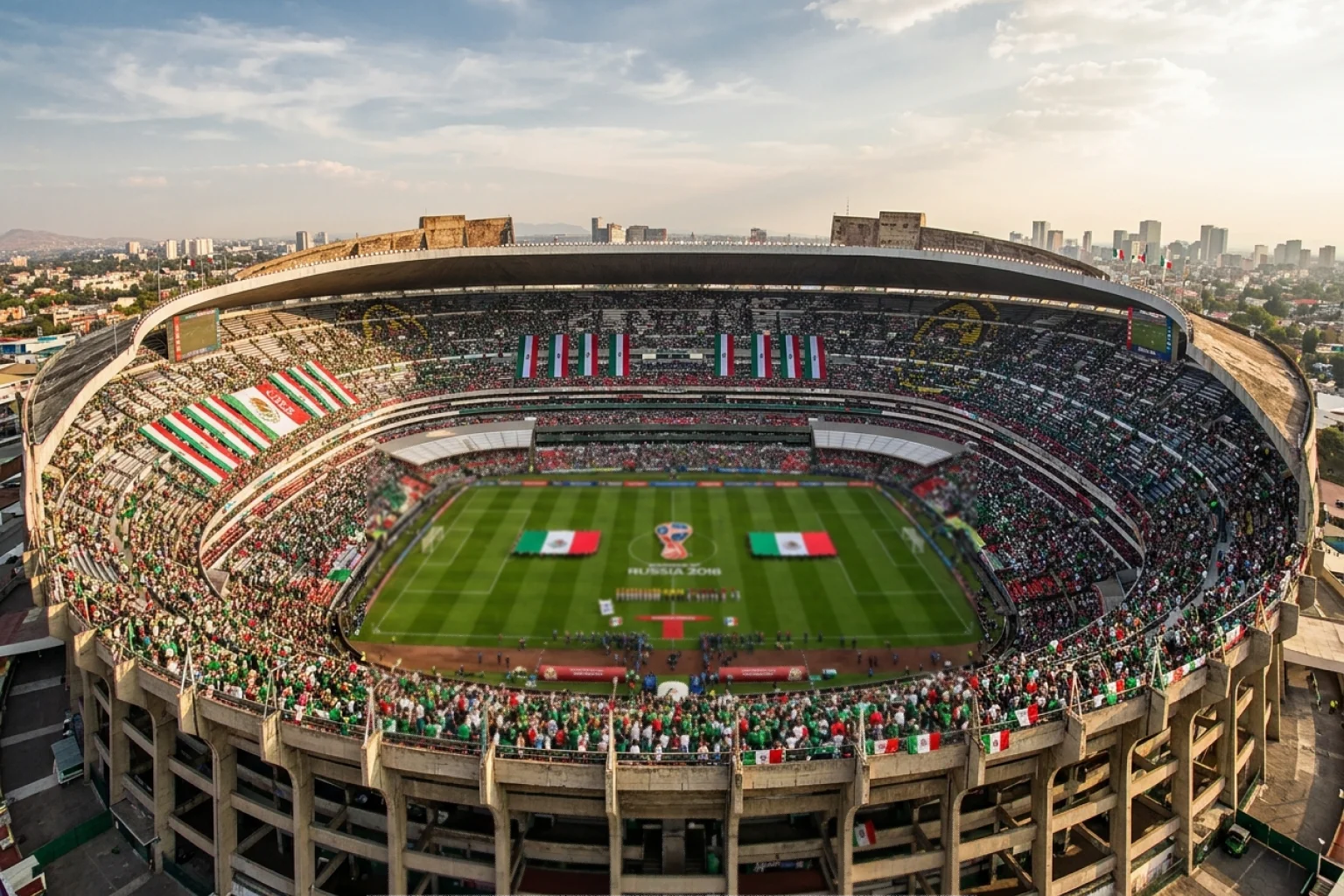
No stadium in world football carries more World Cup history than the Azteca. When Mexico faces South Africa on June 11, 2026, it marks the third time this iconic Mexico City venue has hosted World Cup football — following tournaments in 1970 and 1986. The ghosts of Pelé’s third triumph and Maradona’s “Hand of God” linger in concrete that has witnessed more World Cup drama than any other structure on Earth. For bettors positioning on opening-match markets, understanding the Azteca’s unique characteristics separates informed wagers from casual speculation.
Estadio Azteca sits at 2,240 metres above sea level in Mexico City’s Tlalpan borough, an altitude that affects player performance in ways that sea-level training cannot prepare teams to handle. The thin air at this elevation reduces oxygen availability, increases ball flight distance, and creates fatigue patterns that favour acclimatized Mexican players over visiting opposition. This altitude advantage has shaped Mexican football for decades — and it shapes how you should bet on every Azteca fixture.
About Estadio Azteca
Estadio Azteca opened in 1966, purpose-built for the 1968 Olympics and 1970 World Cup that followed. The original capacity of 105,000 has been reduced through renovations to approximately 83,000 for World Cup 2026, reflecting modern safety standards and improved sightlines. The stadium remains the largest in Mexico and one of the largest in the world, its scale creating atmospheres that intimate venues cannot replicate.
The playing surface is natural grass, meticulously maintained at altitude conditions that differ from sea-level pitch management. The grass variety and maintenance protocols account for Mexico City’s rainy season (June through September), meaning World Cup fixtures occur during the wettest months. Pitch conditions may vary throughout the tournament as groundskeepers manage rainfall accumulation.
Stadium orientation runs roughly north-south, with the iconic double-tiered stands creating the bowl configuration that has defined Azteca’s atmosphere for six decades. The open-air design exposes matches to Mexico City’s variable weather — afternoon thunderstorms are common during June, potentially affecting match scheduling and playing conditions.
The June 11 opening match kicks off at 11:00 AM local time (12:00 PM ET), a morning scheduling designed to maximize global television audience while avoiding afternoon storm probability. This early kickoff produces relatively cool conditions by Mexico City summer standards — temperatures around 18-22°C compared to mid-afternoon peaks that can exceed 25°C.
World Cup 2026 Matches at Estadio Azteca
Estadio Azteca hosts ten World Cup 2026 matches: seven group-stage fixtures, two Round of 32 knockout matches, and one Round of 16 fixture. Mexico’s concentration of matches here reflects El Tri’s desire to maximize home advantage during the group stage.
| Date | Match | Round | Time (ET) |
|---|---|---|---|
| June 11 | Mexico vs South Africa (Opening Match) | Group A | 12:00 PM |
| June 14 | Group Match TBD | Group Stage | 3:00 PM |
| June 17 | Group Match TBD | Group Stage | 6:00 PM |
| June 20 | Group Match TBD | Group Stage | 3:00 PM |
| June 23 | Group Match TBD | Group Stage | 6:00 PM |
| June 26 | Group Match TBD | Group Stage | 3:00 PM |
| June 27 | Group Match TBD | Group Stage | 6:00 PM |
| June 30 | Round of 32 | Knockout | 3:00 PM |
| July 1 | Round of 32 | Knockout | 6:00 PM |
| July 5 | Round of 16 | Knockout | 6:00 PM |
The June 11 opening match between Mexico and South Africa carries ceremonial significance beyond competitive stakes. World Cup opening matches set the tournament’s tone — and betting markets price them accordingly. Opening fixtures historically produce fewer goals than typical group-stage matches as teams prioritize avoiding early defeat over attacking ambition.
The Azteca’s World Cup Legacy
Estadio Azteca has witnessed more iconic World Cup moments than any other venue. In 1970, Pelé lifted his third World Cup trophy after Brazil defeated Italy 4-1 in a final that defined beautiful football. In 1986, Diego Maradona’s quarterfinal against England produced both the “Hand of God” goal and the “Goal of the Century” — two moments that represent football’s moral extremes within the same 90 minutes.
This historical weight affects the psychological experience for teams playing at the Azteca. The stadium is not merely a venue; it is a monument to football’s greatest achievements and darkest controversies. Teams that embrace this history draw energy from the setting; those intimidated by legacy expectation may underperform their capability.
For betting purposes, the Azteca’s aura creates home advantage that exceeds typical calculations. Mexican supporters generate atmospheres that visiting teams describe as overwhelming — the famous “Ola” wave originated here, and the coordinated chanting creates noise levels that disrupt opposition communication. Back Mexican home advantage at the Azteca with higher conviction than standard home-field models suggest.
Altitude Factor — How It Affects Betting
The Azteca’s 2,240-metre elevation creates physiological challenges that fundamentally affect match dynamics. At this altitude, atmospheric pressure drops approximately 25% compared to sea level, reducing oxygen availability that muscles require for sustained effort. Players unaccustomed to altitude experience fatigue earlier, recover more slowly between sprints, and may suffer altitude sickness symptoms including headache and nausea.
Ball physics change at altitude. Reduced air resistance increases shot speed and distance, potentially catching goalkeepers off guard with long-range efforts that behave differently than their training experience suggests. Crosses travel farther; corners bend less sharply; goalkeepers’ clearances carry unexpectedly far. These effects favour teams accustomed to altitude conditions — Mexico, and potentially South American nations from Andean regions.
For betting purposes, altitude creates specific angles worth exploiting. Over 2.5 goals in Azteca fixtures at approximately 1.95 captures the potential for goalkeeping errors and increased goal-scoring from distance. Mexican clean sheets become more likely as visiting attackers tire before home defenders. First-half scoring may exceed second-half patterns as visiting team fatigue accumulates through 90 minutes.
Teams that arrive in Mexico City without altitude acclimatization time face significant disadvantage. The ideal preparation requires 7-10 days at elevation before competition; teams arriving 2-3 days before matches cannot fully adapt. Research opponent arrival schedules when positioning Azteca bets — a team flying in from sea level 48 hours before kickoff faces physiological handicap that tactical preparation cannot overcome.
Opening Match Betting Considerations
World Cup opening matches carry unique betting dynamics. The ceremonial weight of launching the tournament creates pressure that inhibits attacking risk-taking. Recent opening matches have produced under 2.5 goals at rates exceeding typical group-stage patterns — Qatar 2022’s opener ended 0-0 before Ecuador won 2-0, while Russia 2018’s opener saw the hosts defeat Saudi Arabia 5-0 in an outlier result.
Mexico vs South Africa on June 11 projects as a controlled, cautious fixture. Mexico will prioritize avoiding defeat that would damage home-tournament narrative; South Africa will prioritize defensive organization against superior opposition. Under 2.5 goals at approximately 1.75 captures this dynamic. Mexico to win to nil at approximately 2.75 offers value if you believe South African attacking threat is minimal against organized Mexican defence.
The Azteca represents football history in concrete form — a stadium that has shaped the sport’s greatest moments across six decades. Its altitude, atmosphere, and legacy create betting conditions unlike any other World Cup venue. Respect these factors, position for Mexican home advantage, and watch the 2026 World Cup begin where so many memorable chapters have already been written.
Mexico City Infrastructure
Mexico City’s transportation infrastructure connects the Azteca to metropolitan areas housing over 21 million people. The metro system delivers supporters directly to the stadium via the Estadio Azteca station on Line 2, providing efficient mass transit that concentrates tens of thousands of Mexican supporters arriving simultaneously. This coordinated arrival creates pre-match atmosphere that builds throughout the stadium’s surroundings.
For visiting supporters, Mexico City’s altitude affects not only match-day experience but the entire trip. Tourists arriving from sea-level cities should expect 1-2 days of adjustment before feeling fully comfortable at 2,240 metres. This same acclimatization challenge affects visiting teams, compounding the home advantage Mexican football enjoys at the Azteca.
The stadium’s location in the Tlalpan borough, approximately 15 kilometres south of the historic city centre, provides access to Mexico City’s cultural attractions alongside World Cup fixtures. This integration of tourism and football creates economic benefits that justify Mexico’s continued World Cup hosting ambitions.
Future Significance
World Cup 2026 may represent the Azteca’s final World Cup appearance. The stadium’s age — 60 years by tournament time — raises questions about whether future renovations can maintain FIFA’s evolving infrastructure standards. Canadian bettors positioning on opening-match futures should recognize they are betting on history in multiple senses: the tournament’s beginning and potentially the Azteca’s World Cup farewell.
This historical context adds emotional weight to every Azteca fixture. Mexican supporters attending World Cup 2026 matches know they may be witnessing final chapters in their stadium’s global story. That awareness intensifies atmosphere in ways that cold analysis cannot fully capture. Position for Mexican outperformance at the Azteca — the emotional stakes transcend mere football.
