
MetLife Stadium — World Cup 2026 Final Venue Guide | KICKSTAKE
 Available in US
Loading...
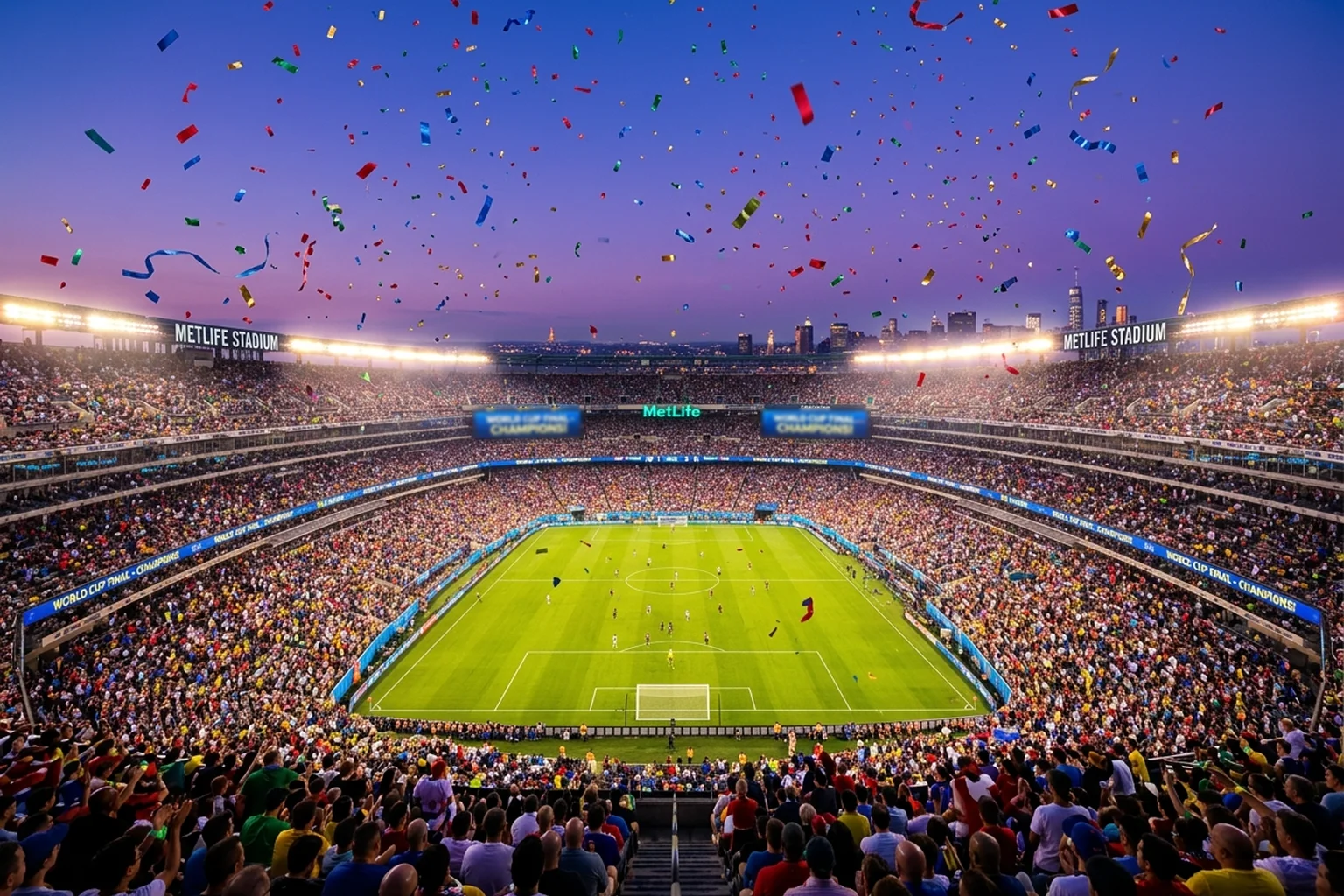
Every World Cup journey ends in the same place: the final stadium where one nation lifts the trophy while another watches in devastation. On July 19, 2026, that moment occurs at MetLife Stadium in East Rutherford, New Jersey — the 82,500-seat arena that hosts the most watched sporting event on Earth. For bettors positioning on outright winner markets, understanding this venue’s characteristics shapes how you approach the tournament’s ultimate fixture.
MetLife Stadium serves as World Cup 2026’s crown jewel, hosting not only the final but also both semifinals and multiple earlier-round matches. The venue’s selection reflects American football infrastructure repurposed for soccer’s greatest stage — a choice that carries both advantages and complications for teams accustomed to purpose-built football stadiums. Understanding these dynamics separates informed outright betting from blind favouritism.
About MetLife Stadium
MetLife Stadium opened in 2010 as the shared home of the New York Giants and New York Jets, replacing the historic Giants Stadium that stood on the same East Rutherford site. The current capacity of 82,500 for World Cup 2026 makes it one of the tournament’s largest venues, exceeded only by AT&T Stadium’s expandable configuration. The stadium sits in the Meadowlands Sports Complex, approximately 13 kilometres west of Manhattan.
The open-air design lacks any roof structure, exposing matches to whatever weather the New Jersey July climate delivers. Average temperatures during the July 19 final window range from 24-30°C with humidity levels that can reach uncomfortable peaks. Thunderstorm probability during summer afternoons creates scheduling uncertainty that FIFA’s operational planning must accommodate.
The playing surface is natural grass — a temporary installation replacing the standard artificial turf used for NFL games. This grass-over-turf configuration requires extensive preparation and creates pitch conditions that differ from purpose-built soccer stadiums. Previous major soccer events at MetLife have produced mixed pitch quality assessments that affect playing style calculations.
Stadium orientation runs roughly north-south, with the main broadcast camera position on the western sideline. Evening fixtures during the July window produce western sun angles that can affect visibility for players facing the setting sun. The final’s likely late-afternoon kickoff minimizes this effect while maximizing global television audience across multiple time zones.
World Cup 2026 Matches at MetLife Stadium
MetLife Stadium hosts eight World Cup 2026 matches: five group-stage fixtures, one Round of 16 match, both semifinals, and the final. This concentration of high-stakes fixtures makes MetLife the tournament’s most significant venue.
| Date | Match | Round | Time (ET) |
|---|---|---|---|
| June 15 | Group Match TBD | Group Stage | 6:00 PM |
| June 16 | France vs Norway | Group I | 6:00 PM |
| June 19 | England vs Ghana | Group L | 6:00 PM |
| June 22 | Group Match TBD | Group Stage | 3:00 PM |
| June 28 | Group Match TBD | Group Stage | 6:00 PM |
| July 6 | Round of 16 | Knockout | 6:00 PM |
| July 14 | Semifinal 1 | Semifinal | 6:00 PM |
| July 15 | Semifinal 2 | Semifinal | 6:00 PM |
| July 19 | Final | Final | 3:00 PM |
The July 19 final kicks off at 3:00 PM ET — a timing designed to maximize global television audience while providing comfortable viewing hours across Europe (9:00 PM CET) and reasonable times for Asian audiences (4:00 AM JST the following day). This afternoon kickoff exposes the final to peak summer heat, creating physical demands that favour teams with superior fitness conditioning.
A Brief History of World Cup Finals
World Cup finals produce unique psychological dynamics that regular tournament matches cannot replicate. The pressure of 90 minutes determining four years of preparation, the global audience exceeding one billion viewers, and the permanent historical legacy create conditions where mental strength rivals technical quality in determining outcomes.
Recent finals have favoured teams with previous final experience. Germany’s 2014 victory came with players who had experienced the 2010 semifinal loss; France’s 2018 triumph featured a core that had reached Euro 2016’s final. Argentina’s 2022 victory combined Messi’s desperation for legacy validation with supporting players who understood the stakes. First-time finalists historically underperform against experienced opposition.
For betting purposes, this pattern suggests backing teams with recent final or semifinal experience over those reaching the final for the first time. France, Argentina, Germany, and Brazil all carry this pedigree; England, despite multiple semifinals, lacks final experience that could prove decisive in the July 19 fixture.
Extra time and penalties occur with surprising frequency in World Cup finals. Four of the last ten finals have required additional time beyond 90 minutes. Position accordingly — draw at 90 minutes in the final typically offers value around 3.00 that exceeds its true probability given the cautious approaches teams adopt when stakes reach maximum intensity.
Final Betting Trends and Angles
World Cup finals historically produce fewer goals than earlier knockout rounds. The average final since 1990 has produced 2.3 goals, compared to 2.7 for quarterfinals during the same period. This pattern reflects tactical caution, heightened defensive focus, and the psychological weight that inhibits attacking risk-taking. Under 2.5 goals in the final typically offers value around 1.75.
First-half scoring decreases significantly in finals. Teams prefer to avoid early deficit situations that force attacking adjustments against elite opposition. Half-time draw at approximately 1.70 captures this caution — expect scoreless or 1-1 half-time results more frequently than earlier-round patterns suggest.
Late goals carry disproportionate importance in finals. The 2014 final was decided in extra time; the 2022 final required penalties after a 3-3 draw that included two Mbappé goals after the 80th minute. Goals after the 75th minute in the final offer value around 1.65 when fatigue, substitutions, and desperation combine to create openings that earlier caution prevented.
Weather conditions at MetLife on July 19 will affect physical performance. July afternoon temperatures in New Jersey can exceed 30°C with humidity that saps energy. European teams accustomed to milder conditions may struggle with fitness demands that South American squads handle more comfortably. Factor climate into your final betting — teams with superior depth and conditioning hold advantages that skill alone cannot overcome.
Reaching the Final — Bracket Implications
The path to MetLife Stadium matters as much as arrival. Teams emerging from the bracket’s harder side face accumulated fatigue and potential injury concerns that affect final performance. Conversely, teams with easier paths may lack competitive sharpness that tougher opposition provides.
For outright betting, position on teams whose bracket path balances challenge with survival probability. A team that defeats quality opposition in quarters and semis arrives at MetLife battle-tested; a team that faces weak opposition may be unprepared for final intensity. Evaluate bracket paths when positioning outright winner bets rather than simply backing pre-tournament favourites regardless of draw.
MetLife Stadium on July 19 represents the culmination of everything World Cup 2026 promises. The venue’s characteristics — open-air exposure, temporary grass surface, afternoon summer heat — create conditions that reward physically prepared teams with mental resilience. Position for under totals, back experienced finalists, and prepare for the possibility of extra time and penalties. The final rewards patience, preparation, and respect for the unique pressure that separates world champions from runners-up.
The New York Metropolitan Advantage
MetLife Stadium’s location in the New York metropolitan area provides neutral-venue characteristics that other American cities cannot match. The region hosts substantial diaspora communities from virtually every World Cup nation, meaning final day will feature massive supporter contingents for both finalists regardless of which nations advance. No team will feel isolated in a hostile environment; all will find community support that transforms the final into a celebration rather than an away fixture.
The transportation infrastructure connecting Manhattan to East Rutherford provides efficient match-day logistics. NJ Transit trains deliver supporters directly to the Meadowlands Sports Complex, while extensive highway networks accommodate those driving from across the northeastern United States. This accessibility ensures the 82,500 capacity fills completely with passionate supporters who contribute to the atmosphere that major finals deserve.
For bettors, the neutral-venue dynamic means home advantage calculations do not apply to the final. Unlike group-stage matches where crowd composition favours specific nations, the final features balanced support that eliminates referee pressure and psychological intimidation effects. Back your final selections based on team quality and tournament form rather than crowd composition.
Semifinal Preview — The Path to July 19
MetLife Stadium hosts both semifinals on July 14 and 15, giving finalists just four or five days to recover before the championship match. This compressed schedule affects team selection and physical preparation in ways that accumulate across the knockout rounds. Teams advancing through harder bracket paths face fatigue challenges that easier routes avoid.
The semifinal-to-final recovery gap historically favours teams with superior squad depth. Managers can rotate during earlier knockout rounds knowing bench players maintain fitness levels that exceed fatigued starters. For outright betting, prioritize teams with established rotation patterns and quality depth over those dependent on irreplaceable starting elevens.
Watch the semifinals closely for injury signals that affect final availability. The four-day gap provides minimal recovery time for muscle injuries sustained in semifinal fixtures. A key player limping off on July 14 likely misses the July 19 final — information that live bettors can exploit before markets fully adjust to availability news.
