Morocco World Cup 2026 — Can the 2022 Dark Horse Strike Again? | KICKSTAKE
 Available in US
Loading...
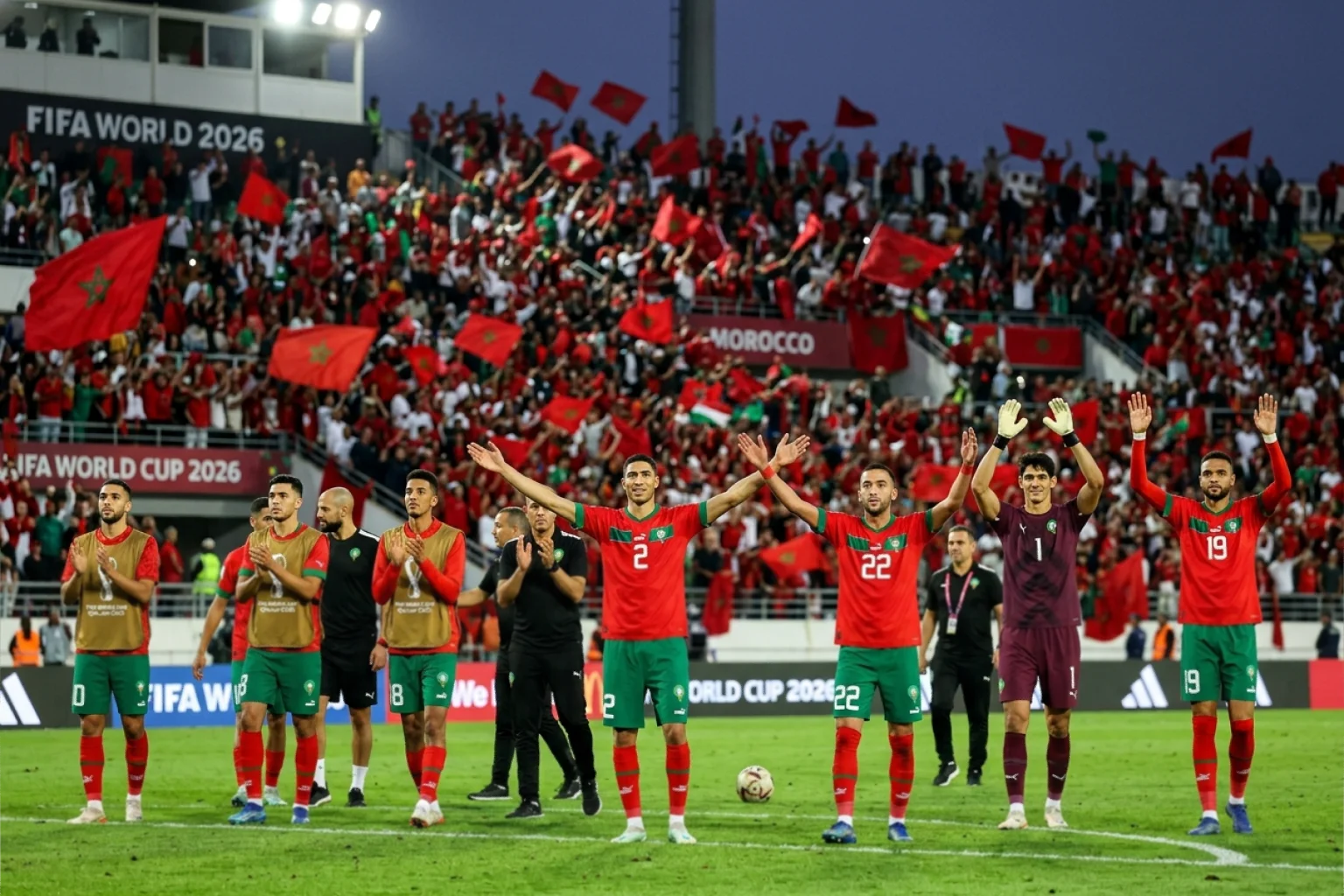
Semi-finalists in Qatar. The first African nation to reach the World Cup’s final four. Morocco’s 2022 run rewrote assumptions about what African football could achieve at the highest level. They defeated Belgium, Spain, and Portugal through defensive excellence and collective spirit that made neutrals worldwide fall in love with the Atlas Lions. Morocco World Cup 2026 betting carries the weight of that historic achievement alongside the central question: can lightning strike twice?
The 2022 success emerged from the convergence of factors that rarely align — defensive organization perfected over years, attacking efficiency that maximized limited chances, and cultural unity that transcended individual talent. Replicating that formula four years later requires maintaining what worked while opponents have studied and prepared for Moroccan methods. This guide examines Moroccan squad evolution, Group C dynamics featuring Brazil, and where betting value exists for a team whose ceiling we have witnessed and whose floor remains uncertain.
Squad and Key Players
Achraf Hakimi represents the attacking full-back quality that defines modern football. His Paris Saint-Germain career has produced a right-back whose offensive contribution matches many wingers while defensive discipline suits Moroccan organizational principles. Hakimi’s pace, crossing, and willingness to join attacks create overloads that opponents struggle to manage. His importance to Moroccan attacking play cannot be overstated.
Yassine Bounou earned global recognition through Qatar heroics. His penalty saving against Spain — three consecutive stops — became one of the tournament’s defining images. Bounou’s shot-stopping provides the foundation that defensive excellence requires. His confidence from 2022 success should persist into a tournament where opponents know what to expect.
Sofyan Amrabat’s midfield tenacity anchors Moroccan defensive organization. His ability to cover ground, win duels, and disrupt opponent buildup creates the platform that allows more creative teammates freedom. Amrabat’s Manchester United and subsequent career experiences have tested him against elite-level opposition consistently. His tournament pedigree provides composure that newer squad members still developing.
Hakim Ziyech brings the attacking creativity that defensive excellence alone cannot provide. His unpredictable passing, crossing quality, and long-range shooting offer outlets when Moroccan possession struggles against organized blocks. Ziyech’s inconsistency frustrates — brilliant one match, invisible the next — but his ceiling justifies selection when inspiration arrives.
Azzedine Ounahi emerged as one of Qatar’s breakthrough performers. His ability to control matches through technical quality and intelligent positioning surprised opponents expecting Moroccan directness. Ounahi’s development since 2022 determines whether that emergence represents sustained quality or tournament-specific brilliance.
Walid Regragui’s coaching transformed Moroccan football from hopeful African qualifier to legitimate World Cup contender. His defensive organization, cultural management, and tactical flexibility produced the 2022 semi-final through preparation rather than fortune. Regragui understands Moroccan football identity while demanding European-level discipline that produces results against elite opponents.
Squad depth has maintained quality as the 2022 generation matures. Noussair Mazraoui provides full-back alternatives. Nayef Aguerd anchors central defense. The bench offers rotation options that maintain Moroccan identity without dramatic quality drops — essential for seven-match tournament runs.
The cultural unity that characterized 2022 — mothers on the pitch, national pride transcending individual ego — requires recreation in a tournament where expectations have transformed. Morocco no longer surprise anyone; they face opponents who have studied their methods for four years. Managing this transition from underdogs to targeted opponents shapes Moroccan tournament experience.
Defensive organization remains the foundation of Moroccan success. The low block, disciplined positioning, and collective commitment to shape frustrate opponents expecting space to exploit. This approach requires every player — including attackers — to contribute defensively. The physical and mental demands of maintaining defensive excellence across seven tournament matches test squad depth.
Transition efficiency converts defensive possession gains into attacking opportunity. Moroccan counter-attacks feature pace through Hakimi and technical quality through Ziyech that punish overcommitted opponents. This efficiency matters disproportionately when overall possession favors opponents — Morocco maximize limited attacking opportunities.
Set-piece organization on both ends affects Moroccan tournament outcomes. Defensive aerial ability prevents corner and free-kick goals; attacking set-pieces create chances that open-play struggles to generate against organized blocks. This dimension often decides tight matches where flowing football cannot separate teams.
Group C — Brazil, Haiti, Scotland
Morocco draws Group C alongside Brazil, Haiti, and Scotland. The draw features the five-time champions as clear favorites, Caribbean debutants, and Scottish competitors. This group presents genuine challenges alongside matches where Moroccan quality should prevail.
Brazil represents the headline challenge. The five-time champions possess attacking quality that tests even elite defensive organization. Morocco versus Brazil profiles as a rematch of 2022 energy — Moroccan defensive excellence against Brazilian attacking brilliance. The winner likely tops Group C; the loser faces more challenging knockout pathway.
Haiti makes their World Cup debut, representing Caribbean football’s breakthrough moment. The limited quality that Caribbean nations bring to global stages suggests Haiti versus Morocco produces comfortable Moroccan victory. Points collection here should prove straightforward.
Scotland brings European competitive quality that African qualifiers must respect. The Scots possess organization and physicality that matches Moroccan style. Scotland versus Morocco profiles as competitive without clear favorite — a fixture where either result remains plausible.
Morocco should advance from Group C, likely competing with Brazil for first position. The Brazil fixture determines group outcome; Haiti and Scotland matches should produce sufficient points for advancement. Betting on Morocco to top the group requires expecting victory or draw against Brazil — possible given 2022 precedent.
North American venues create different challenges than Qatar’s compact tournament. Travel distances between match locations, varied climates, and time zone management affect Moroccan preparation. The 2022 advantage of Middle Eastern proximity to Morocco does not replicate in North America.
Match scheduling affects tactical preparation significantly. The order of opponents changes how Regragui manages squad rotation and physical loads. Opening against Haiti allows confidence-building; opening against Brazil presents immediate test. Understanding fixture sequences helps identify upset potential.
Morocco’s Odds — Still Undervalued?
Morocco typically prices between twenty and thirty to one for outright tournament winner, reflecting 2022 achievement alongside questions about repeatability. This pricing acknowledges Moroccan capability while recognizing that semi-final runs require everything working simultaneously across seven matches.
At twenty-five to one, Morocco implies roughly four-percent win probability. Given their 2022 semi-final, maintained squad quality, and defensive excellence, this pricing may undervalue their actual ceiling. Value exists if you believe Regragui’s methods remain effective when opponents have prepared specifically for Moroccan play.
Group C advancement markets price Morocco around 1.50 for qualification, reflecting expected advancement alongside competitive Brazil fixture. Finding value requires backing Moroccan group victory at longer odds if you believe Brazil’s title drought continues through group-stage struggles.
Morocco to reach quarterfinals prices around 2.00, capturing expected group advancement plus a Round of 32 win. This market offers clean value for bettors who believe Moroccan defensive excellence sustains through four matches.
Player props concentrate on Hakimi, Ziyech, and Bounou. Hakimi’s assist props capture his attacking contribution from right-back. Ziyech’s goal-involvement props reflect his creative role when inspiration appears. Bounou’s clean sheet correlation offers defensive dimension to Moroccan betting.
Morocco clean sheet props vary by opponent. Haiti fixtures should produce high clean sheet probability; Brazil presents lower probability where attacking quality threatens. Scotland offers middle ground where Moroccan defensive excellence faces European organization.
Cards markets for Moroccan players reflect their disciplined approach. Tactical fouls prevent counter-attacks but Moroccan discipline limits reckless challenges. This tendency creates value in under cards markets for Moroccan fixtures compared to other African nations.
Corners props in Moroccan matches reflect their defensive approach. Opposing teams generate corners through territorial pressure while Morocco counter without sustained possession. Over corner totals for opponents, under for Morocco captures this dynamic.
Both teams to score props vary significantly by fixture. Brazil matches profile for BTTS given quality on both sides; Haiti matches profile for Moroccan clean sheets given quality disparity. Selective BTTS backing captures fixture-specific dynamics.
Value Bets on Morocco
After analyzing squad, group dynamics, and market positioning, several value angles emerge for Morocco betting.
Morocco to draw Brazil at odds around 4.00 or higher captures the tactical match profile. Moroccan defensive organization can frustrate Brazilian attacking genius. Draw probability in this fixture exceeds what match-winner pricing implies given Moroccan ability to grind out results.
Under 2.5 goals in Morocco versus Brazil reflects both teams’ potential for tight tactical chess. Moroccan defensive excellence meets Brazilian attacking quality in a fixture where goals come at a premium. This market often prices near even money when probability favors the under.
Morocco to reach semifinals at odds around six to one offers exposure to their proven tournament capability. They reached the 2022 semi-final; reaching again requires similar performance that their squad can produce. This threshold captures Moroccan potential at prices that may undervalue demonstrated ability.
Yassine Bounou to save a penalty across the tournament captures his specialty. If Morocco face penalty shootouts — likely in tight knockout matches — Bounou’s heroics may repeat. His 2022 record justifies backing this outcome at prices that may not reflect his exceptional shootout performance.
The broader approach to Morocco betting involves respecting proven capability without assuming automatic repetition. The 2022 run demonstrated ceiling; maintaining that level requires factors that do not guarantee repetition. Value exists in progression markets at appropriate prices; outright backing captures their upset potential at reasonable cost.
Historical patterns now include Morocco’s 2022 breakthrough as data point. Previous African nations — Ghana 2010, Senegal 2002, Cameroon 1990 — produced memorable runs without sustaining success across multiple tournaments. Whether Morocco represents a new era or another one-tournament wonder affects long-term assessment.
The Regragui factor deserves specific consideration. His tactical approach produced results that surprised everyone including Morocco themselves. Whether that surprise factor persists when opponents have four years of preparation to counter Moroccan methods remains uncertain. Coaching continuity provides advantage; opponent preparation may neutralize it.
Moroccan betting suits bettors who appreciate defensive excellence over attacking entertainment. Tight, low-scoring matches suit Moroccan strengths more than open contests. Understanding this stylistic preference helps select appropriate markets — unders, clean sheets, and progression rather than goals and attacking props.
The emotional dimension matters for Moroccan performance. National pride, diaspora support, and cultural significance create intangibles that tactical analysis cannot capture. These factors contributed to 2022 success; their persistence four years later depends on squad chemistry that changes with time.
