
SoFi Stadium LA — World Cup 2026 Venue Guide | KICKSTAKE
 Available in US
Loading...
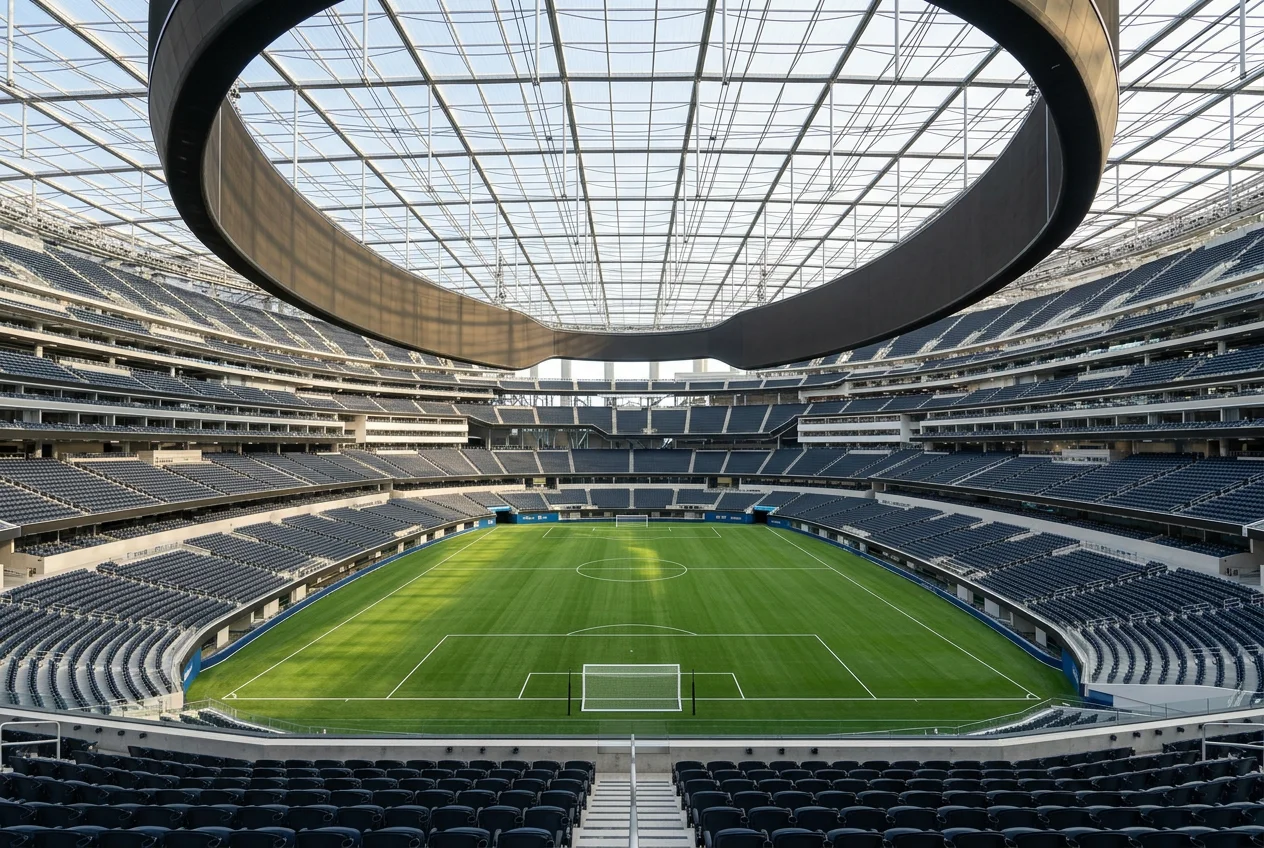
The most expensive stadium ever built now hosts football’s most valuable tournament. SoFi Stadium in Inglewood cost $5.5 billion to construct — more than any sports venue in history — and its technological sophistication reflects that investment. When World Cup 2026 arrives in Los Angeles, matches unfold beneath a translucent ETFE roof that admits natural light while protecting from California’s predictable sunshine. For bettors evaluating venue effects, SoFi represents the future of stadium design applied to soccer’s greatest stage.
SoFi Stadium opened in 2020 as the shared home of the NFL’s Los Angeles Rams and Chargers, replacing aging venues that could not accommodate modern event requirements. The stadium sits adjacent to the Inglewood Forum, creating an entertainment district that rivals any in North America. Understanding SoFi’s unique characteristics — particularly its semi-enclosed design and Los Angeles’s diverse supporter populations — shapes how smart bettors approach every fixture scheduled here.
About SoFi Stadium
SoFi Stadium’s capacity reaches 70,240 for World Cup 2026, utilizing a soccer-specific configuration that differs from NFL game arrangements. The stadium’s architecture features a distinctive canopy roof that covers the seating bowl while leaving the playing surface partially exposed to the elements — a design that balances weather protection with natural grass requirements.
The playing surface is natural grass, installed specifically for soccer events to replace the artificial turf used during NFL season. This grass installation follows protocols established for previous international fixtures at SoFi, including Copa América matches that provided operational experience with major tournament requirements. The pitch quality should meet FIFA standards, though the transition from artificial to natural surfaces always carries unpredictability.
The stadium’s translucent roof creates unique lighting conditions. Natural California sunlight filters through the ETFE material, providing illumination without the harsh shadows that fully open-air venues produce. Evening matches benefit from integrated artificial lighting that supplements declining natural light, maintaining consistent visibility throughout twilight kickoffs.
Climate control within the partially enclosed structure moderates Los Angeles’s summer temperatures. While outdoor thermometers may reach 30°C during June and July afternoons, the stadium’s airflow design and roof shading reduce pitch-level temperatures by several degrees. This climate moderation benefits visiting teams unaccustomed to Southern California heat.
World Cup 2026 Matches at SoFi Stadium
SoFi Stadium hosts eight World Cup 2026 matches: six group-stage fixtures and two Round of 16 knockout matches. The venue’s schedule includes several high-profile fixtures featuring major footballing nations.
| Date | Match | Round | Time (ET) | Time (PT) |
|---|---|---|---|---|
| June 14 | Group Match TBD | Group Stage | 6:00 PM | 3:00 PM |
| June 18 | Colombia vs DR Congo | Group K | 9:00 PM | 6:00 PM |
| June 18 | Switzerland vs Bosnia & Herzegovina | Group B | 3:00 PM | 12:00 PM |
| June 21 | Group Match TBD | Group Stage | 6:00 PM | 3:00 PM |
| June 25 | Group Match TBD | Group Stage | 6:00 PM | 3:00 PM |
| June 29 | Argentina vs Jordan | Group J | 6:00 PM | 3:00 PM |
| July 4 | Round of 16 | Knockout | 6:00 PM | 3:00 PM |
| July 5 | Round of 16 | Knockout | 3:00 PM | 12:00 PM |
The Argentina vs Jordan fixture on June 29 represents SoFi’s highest-profile group-stage match. Los Angeles hosts one of North America’s largest Argentine diaspora communities, meaning this fixture will feel like a home game for the defending champions despite neutral venue status.
Los Angeles and the World Cup
Los Angeles’s multicultural population of 3.9 million — expanding to 13 million in the metropolitan area — creates unique World Cup dynamics. The city hosts North America’s largest Mexican-American community (4.9 million in LA County alone), along with substantial populations from Central America, South America, and virtually every Asian nation. No World Cup 2026 fixture at SoFi will lack passionate supporter contingents.
The Colombian and Argentine communities in Los Angeles transform any match featuring those nations into de facto home games. Combined with significant Brazilian, Salvadoran, Guatemalan, and Peruvian populations, Latin American fixtures at SoFi produce atmospheres that rival matches in South America itself. Bettors should factor these diaspora effects into crowd-influence calculations.
Los Angeles’s entertainment industry presence adds media attention that other venues cannot match. Hollywood celebrities attending matches, combined with the city’s influencer culture, amplify SoFi fixtures in ways that affect global viewing patterns. This heightened exposure may influence referee behaviour and player performance as the spotlight intensifies.
Betting Notes
SoFi Stadium’s semi-enclosed design creates controlled conditions that reduce weather-related variance. Unlike fully open-air venues where rain, wind, and temperature extremes affect match dynamics, SoFi’s roof and climate management provide consistency that favours pre-match betting over in-play weather adjustments.
The natural grass installation deserves monitoring. Previous soccer events at SoFi have produced varying pitch assessments, and the transition from NFL artificial turf requires several weeks of cultivation. Early-tournament fixtures may feature pitch conditions that differ from late-round matches after the grass has established itself under consistent soccer use.
Time zone considerations affect SoFi betting for Eastern Canadian bettors. Pacific Time kickoffs (3:00 PM and 6:00 PM PT) translate to 6:00 PM and 9:00 PM ET — comfortable evening viewing. The late kickoffs suit live betting attention without conflicting with work schedules.
Home advantage calculations for SoFi fixtures require diaspora analysis. A match featuring Argentina produces de facto home advantage for La Albiceleste; a match featuring Colombia similarly favours Los Cafeteros. Research diaspora populations when assessing crowd composition effects on referee decisions and player psychology.
Round of 16 Implications
SoFi’s July 4 and July 5 Round of 16 fixtures carry significant betting implications. The bracket structure determines which group winners and runners-up face each other in Inglewood, creating pathway analysis opportunities for futures bettors. Teams progressing through SoFi knockout matches continue toward quarterfinals at AT&T Stadium or other venues.
The July 4 date adds American significance to that Round of 16 fixture. Independence Day celebrations surrounding the match create festive atmosphere that could affect match dynamics — particularly if USMNT advances to play at SoFi on American football’s most patriotic holiday. Position for potential American involvement in July 4 knockout futures.
SoFi Stadium represents the pinnacle of modern venue technology applied to football’s greatest tournament. Its $5.5 billion investment provides controlled conditions that reward prepared teams over those dependent on weather advantages. The Los Angeles diaspora populations transform neutral fixtures into home games for Latin American nations. Position accordingly — SoFi’s sophistication creates betting dynamics that simpler venues cannot replicate.
Transportation and Logistics
SoFi Stadium’s Inglewood location presents transportation challenges that differ from downtown stadium sites. The venue sits approximately 5 kilometres from Los Angeles International Airport, with dedicated Metro connections via the K Line providing rail access that opened in 2022. This transit infrastructure reduces traffic congestion that plagued previous major events at the site.
For supporters arriving from across Southern California, freeway access via the 405, 105, and Century Boulevard corridors provides multiple approach routes. However, Los Angeles traffic patterns mean departure timing significantly affects arrival experience — bettors monitoring in-play markets should recognize that late-arriving crowds may not reach full volume until 15-20 minutes after kickoff.
The stadium’s proximity to LAX creates scheduling considerations for teams flying into World Cup fixtures. A team arriving at LAX can reach SoFi within 30 minutes in light traffic, minimizing travel fatigue compared to venues requiring multi-hour ground transportation from airports. This logistical advantage benefits teams managing tight knockout-round schedules.
Historical Context
SoFi Stadium has limited soccer history compared to older venues, but its brief tenure includes significant international fixtures. The venue hosted Copa América 2024 matches, providing operational experience that informs World Cup preparations. Those matches established protocols for natural grass installation, crowd management, and broadcast requirements that FIFA inherits for 2026.
Los Angeles itself carries profound World Cup history. The Rose Bowl in nearby Pasadena hosted the 1994 World Cup Final, where Brazil defeated Italy in penalties — a match that introduced American audiences to global football culture. SoFi inherits that legacy while providing technological capabilities that 1994 infrastructure could not imagine.
For bettors, this historical context suggests SoFi fixtures carry cultural significance that intensifies atmosphere beyond typical neutral-venue dynamics. Los Angeles understands World Cup football through three decades of diaspora community support. That understanding translates to knowledgeable crowds whose energy reflects genuine football culture rather than curious tourism. Position for atmospheric effects that exceed what stadium capacity alone suggests.
SoFi Stadium combines technological sophistication with cultural passion to create a World Cup venue unlike any other. Its controlled conditions favour preparation over improvisation; its diaspora populations transform neutral fixtures into de facto home games. Back Latin American teams in SoFi fixtures with confidence that the crowd carries them, and trust that the venue’s $5.5 billion investment delivers conditions where quality prevails over chaos.
