
France World Cup 2026 — Odds, Group I Analysis & Betting Guide | KICKSTAKE
 Available in US
Loading...
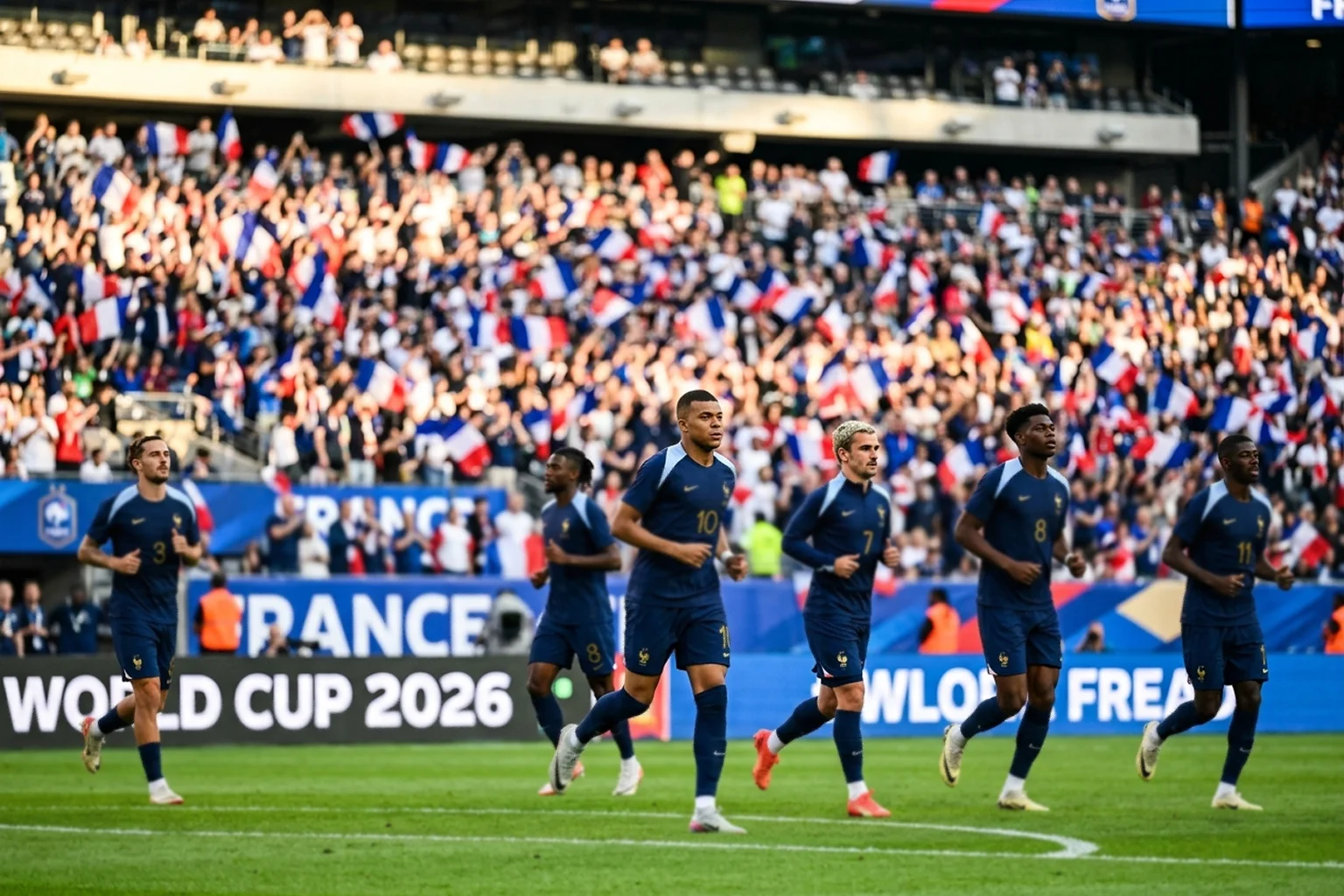
Kylian Mbappé collected the ball forty meters from goal with ten minutes remaining in the 2022 World Cup final. Argentina led 3-2. What followed — a turn, a strike, a hat-trick completed — encapsulated everything France represents in modern tournament football: individual brilliance capable of rescuing any situation, tactical adaptability, and a refusal to accept defeat until the final whistle. They lost that final on penalties, but the performance cemented France as perennial contenders who reach decisive matches regardless of circumstances.
Three consecutive World Cup finals reached. Champions in 2018, runners-up in 2022. France enters the 2026 tournament as the most consistent major-tournament performer of the past decade. France World Cup 2026 odds reflect this pedigree, pricing Les Bleus among the shortest favorites despite the challenges of transitioning from the 2018-2022 core to the next generation. This guide examines France’s squad composition, Group I dynamics, tactical identity, and where betting value might exist for a team whose pricing leaves little margin for error.
Squad Overview — Depth That Defies Injury
The 2022 World Cup run featured France overcoming an injury crisis that would have eliminated lesser nations. Benzema withdrew before the tournament. Pogba and Kanté missed entirely. Lucas Hernández lasted forty minutes before his hamstring gave out. Yet France reached the final anyway, a testament to squad depth that extends beyond starting eleven quality.
Kylian Mbappé anchors everything. At twenty-seven, he enters his absolute prime — the age where explosive athleticism meets tactical maturity. His move to Real Madrid after years at Paris Saint-Germain adds Champions League pedigree and experience in high-pressure environments beyond domestic dominance. Mbappé’s pace, finishing, and ability to manufacture goals from minimal opportunity make him the tournament’s most dangerous individual player. Betting markets for golden boot, most assists, and anytime scorer in any match start with Mbappé as the reference point.
Antoine Griezmann’s evolution from primary attacking threat to deeper orchestrator has extended his international relevance. Operating between the lines, Griezmann connects midfield to attack with movement and vision that creates space for Mbappé and others. His defensive workrate exceeds typical attacking players, contributing to France’s ability to dominate without the ball. Griezmann’s experience — three World Cups, two European Championships — provides leadership that statistics cannot capture.
The midfield generates both France’s greatest strength and lingering questions. Aurélien Tchouaméni has emerged as the Kanté replacement, offering athleticism, passing range, and defensive coverage from the pivot. Eduardo Camavinga provides dynamic ball-carrying and pressing intensity. Together, they form a youthful core that will define France’s tournament identity for the next cycle. However, neither has experienced the pressure of elimination matches as primary midfield figures — their 2022 contributions came alongside more experienced presences. The 2026 tournament tests whether they can carry that responsibility independently.
Defensive personnel remains robust. William Saliba has developed into one of Europe’s elite center-backs at Arsenal, adding to France’s depth behind established options. Dayot Upamecano’s physical attributes suit knockout-round intensity. Théo Hernández provides attacking thrust from left-back, while Jules Koundé offers versatility across the back line. Goalkeeper Mike Maignan has established himself as Hugo Lloris’s successor, bringing shot-stopping quality and distribution that suits France’s playing style.
Attacking depth extends beyond the obvious names. Ousmane Dembélé’s unpredictable dribbling creates chaos that structured defenders struggle to contain. Randal Kolo Muani offers physical presence and finishing from central positions. Marcus Thuram provides workrate and tactical discipline. France can field multiple attacking configurations without significant quality drop-off — a luxury that proves decisive across tournament formats requiring depth utilization.
Didier Deschamps’s tenure as manager now spans over a decade, producing one World Cup title and two finals. His pragmatic approach — defensive organization first, attacking quality released in specific moments — has proven effective across multiple squad iterations. Critics question whether this conservatism maximizes France’s talent; supporters point to consistent results that exceed more aesthetically pleasing teams. For betting purposes, Deschamps’s influence means France matches often feature controlled proceedings, with scoring concentrated in specific phases rather than distributed throughout.
The integration of younger players has occurred seamlessly under Deschamps’s management. Veterans like Griezmann mentor emerging talents, creating squad harmony that enhances tournament performance. Unlike nations where generational transitions create friction, France’s blend of experience and youth functions cohesively. This cultural strength may not appear in talent assessments but proves decisive in pressure moments where team unity matters.
Injury management represents another Deschamps strength. France’s depth allows rotation without performance drop-offs, preserving key players for knockout rounds while maintaining group-stage dominance. Mbappé’s minutes can be managed; Griezmann’s workload can be distributed. This luxury, unavailable to nations with thin squads, positions France to peak when tournaments matter most — in semifinal and final weeks rather than early group matches.
Group I — Senegal Demands Respect
France draws Group I alongside Senegal, Norway, and Iraq. The draw appears favorable without qualifying as a formality. Senegal’s presence ensures at least one genuinely competitive fixture, while Norway’s quality prevents complacency in what might otherwise seem like straightforward matches.
Senegal carries pedigree that casual observers underestimate. African Cup of Nations champions in 2022, quarterfinal finishers at the same World Cup — this is not a team lacking tournament credentials. Aliou Cissé’s squad blends European-based stars with tactically disciplined organization that troubled England and the Netherlands in Qatar. Ismaïla Sarr provides pace and directness. Kalidou Koulibaly anchors defense with experience accumulated across Serie A and Premier League. Senegal will not fear France; they have beaten comparable opponents before. The France-Senegal fixture profiles as the group’s decisive match, likely determining who finishes first versus second.
Norway represents Erling Haaland’s first World Cup appearance — a storyline that generates attention beyond the squad’s overall quality. Haaland’s goal-scoring record at Manchester City establishes him among the world’s elite finishers, capable of punishing any defensive lapse. However, Norway’s supporting cast falls short of matching Haaland’s individual brilliance. Their approach often involves feeding Haaland and hoping he produces moments of magic that decide matches. Against France’s organized defense, this strategy faces challenges. The betting angle involves whether France can contain Haaland entirely or whether he produces despite limited team support.
Iraq makes their World Cup return after qualifying through Asian playoffs. The Iraqi side offers competitive spirit and improving technical quality without threatening established nations for advancement. Iraq will defend deep, aim to frustrate, and hope for set-piece opportunities that generate unlikely results. France versus Iraq should produce comfortable French victory, with betting interest focusing on margin, totals, and player props rather than match-result uncertainty.
Group dynamics suggest France and Senegal contest top spot, Norway competes for third-place qualification through best-performer calculations, and Iraq faces long odds for advancement. France should finish first, though Senegal could claim top position if the direct match favors the African champions. Betting on France to win Group I at short prices offers limited value; finding Senegal at longer odds may provide better risk-reward if you believe the matchup profiles competitively.
Match scheduling affects preparation and betting strategy. The order of opponents — whether France faces Senegal first, middle, or last — changes tactical approaches and squad rotation decisions. Opening against Iraq allows France to build confidence against inferior opposition. Closing against Senegal with qualification potentially secured could invite rotation that affects match dynamics. Understanding the exact fixture sequence helps identify where upset potential or comfortable wins most likely occur.
North American venues create logistics that affect all European teams, including France. Travel distances between group-stage cities, training facility quality, and acclimatization timelines all matter for player preparation. France’s resources — top-tier hotels, medical staff, and support systems — minimize these challenges relative to smaller nations, but tournament logistics never disappear entirely from preparation considerations.
Tactical Identity — Pragmatism Meets Starpower
Deschamps’s France operates on principles that prioritize solidity over spectacle. Defensive organization begins with the front line pressing in coordinated triggers rather than individual chaos. Midfielders protect central spaces with disciplined positioning. Defenders sit in structured blocks that force opponents wide and limit central penetration. This foundation allows France to control matches without dominating possession statistics.
The offensive approach relies on transitions and individual quality. Mbappé’s speed punishes teams caught between shapes after turnovers. Griezmann’s movement creates advantages that others exploit. Set pieces generate disproportionate goal output relative to open-play chances. France often win matches without creating overwhelming expected-goals advantages, converting clinical chances while limiting opponents to low-quality attempts.
This profile affects betting markets specifically. Unders in France matches hit more frequently than their talent suggests because their approach minimizes chaos that produces high-scoring affairs. France often lead 1-0 through sixty minutes, add a second on transition, and close 2-0 or 2-1 after conceding a late consolation. Totals around 2.5 goals frequently decide France match bets — over requires open play they do not encourage, under requires clean sheets they often achieve.
Corners and shots statistics reflect territorial control without finishing volume. France generate corners through sustained pressure in wide areas, creating markets where over corner totals find value. Shots on target often underwhelm relative to possession because France prioritize quality over quantity, taking only high-percentage opportunities. Player-specific shot props require adjusting for this team tendency rather than extrapolating from domestic league data.
Late-game management represents a Deschamps strength. France protect leads effectively, seeing out matches through game management and tactical adjustments that frustrate opponents chasing equalizers. In-play markets during France matches often offer value on maintaining current scorelines — if France lead at sixty minutes, backing them to win without conceding captures their closing ability at prices that may not reflect historical patterns.
Substitution patterns under Deschamps follow predictable templates. Fresh legs enter around the sixty-fifth minute to maintain pressing intensity. Defensive-minded replacements shore up leads in final twenty minutes. These patterns create in-play opportunities where knowing France’s likely changes helps anticipate match flow. Late substitutes scoring occurs less frequently than for teams chasing games, affecting live scorer markets accordingly.
Set-piece efficiency exceeds expectations for France despite lacking aerial-dominant targets. Delivery quality from Griezmann and others, combined with intelligent movement in the box, generates goals from corners and free kicks at rates that matter in tight matches. Betting on France to score from set pieces in specific matches captures this strength at prices not reflecting their efficiency.
France’s Odds and Market Positioning
France typically prices between five and seven to one for outright tournament winner, among the shortest alongside Argentina and England. This pricing reflects consistent tournament performance, squad quality, and the perception that France competes for titles regardless of draw or circumstances. Whether these prices offer value depends on your assessment of their margin relative to probability.
At six to one, France implies roughly fourteen-percent win probability. Historical base rates for tournament favorites at these prices cluster around ten to fifteen percent, suggesting pricing efficiency without obvious value. Backing France at six to one accepts fair odds on a genuine contender without exploiting market inefficiency. Value emerges only if you believe France’s probability exceeds what public markets perceive — a difficult argument given their transparency.
Group I winner markets price France as heavy favorites. Finding alternative value requires backing Senegal at significant odds — perhaps three to one or longer — if you believe the head-to-head match could go either way. Given Senegal’s 2022 performance, this bet offers more upside than group-winner markets typically provide.
France to reach the final prices around three to one, reflecting their path through group stage and knockout rounds. This market may offer better value than outright winner because it captures France’s strength — reaching decisive matches — without requiring them to win those matches, where variance increases. France reaching finals without winning has happened; betting on the journey rather than the destination may suit their profile.
Player props concentrate on Mbappé. Golden boot odds typically price him as favorite or near-favorite, reflecting his expected goals involvement and France’s likely deep run providing additional matches. Mbappé scoring in every group match creates accumulator opportunities if pricing undervalues his consistency against inferior opponents. Assists props also merit attention given his willingness to create for teammates when doubled.
Defensive props for France deserve consideration. Clean sheet betting in matches against Iraq and potentially Norway captures their defensive solidity at prices that may not reflect likelihood. William Saliba and Théo Hernández receiving cards could offer value on physical match profiles. Maignan to save a penalty across the tournament reflects both France’s expected deep run and the likelihood of knockout matches going to shootouts.
Historical Patterns and 2026 Context
France’s World Cup history features extremes rather than mediocrity. They win it (1998, 2018), reach finals (2006, 2022), or exit early in embarrassing fashion (2002, 2010). The middle ground of quarterfinal or semifinal exits happens less frequently than peer nations. This pattern suggests France matches present binary scenarios — they either perform to potential or collapse unexpectedly.
The 2010 implosion, featuring player revolts and group-stage elimination, demonstrates that France dysfunction is possible despite squad talent. Deschamps’ extended tenure has minimized these risks through squad culture and selection policies that prioritize team cohesion. The probability of France-style collapse in 2026 remains low but non-zero — a consideration when assessing group-stage advancement at short prices.
The 2022 near-miss — coming back from 2-0 down in the final before losing on penalties — establishes emotional context for 2026. France have unfinished business, a narrative that could inspire or burden depending on how players internalize the experience. Mbappé’s hat-trick final provides both confidence and reminder of how close they came without lifting the trophy. Whether this motivates superior performance or creates pressure that undermines execution remains to be seen.
Bracket implications matter for France’s path. Group I winner faces opponents from favorable bracket positions in early knockout rounds. Group I runner-up may face more challenging paths depending on other group outcomes. France finishing first versus second affects their probability of deep runs, making group-stage margins relevant beyond advancement itself.
The expanded forty-eight-team format benefits France’s depth advantage. More matches mean more opportunities for rotation and more pathways to the final. Teams with thin squads tire across additional knockout rounds; France’s resources sustain performance levels. This structural advantage may not appear in tournament previews but compounds through six or seven matches required for title victory.
French football culture generates pressure that can motivate or burden. Media scrutiny, public expectations, and national pride create environments that some players embrace and others struggle to navigate. Deschamps’s experience managing these dynamics across multiple tournaments provides stability that newer coaches cannot replicate. The emotional intelligence required to lead France through World Cup campaigns represents an undervalued coaching attribute.
Value Angles on France
After assessing squad, group, tactical identity, and market positioning, several value angles emerge for France betting.
France to win to nil against Iraq offers value if pricing does not reflect France’s defensive capability against overmatched opponents. Clean sheet probability in this fixture likely exceeds fifty percent, yet pricing may not reach corresponding levels. Similar logic applies to Norway if France’s defensive organization contains Haaland effectively.
Under 2.5 goals in France versus Senegal captures the tactical profile of both teams. Senegal defends compactly and counters; France controls without creating excessive chances. Neither team’s approach produces high-scoring affairs. This market may price near even money when probability favors the under.
Mbappé to outscore Haaland head-to-head in Group I creates a player-versus-player market where France’s expected dominance gives Mbappé more scoring opportunities. Haaland faces France’s elite defense in the direct match while Mbappé faces Norway’s inferior back line. This structural advantage may not price correctly.
France to reach semifinals at odds around even money offers exposure to their consistent deep runs without requiring ultimate triumph. If you believe France navigates group and early knockout rounds at rates exceeding fifty percent, this market provides cleaner value than outright winner prices that require winning additional elimination matches against elite opposition.
The broader approach to France betting involves acknowledging their genuine quality while avoiding short prices that eliminate margin for error. France should advance from Group I, should reach later knockout rounds, and should compete for the title. Whether they deserve to price as second or third favorites depends on competitor assessment — Argentina’s defending-champion burden, England’s knockout struggles, Brazil’s transition challenges all factor into relative value. France at fair odds represents a bet on consistency; finding them at inflated odds remains challenging given market awareness of their capabilities.
Contrarian angles on France require identifying moments when public sentiment undervalues them. Early tournament injury scares, unconvincing group-stage performances, or bracket draws against perceived difficult opponents could create temporary odds inflation on France progression. These windows offer value buying opportunities for bettors who recognize France’s structural advantages persist despite short-term setbacks.
The ultimate test for France betting involves separating their genuine probability of lifting the trophy from their probability of deep runs. France reaching semifinals prices as near-certainty in probability terms; France winning the entire tournament requires also defeating other elite teams in consecutive knockout matches. The difference between these probabilities creates market opportunities for bettors who can identify where pricing fails to distinguish between levels of progression.
