
World Cup 2026 Group F — Group of Death Betting Preview | KICKSTAKE
 Available in US
Loading...
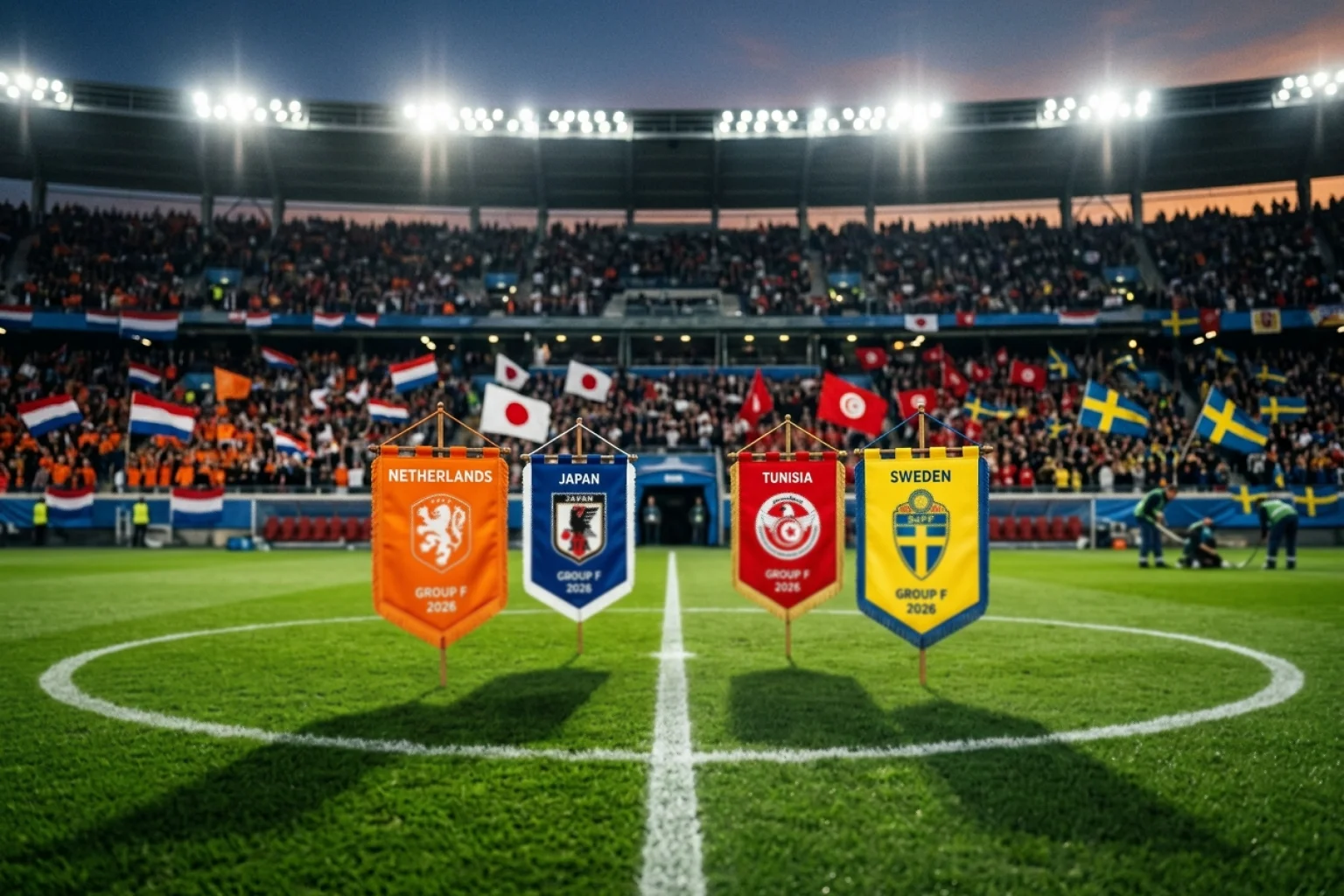
The group nobody wants. Netherlands, Japan, Tunisia, Sweden — four nations with genuine knockout-round aspirations crammed into a single pool where someone good goes home early. World Cup 2026 Group F earned its “group of death” designation through balanced competitiveness rather than one overwhelming favourite. Every fixture carries elimination stakes, and the margins between advancement and disaster will be measured in single goals.
I have tracked Japan’s rise through three World Cups and watched them defeat both Germany and Spain in 2022. Tunisia held Denmark and drew with them in Qatar. Sweden reached the World Cup quarter-finals as recently as 2018. The Netherlands finished third in 2014 and remains among Europe’s elite. There are no free points in Group F — only calculated risks and brutal consequences for those who miscalculate.
The Four Teams
The Netherlands enters as group favourite despite lacking the dominant generation that reached the 2010 and 2014 finals. Manager Ronald Koeman has rebuilt around Virgil van Dijk’s defensive leadership and Cody Gakpo’s attacking dynamism, with Memphis Depay providing experience and clinical finishing when fit. The Dutch style remains possession-dominant, though Koeman has added pragmatic elements that Louis van Gaal championed during the 2014 run.
Dutch tournament football oscillates between brilliance and collapse. They failed to qualify for the 2018 World Cup, reached the 2022 quarter-finals before losing to Argentina on penalties, and exited Euro 2024 in the semifinals. That inconsistency creates betting opportunities — the market prices Dutch quality without fully accounting for their psychological fragility in critical moments.
Japan’s European-based generation has transformed their World Cup ceiling. Takefusa Kubo at Real Sociedad, Takehiro Tomiyasu at Arsenal, and Wataru Endo at Liverpool provide elite-level experience that previous Japanese squads lacked. Manager Hajime Moriyasu refined a tactical approach that stunned the 2022 World Cup — high pressing, quick transitions, and fearlessness against nominally superior opponents.
The 2022 victories over Germany and Spain were not flukes. Japan identified tactical weaknesses in both sides and exploited them ruthlessly. Against the Netherlands, they will target similar vulnerabilities — the Dutch struggle against organized pressing, particularly when building from the back. Japan’s path to group victory runs through Van Dijk’s backline, and their confidence from past triumphs makes that assault more credible.
Tunisia represents African football’s defensive tradition at its finest. They drew Denmark and held Belgium goalless for 85 minutes at the 2022 World Cup, conceding just twice across three matches. Manager Jalel Kadri has maintained the tactical discipline that made them competitive while adding attacking outlets through Hannibal Mejbri, now established in the Premier League after his Manchester United development. Tunisian supporters in France — the massive diaspora population — will travel extensively to American venues.
Tunisian teams frustrate opponents who expect to dominate. Their compact 4-3-3 defensive shape limits space between lines, forcing opponents into long-range efforts and hopeful crosses. Against Japan’s quick transitions and Netherlands’ possession dominance, Tunisia’s organization could prove decisive in tight matches.
Sweden qualified through the European playoffs in March 2026, defeating Slovenia in the final round after finishing third in their qualification group behind Belgium and Austria. Manager Jon Dahl Tomasson has rebuilt a squad that lost Zlatan Ibrahimović to retirement but found new attacking identity through Alexander Isak and Dejan Kulusevski. The Scandinavian physical template remains — aerial presence, set-piece threat, and defensive resilience that compensates for technical limitations.
Swedish World Cup history includes the 2018 quarter-final run where they eliminated Mexico, Germany, and Switzerland before losing to England. That tournament demonstrated their capacity to grind through group stages and peak at the right moment. They enter Group F as underdogs but not pushovers — their ceiling reaches higher than odds suggest.
Schedule and Venues
Group F fixtures concentrate in the northeastern and western United States, requiring significant travel for all four teams. The schedule creates recovery challenges that could influence late-tournament match outcomes.
| Date | Match | Venue | Time (ET) | Time (PT) |
|---|---|---|---|---|
| June 14 | Netherlands vs Sweden | Lincoln Financial Field, Philadelphia | 3:00 PM | 12:00 PM |
| June 14 | Japan vs Tunisia | Gillette Stadium, Foxborough | 6:00 PM | 3:00 PM |
| June 20 | Netherlands vs Japan | MetLife Stadium, East Rutherford | 3:00 PM | 12:00 PM |
| June 20 | Tunisia vs Sweden | Lumen Field, Seattle | 6:00 PM | 3:00 PM |
| June 26 | Netherlands vs Tunisia | Hard Rock Stadium, Miami | 6:00 PM | 3:00 PM |
| June 26 | Sweden vs Japan | Lincoln Financial Field, Philadelphia | 6:00 PM | 3:00 PM |
The June 20 matchday forces Tunisia and Sweden to Seattle — a cross-country journey from their northeastern opening venues — while Netherlands and Japan remain on the East Coast. That travel disparity advantages the European and Asian representatives in their head-to-head on June 20. Factor this into your matchday two betting.
Key Matchups
Netherlands vs Japan on June 20 is Group F’s defining fixture. Both teams should take points from their opening matches, making this head-to-head decisive for group winner status. MetLife Stadium will host an atmosphere split between Dutch supporters — the largest European diaspora in New York — and Japanese fans who travel obsessively for World Cup matches.
Japan’s pressing intensity targets exactly the build-up patterns the Netherlands prefer. Koeman’s side plays out from Van Dijk and the centre-backs, but Japanese forwards will close passing lanes aggressively. If the Dutch cannot escape the press, Japan creates transition chances that their clinical forwards convert efficiently. The 2022 victories over Germany and Spain followed this template precisely.
Draw is the value play at approximately 3.30. Both teams have too much quality to lose decisively, and the stakes encourage caution after opening-match results clarify the group picture. Under 2.5 goals aligns with this thesis — expect a tense 1-1 or scoreless draw rather than an open attacking contest.
Tunisia vs Sweden on June 20 in Seattle carries survival stakes for both. The loser faces likely elimination; the winner establishes themselves as contenders for second place. Swedish aerial threats from Isak and set-piece specialists will target Tunisia’s compact defence, while Tunisian transitions through Mejbri can punish Swedish aggression.
This match projects as lower-scoring than the talent suggests. Both teams prioritize defensive organization, and the stakes discourage attacking risks. Under 2.5 goals at approximately 1.85 offers strong value. Sweden to win at 2.40 represents the marginally better side in a coin-flip match.
Netherlands vs Tunisia closes Dutch group play in Miami’s heat. Tunisia’s defensive shell will frustrate Dutch possession patterns, potentially replicating the 0-0 they held Belgium to for 85 minutes in 2022. The climate advantages Tunisia — they play regularly in North African heat — while Dutch players will struggle with June humidity in southern Florida.
Group F Odds
The Netherlands leads betting markets, but the gap to Japan is smaller than typical favourite-challenger dynamics suggest.
| Market | Netherlands | Japan | Tunisia | Sweden |
|---|---|---|---|---|
| To Win Group F | 1.90 | 2.75 | 7.00 | 8.00 |
| To Qualify (Top 2) | 1.30 | 1.55 | 3.50 | 4.00 |
| To Finish Bottom | 10.00 | 6.00 | 2.50 | 2.25 |
Japan at 2.75 to win the group offers the best value in Group F. Their 2022 pedigree demonstrates World Cup-specific excellence that the Netherlands cannot match. The head-to-head on June 20 determines group leadership, and Japan’s tactical approach specifically targets Dutch weaknesses. At 2.75, you receive approximately 36% implied probability on a team whose actual chances sit closer to 40%.
Tunisia at 3.50 to qualify deserves consideration as a longshot. Their defensive organization kept Belgium and Denmark scoreless for extended periods in 2022, and similar performances against Netherlands and Sweden would leave qualification in play. Four points from draws against the European sides plus a victory over Japan — unlikely but possible — delivers second place.
Our Prediction
Japan wins Group F with six points. Netherlands finishes second with five points. Tunisia finishes third with three points. Sweden finishes bottom with two points.
The projected path: Netherlands beats Sweden 2-1 in their opener while Japan draws 1-1 with Tunisia. The crucial matchday two sees Netherlands and Japan draw 1-1 in New Jersey while Tunisia defeats Sweden 1-0 in Seattle. The June 26 finales produce a Dutch victory over Tunisia (2-0) and a Japanese victory over Sweden (2-1), delivering Japan’s group triumph on goal difference after both teams finish with six points.
This projection relies on Japan’s demonstrated ability to compete against elite European opposition. Their 2022 results were not anomalies — they have continued that form through Asian qualification and recent friendlies. The Netherlands lacks the ruthless edge that characterized their 2010 and 2014 squads, and Japan will exploit that softness.
The best value bet in Group F is Japan to win the group at 2.75. Back it as your primary position, with Japan to qualify at 1.55 as a hedge. This group rewards faith in Japan’s World Cup-specific excellence rather than reflexive backing of European pedigree.
Betting Angles Beyond Match Outcomes
Group F’s competitive balance creates opportunities in markets beyond standard match betting. The tight margins between all four teams make props, corners, and goal-scorer bets more attractive than outright winners.
Total group goals under 13.5 offers value at approximately 2.10. All four teams prioritize defensive organization, and the stakes throughout Group F discourage attacking risks. Tunisia will sit deep against everyone. Sweden will absorb and counter. Japan presses intensely but also defends compactly when protecting leads. The Netherlands’ possession dominance often produces controlled, low-event matches. Expect 1-1 draws and 2-1 results rather than goal festivals.
Netherlands total tournament corners offers an interesting angle. Dutch possession dominance generates corner kicks through sustained pressure, and they averaged over 6 corners per match in their 2022 World Cup campaign. If you can find Netherlands team corners over 16.5 for the group stage at reasonable prices, the volume play has historical support.
Japan first goal scorer props deserve attention in their Netherlands match. Takuma Asano scored the winner against Germany in 2022, and Japanese forwards thrive in transition moments that their pressing creates. At 8.00 or better, Asano to score first offers asymmetric upside in a fixture where Japan’s counter-attacking threat is underpriced.
The third-place wildcard adds strategic dimensions to Group F betting. Under the 48-team format, the eight best third-place teams advance. Tunisia finishing third with four points — achievable through draws against Netherlands and Sweden plus a Japan victory — could still deliver Round of 32 advancement. This mechanic increases the value of Tunisia-related bets, as even a “failed” group campaign might produce tournament survival.
Group F encapsulates everything compelling about World Cup betting: quality teams with genuine aspirations fighting for limited advancement spots. The Netherlands enters as favourite but carries psychological baggage from tournament disappointments. Japan proved their 2022 heroics were not flukes. Tunisia and Sweden can spoil any favourite’s plans through organization and resilience. Position for chaos, price in draws, and trust the Asian champions to outperform European expectations once again.
Canadian bettors should pay particular attention to Japan’s progression through this group. If Japan tops Group F, their knockout path could eventually intersect with Canada’s bracket should both teams advance deep. A potential quarter-final between two North Pacific nations — Canada playing in their home tournament, Japan playing their third consecutive deep World Cup run — represents compelling narrative odds for futures betting positioned early in the tournament.
The venues hosting Group F fixtures span American football heartland — MetLife Stadium, Lumen Field, and Gillette Stadium represent converted NFL venues that Japanese and European fans will transform into football atmospheres. Travel between Seattle and New Jersey for the Netherlands creates fatigue factors that could influence their final group match. Monitor travel schedules and rest days when positioning late Group F bets.
