
Best World Cup 2026 Betting Apps in Canada — Mobile Guide | KICKSTAKE
 Available in US
Loading...
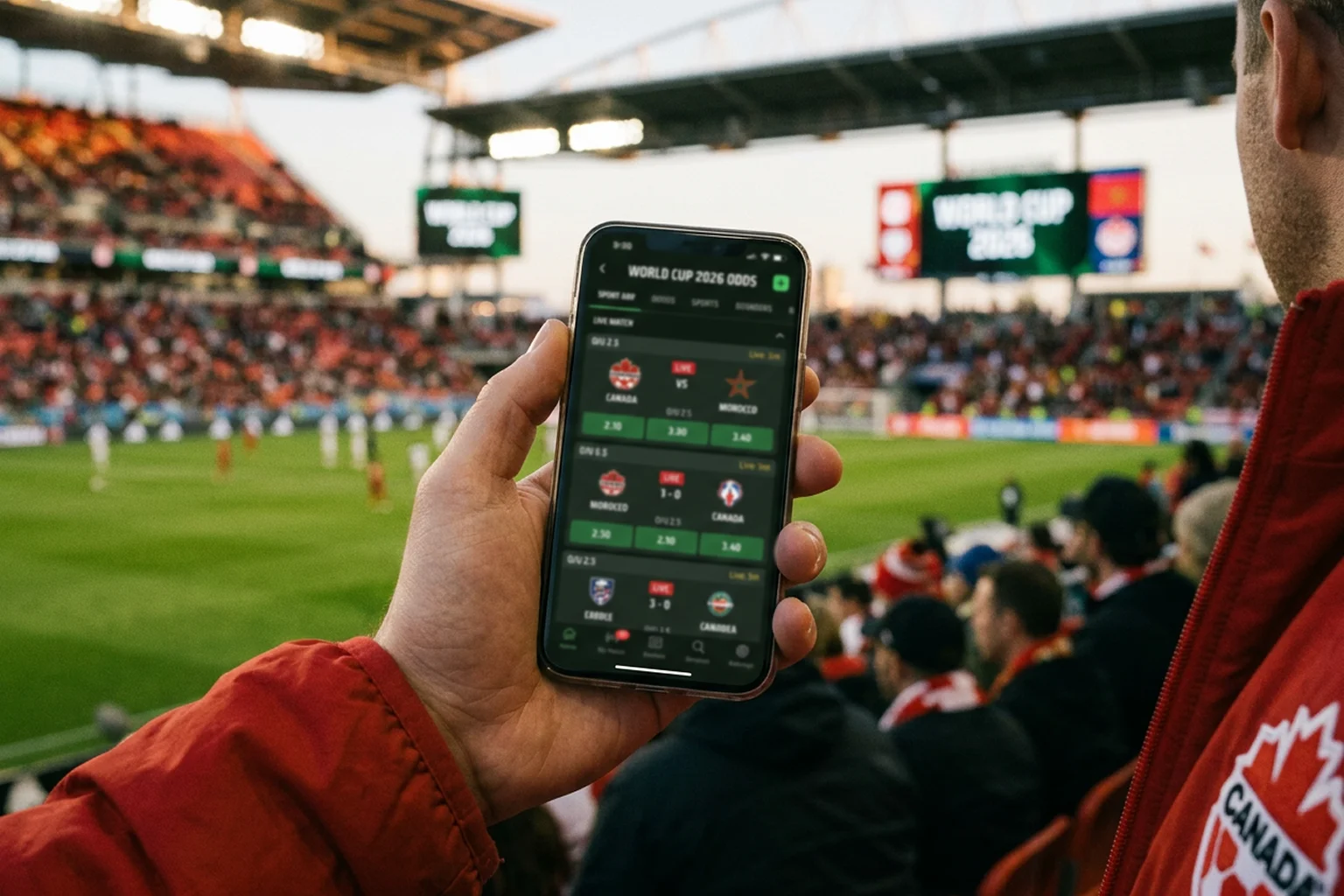
The text arrived at 6:47 AM Pacific time: “Davies just scored, check the live odds.” I was on a ferry crossing from Vancouver to Victoria, and my laptop sat useless in my bag without reliable WiFi. Within thirty seconds, I had the betting app open, found the adjusted line on Canada’s next opponent, and placed a wager before the market corrected. That moment crystallized why mobile betting apps matter for the World Cup 2026 — a tournament spanning time zones, kicking off during commutes, and demanding faster reactions than desktop browsers allow.
Canadians will experience this World Cup differently than any before. Matches in Toronto and Vancouver create afternoon and evening start times locally, while games in Mexico City and American host cities shift schedules across six time zones. Mobile betting apps transform these fragmented viewing experiences into actionable opportunities. This guide covers what distinguishes a strong World Cup betting app, which features justify attention, and how to optimize your mobile setup before June 11.
Why Mobile Betting Changes Everything for This Tournament
Consider the group-stage schedule: up to four matches per day across twelve groups over sixteen days. You cannot be at a desktop for all of them. Perhaps you catch Canada versus Bosnia and Herzegovina on a Friday afternoon while working from home, then watch Switzerland versus Qatar from a pub that evening, and track the late kickoffs through notifications while commuting. Each context demands mobile fluidity.
Live betting amplifies this dynamic. World Cup matches attract global attention, which means odds adjust rapidly based on worldwide betting volume. A seventy-fifth-minute corner kick that shifts momentum does not wait for you to reach a computer. Mobile apps with fast data feeds, one-tap bet placement, and push notifications for odds movements let you act within the window that matters. I tested live betting latency across multiple Ontario-licensed apps during the 2024 Euro tournament and found variance exceeding fifteen seconds between the fastest and slowest platforms. Over a thirty-nine-day World Cup, that gap compounds into meaningful missed opportunities.
Geolocation accuracy also matters for Canadians who travel during the tournament. Betting apps verify your physical location before accepting wagers, ensuring compliance with provincial regulations. A well-designed app handles this transparently, confirming your location once per session without repeated prompts. Poorly designed apps interrupt the betting flow with location errors, especially near provincial borders or in areas with weak GPS signals. The apps that handled geolocation smoothly during my cross-country testing earned my continued use; those that didn’t got deleted.
Battery and data efficiency rarely make marketing lists but affect real-world usability. Streaming apps drain batteries and consume data plans. A betting app running alongside a streaming service should not compete for resources. Native apps optimized for iOS and Android outperform responsive web versions on these metrics, though some operators offer lightweight mobile sites as alternatives for older devices.
What to Look For in a World Cup Betting App
I evaluate mobile betting apps on five dimensions: speed, stability, market depth, live betting functionality, and responsible gambling integration. These criteria emerged from covering three World Cups and testing platforms across regulated markets in Europe, Australia, and North America. Here is how each applies to the 2026 tournament.
Speed encompasses both app launch time and bet placement latency. An app that takes eight seconds to load after tapping the icon loses you opportunities during fast-moving markets. Bet placement should require no more than three taps from odds selection to confirmation: tap the odds, enter stake, confirm. Apps that insert confirmation screens, require scrolling through bet slips, or delay with spinning loaders frustrate the experience. Benchmark prospective apps on lower-stakes matches before the World Cup to identify friction points.
Stability means the app does not crash under load. Opening match, Canada’s group games, knockout rounds, and the final will generate traffic spikes that stress infrastructure. Operators who invest in backend scaling maintain app responsiveness; those who underinvest suffer outages when demand peaks. Past performance during major events — the 2022 World Cup final, 2024 Euro quarter-finals — indicates likely behavior, though infrastructure improvements happen. Social media and betting forums document outage reports worth reviewing.
Market depth on mobile should mirror the desktop experience. Some operators truncate mobile offerings to improve performance, hiding secondary markets or prop bets behind extra navigation. For World Cup betting, you want access to Asian handicaps, both-teams-to-score, first-half results, player props, and tournament specials without switching devices. Open the same match on mobile and desktop to compare market availability; discrepancies signal compromised mobile priority.
Live betting functionality requires real-time data visualization alongside bet placement. Apps displaying possession stats, shot counts, and momentum indicators help you contextualize in-play odds without external tools. Video streaming within the app — where broadcast rights permit — eliminates the need for split attention across apps. Cash-out buttons should appear prominently on active bets, with partial cash-out options accessible without navigating away from the match screen.
Responsible gambling integration includes deposit limits, session reminders, and self-exclusion accessible within the app itself. Platforms that bury these features in desktop-only settings fail mobile-first bettors. Ontario regulations require licensees to offer these tools on all platforms, but implementation quality varies. Test whether you can adjust a deposit limit or set a session reminder directly from the app before committing to regular use.
Live Betting on Mobile — The Critical Feature
My notebook from the 2018 World Cup final contains a scribbled note: “Griezmann penalty — line moved before I could confirm.” That was on a European operator’s app that lagged its data feed by nearly twenty seconds. Four years later, covering the 2022 tournament, I found apps where line updates reached my screen within three seconds of on-field events. The gap reflects deliberate infrastructure investment, and it defines which apps deserve your World Cup attention.
Live betting for soccer depends on continuous odds adjustment across multiple markets. Unlike sports with discrete plays — baseball pitches, football downs — soccer flows continuously, and odds shift based on territorial control, shots, fouls, and the collective judgment of traders watching the same broadcast you are. Apps with sluggish feeds show stale odds that get rejected when you attempt to place, forcing repeated attempts and missing the value window entirely.
In-play markets worth prioritizing include next goal scorer, match result at halftime, and correct score. These update frequently and reflect immediate game state. Apps that suspend markets for extended periods during dangerous attacks or set pieces frustrate bettors seeking to capitalize on momentum shifts. The best apps suspend markets narrowly — during active penalty kicks, VAR reviews, or goals being awarded — and resume pricing within seconds.
Push notifications enhance live betting without requiring continuous app focus. Configurable alerts for odds movements, goal alerts, and cash-out opportunities let you monitor matches peripherally while engaged elsewhere. An app that notifies you when your open bet becomes eligible for cash-out at profit saves the constant checking that drains batteries and attention.
Interface design for live betting should minimize cognitive load. A cluttered screen with dozens of markets, flickering odds, and promotional banners impedes quick decision-making. The apps I return to for live betting use clean layouts: current score and match time prominently displayed, key markets (match result, next goal, totals) accessible without scrolling, and secondary markets collapsible. Personal preference matters here, so experiment before settling on a primary app.
How to Download and Set Up Your App
Getting started with a mobile betting app involves straightforward steps, though pitfalls exist. Here is the process I recommend for Canadian bettors preparing for the World Cup.
Identify your preferred operator based on provincial availability and the criteria above. Ontario residents choose from dozens of AGCO-licensed options; residents of British Columbia, Québec, Alberta, and other provinces use their provincial lottery platform or consider alternatives where legally accessible. Write down your choice before proceeding — the goal is focused setup, not wandering through app stores.
Download the app from official sources only. iOS users find regulated betting apps on the Apple App Store; search by operator name and verify the developer matches the licensed company. Android users should download from the Google Play Store or, where unavailable, directly from the operator’s website following their official instructions. Avoid third-party APK repositories, which may distribute compromised versions that capture credentials or inject malware. I have seen phishing apps mimic legitimate betting platforms with near-identical interfaces; always confirm the source.
Create your account through the app or on desktop before logging in via mobile. Account creation requires personal information: full legal name, date of birth, address, email, and phone number. Operators verify this against government records, so accuracy matters. Mismatched information delays withdrawals and triggers compliance reviews. Some apps allow registration directly on mobile; others redirect to a mobile browser during signup. Either works, but note where you established the account for future reference.
Complete identity verification promptly. Most platforms request a scan or photograph of government-issued ID — Canadian driver’s license, passport, or provincial ID card — along with proof of address such as a utility bill or bank statement. Apps with integrated document scanning simplify this process; others require uploading files separately. Completing verification before the tournament begins ensures your account is fully functional when matches start. Delaying verification until you attempt a withdrawal introduces friction at the worst moment.
Set responsible gambling limits before depositing. Mobile apps should provide access to deposit limits, loss limits, session reminders, and self-exclusion options. Navigate to account settings or responsible gambling sections and configure limits matching your planned bankroll. A daily deposit limit prevents impulsive top-ups after losses; a session time reminder prompts breaks during marathon group-stage days. These tools are more valuable when set proactively than when sought reactively.
Fund your account using supported payment methods. Interac e-Transfer dominates the Canadian market, offering near-instant deposits from major banks. Credit cards, debit cards, and e-wallets like PayPal provide alternatives, though some banks block gambling transactions on credit products. Minimum deposits typically range from ten to twenty dollars. Deposit only your planned tournament bankroll — the World Cup is a five-week event, and pacing matters more than frontloading.
Enable notifications selectively. Apps offer various alerts: promotional messages, odds movements, settled bets, cash-out availability, and goal alerts. Enable the functional notifications that support your betting workflow; disable marketing messages that clutter your phone. Most apps allow granular control through settings menus, though defaults lean toward maximum notification volume.
Test the app on low-stakes bets before the tournament. Place a wager on a pre-World Cup friendly or early June league match to confirm the full cycle: bet placement, live tracking, cash-out functionality, and settlement. Identify friction points now rather than during Canada’s opening match against Bosnia and Herzegovina on June 12.
Managing Your Mobile Betting Experience
A colleague once drained his phone battery by halftime of a knockout match, leaving him unable to cash out a winning position before a late equalizer. Practical management of your mobile betting setup prevents such frustrations during a tournament where every match matters.
Battery conservation starts with closing background apps that compete for resources. Streaming services, social media, and other battery-intensive applications should close when you need maximum betting uptime. Low-power mode on both iOS and Android extends battery life at the cost of some performance, a worthwhile tradeoff during multi-match days. Portable chargers offer insurance for extended sessions away from outlets.
Data management matters for bettors on limited mobile plans. Betting apps themselves consume minimal data — text-based odds and bet confirmations require kilobytes, not megabytes. However, streaming video through the app or a parallel service consumes gigabytes quickly. Monitor data usage during early tournament matches to gauge consumption, and adjust streaming quality settings or switch to WiFi where available. Most venues hosting World Cup viewing will offer WiFi; confirm passwords before kickoff.
App updates should install promptly when released. Operators push updates to fix bugs, improve performance, and address security vulnerabilities. An outdated app may experience login issues, display errors, or miss feature improvements rolled out during the tournament. Enable automatic updates or check manually during the group stage.
Multiple apps serve different purposes for serious bettors. A primary app for live betting, a secondary app for line shopping, and a third for futures markets distributes risk and captures value across platforms. Managing multiple accounts requires tracking login credentials securely — a password manager helps — and balancing funds across platforms. The cognitive overhead increases, but so does your ability to find the best price on any given wager.
Session awareness prevents the creep from engaged betting to compulsive betting. Group-stage days offer continuous action, and the transition from watching Canada to tracking later matches to betting on overnight games blurs hours together. Responsible gambling tools like session reminders create external boundaries, but self-awareness remains primary. Know your limits, take breaks between matches, and step back when frustration or fatigue clouds judgment.
Record-keeping extends to mobile. Screenshot bet slips before confirmation, note odds taken and stakes placed, and log results as they settle. Apps store bet history, but exporting that data varies in difficulty. A simple notes app or spreadsheet captures what you need for post-tournament review. I maintain a running log that takes sixty seconds per bet and has improved my analysis over multiple World Cups.
Preparing Your Device for Tournament Day
The forty-eight hours before Canada’s opening match on June 12 should include device preparation alongside research and bankroll allocation. A few practical steps ensure your mobile setup performs when stakes matter most.
Clear storage space on your device. Apps perform better with available storage for caching data and processing updates. Delete unused apps, clear browser caches, and move photos to cloud storage if space runs tight. Betting apps typically require between one hundred and three hundred megabytes, but performance degrades on devices operating near capacity.
Update your operating system to the current stable release. iOS and Android updates often include security patches and performance improvements that benefit all apps. Avoid updating during the tournament itself, when a buggy release could disrupt access — complete updates at least a week before June 11.
Test login credentials across all betting apps you plan to use. Password resets during live matches waste critical time. Confirm that two-factor authentication, if enabled, functions smoothly. Some operators send verification codes via SMS; others use authenticator apps. Know which method each platform uses and ensure the associated phone number or app is accessible.
Configure notification settings to balance information flow with distraction management. Enable goal alerts and cash-out notifications for matches you bet on; disable promotional pushes that add noise without value. Review these settings in each app’s preferences menu, as defaults often prioritize operator marketing over bettor utility.
Charge external batteries and confirm you have charging cables accessible for tournament viewing locations. A pub without convenient outlets, a friend’s backyard, or a park screening demands portable power. The investment in a reliable portable charger pays back across thirty-nine days of mobile betting opportunities.
