
USA World Cup 2026 — Betting Picks & Co-Host Advantage | KICKSTAKE
 Available in US
Loading...
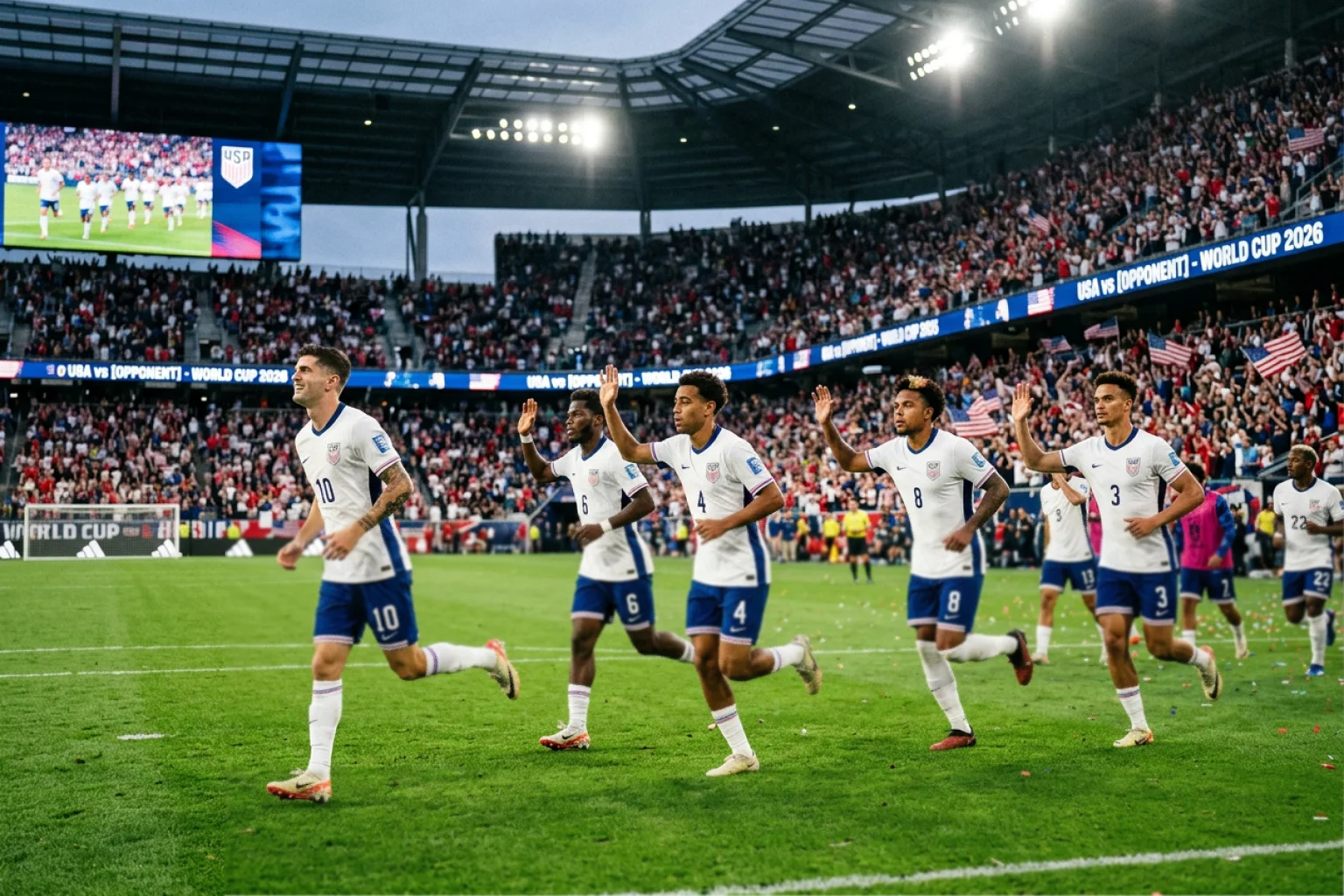
The biggest stage comes home. Eleven American venues will host seventy-eight matches including every knockout round from the quarterfinals onward. For the USMNT, this represents the opportunity that generations of American soccer development have built toward — a World Cup where home advantage, prime-time kickoffs, and passionate crowds create conditions no previous American squad has experienced. USA World Cup 2026 betting carries the weight of co-host expectations alongside genuine uncertainty about where this young, talented squad actually stands against global elite.
The 2022 World Cup demonstrated both American potential and limitations. They advanced from a difficult group featuring England and Wales, competed fiercely against Netherlands in the Round of 16, and exited without disgrace. Four years later, with a squad that has matured through European leagues and a tournament on home soil, the ceiling has risen — but so have expectations. This guide examines American squad composition, Group D dynamics, co-host advantage factors, and where betting value exists for a team whose trajectory points upward even as assessment remains uncertain.
USMNT Squad and Key Players
Christian Pulisic carries the creative burden that American soccer places on its brightest talent. His AC Milan development added consistency to the explosive potential that earned Chelsea’s investment. Pulisic operates across the front line, creating and scoring with quality that matches any opponent’s wide threats. His fitness — historically fragile at critical moments — represents the primary concern for a player whose influence determines American ceiling.
Weston McKennie provides the midfield engine that American teams historically lacked. His Juventus career refined a game built on energy, aerial ability, and box-to-box contribution. McKennie’s physicality suits tournament football where matching opponents’ intensity matters as much as technical superiority. His tournament experience across multiple competitions provides composure that younger teammates still developing.
Tyler Adams anchors defensive midfield with leadership that exceeds his age. His ability to win the ball, distribute under pressure, and organize teammates creates the platform that attacking players require. Adams’ captaincy provides the vocal leadership that young squads need; his absence through injury creates vulnerability that no direct replacement addresses.
Giovanni Reyna represents the technical ceiling that American development has reached. His Borussia Dortmund breakthrough suggested generational talent; subsequent injury struggles have limited his trajectory without eliminating his potential. Reyna healthy transforms American attacking options; Reyna injured leaves creative burden concentrated on Pulisic alone.
Yunus Musah’s midfield presence adds dynamism that complements McKennie and Adams. His Valencia and then AC Milan development produced a player capable of progressing the ball through pressure with carrying and passing. Musah’s physicality and tactical intelligence suit the specific demands of tournament football.
Defensive personnel has improved through European development. Antonee Robinson provides attacking thrust from left-back. Sergiño Dest offers versatility across the back line. Center-back partnerships continue evolving through various combinations. The overall defensive picture remains unsettled compared to established nations — a concern that quality opponents will target.
Goalkeeping presents genuine strength through Matt Turner’s development. His Arsenal and then club pathway refined shot-stopping and distribution that suit American playing style. Turner provides competent goalkeeping without elite ceiling — adequate for tournament advancement without representing decisive advantage.
Gregg Berhalter’s coaching tenure has produced consistent results without dramatic breakthroughs. His system emphasizes possession, pressing, and developing young talent through international experience. Berhalter understands American soccer culture and player relationships; whether his tactical approach maximizes squad potential against elite opponents remains debated.
Squad depth has improved through European development pathways. Brenden Aaronson provides attacking alternatives with energy and pressing contribution. Timothy Weah adds pace and directness from wide positions. Josh Sargent offers striking options when tactical situations demand direct threat. The bench provides quality that previous American generations lacked — adequate rotation options for tournament demands.
The dual-national pipeline has benefited American soccer significantly. Players who could represent other nations chose USA, adding quality that domestic development alone could not produce. This recruitment success contributes to squad depth that feels unprecedented for American football.
Set-piece organization has improved under Berhalter’s staff. Delivery quality and movement patterns create corner and free-kick threats. Defensive set-piece organization remains a concern — American inexperience at this level shows in disorganization that quality opponents exploit.
Group D — Paraguay, Australia, Türkiye
USA draws Group D alongside Paraguay, Australia, and Türkiye. The draw lacks elite European or South American powerhouses while featuring competitive teams capable of challenging American advancement. Co-host status demands group-stage dominance; this draw should allow it.
Paraguay represents South American grit without continental elite quality. Their physical approach and defensive organization frustrate technically superior opponents. Paraguay versus USA profiles as competitive without favoring the South Americans clearly — American quality should prevail with effort.
Australia returns after competitive 2022 performances that included a Round of 16 appearance. The Socceroos combine European-based talent with typical Australian resilience. Australia versus USA produces matches where outcome remains uncertain despite American favorites status. Points dropped here would disappoint co-host expectations.
Türkiye qualified through European playoffs, demonstrating knockout-format resilience. The Turkish side possesses technical quality through Arda Güler and others that can match American talent. Türkiye versus USA represents the group’s most uncertain fixture, where either result remains plausible depending on which squad performs to potential.
USA should top Group D as co-hosts with superior squad quality. The group draw allows demonstrating capability without facing immediate elite-level tests. Betting on USA to win the group at short prices reflects expected dominance that co-host status demands. Finding value requires either accepting short favorites pricing or identifying underpriced opponents in specific matches.
Match scheduling heavily favors American preparation. Group D fixtures across American venues eliminate travel burden that opponents face. Familiar facilities, time zones aligned with body clocks, and supportive crowds create advantages that accumulate match by match.
Third-place advancement rules provide insurance USA should not need. Eight of twelve third-place teams advance — but co-hosts must win the group, not scrape through on goal difference. Anything less than dominant group performance disappoints expectations that home World Cup creates.
The Co-Host Factor — How It Changes the Odds
Historical analysis of World Cup host-nation performance provides betting context that pure squad assessment misses. Hosts consistently outperform pre-tournament expectations through factors that compound across seven potential matches.
Crowd support creates advantages that visiting teams cannot replicate. American venues will feature passionate supporters whose energy affects referee decisions, opponent concentration, and home-team confidence. The psychological lift from sixty thousand compatriots cheering every challenge matters in tight moments where matches hang in balance.
Travel and logistics favor co-hosts entirely. While opponents cross time zones, adjust to climates, and navigate unfamiliar environments, American players return to familiar hotels, training facilities, and routines. The accumulated fatigue that tournament travel produces affects visiting teams more than hosts who face minimal logistical burden.
Kickoff times suit American audiences rather than overseas viewers. Prime-time evening matches allow American players to perform at optimal hours while European and Asian opponents adjust body clocks to foreign schedules. This advantage compounds across group and knockout rounds as sleep debt accumulates for visitors.
South Korea’s 2002 semifinal run, Russia’s 2018 quarterfinal, and Qatar’s 2022 group advancement despite limited squad quality all demonstrate host-nation boost. Brazil’s 2014 semifinal — despite the 7-1 loss — reflected expected advancement until meeting eventual champions. The historical base rate for co-host advancement exceeds what pure squad assessment would predict.
Betting markets should price American progression more generously than talent comparison alone justifies. If markets underweight co-host advantage, value exists in American advancement beyond group stages. The specific magnitude of this adjustment varies by bettor assessment, but ignoring it entirely misses relevant evidence.
Odds and Markets
USA typically prices between fifteen and twenty-five to one for outright tournament winner, reflecting co-host boost alongside realistic squad assessment. This pricing acknowledges American improvement while recognizing that World Cup victory requires defeating elite opponents across multiple knockout rounds.
At twenty to one, USA implies roughly five-percent win probability. Given co-host advantage, favorable group draw, and squad talent, this pricing may undervalue their actual ceiling. Value exists if you believe co-host factor exceeds what markets price — a historically supported proposition.
Group D winner markets price USA as heavy favorites, often below 1.50 decimal odds. This pricing reflects expected co-host dominance against manageable opposition. Finding alternative value requires backing Türkiye or Australia at significant longshot odds if you believe American complacency creates upset potential.
USA to reach quarterfinals prices around even money, capturing expected group advancement plus a Round of 32 win. This market offers clean value for bettors who believe co-host advantage sustains through four matches against beatable opponents.
Player props concentrate on Pulisic, McKennie, and emerging attacking options. Pulisic’s goal-involvement props capture his central role in American creation. McKennie’s scoring from midfield creates value at prices reflecting positional expectations rather than his actual aerial threat.
USA clean sheet props vary by opponent. Paraguay and Australia fixtures should produce higher clean sheet probability than Türkiye where attacking quality threatens. Selective clean sheet backing captures defensive capability without assuming consistency against all opposition.
Cards markets for American players reflect their pressing intensity. Young players committing tactical fouls accumulate bookings across tournament matches. McKennie’s physical style particularly attracts referee attention in ways that cards props capture.
Corners props in American matches reflect their territorial dominance against Group D opponents. Expected possession and attacking territory generate corner opportunities. Over corner totals may price favorably in fixtures where American control seems assured.
Value Bets on USA
After analyzing squad, group dynamics, co-host advantage, and market positioning, several value angles emerge for USA betting.
USA to reach semifinals at odds around four to one offers exposure to co-host advancement that historical patterns support. The path through Group D and early knockouts presents manageable challenges. Semifinal threshold captures American potential at prices that may underweight co-host factor.
Christian Pulisic to finish as USA’s top tournament scorer at short odds offers accumulator value. His central creative role, likely minutes across all matches, and finishing quality combine for expected production that exceeds teammates. This prop combines well with progression bets.
USA to win Group D with clean sheets in at least one match captures expected dominance against overmatched opponents. Paraguay or Australia fixtures should produce American control that limits quality chances. Combining group winner with defensive performance creates value.
Over 2.5 goals in USA versus Paraguay or Australia captures American attacking intent against defensive opponents. Co-host motivation and crowd energy create environments where USA push aggressively. These totals may exceed what careful tactical analysis suggests.
The broader approach to USA betting involves embracing the co-host factor that pure squad analysis underweights. American soccer has developed significantly; home World Cup creates conditions for that development to manifest in results. Selective backing of American progression captures value that skeptics miss while avoiding outright winner prices where championship probability remains limited.
